
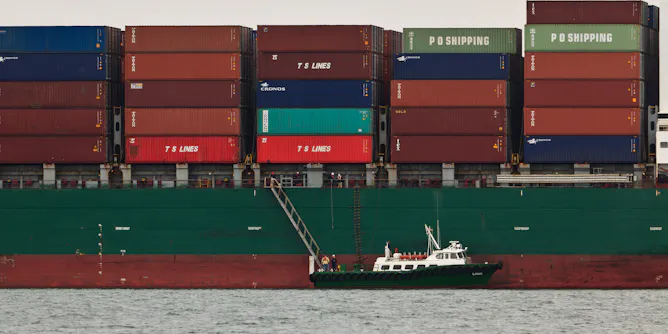
Decarbonising shipping is more urgent than ever. But is a carbon tax the best way to achieve this? Wouldn’t it increase inequalities without sufficiently reducing greenhouse gas emissions?
Articles on Cargo ships
Displaying all articles
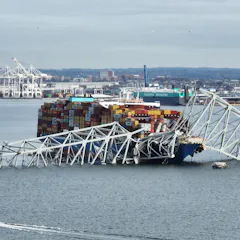
A bridge engineering expert discusses the costs and limitations of building structures to withstand extreme events – and what it takes to prepare the next generation of civil engineers.
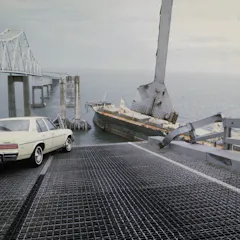
A civil engineer explains why ships taking out bridges is rare, and describes how bridge builders protect the structures from ship collisions.
Growing ship numbers and reductions in the industry’s total emissions add up to big emission cuts per ship – as much as 60% by 2030 and 91% by 2040. The days of fossil-fuelled ships are now numbered.
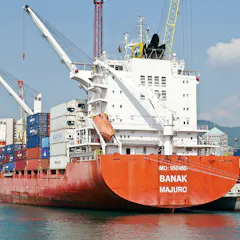
Rising sea levels threaten the low-lying island nation with the world’s third-largest shipping register. That’s why it’s leading efforts to cut shipping emissions in an equitable way.
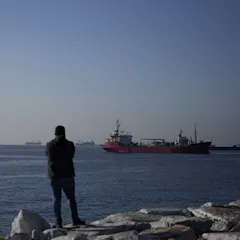
Just like how tax evasion brought down Al Capone, denying Russian ships protection and indemnity insurance could deliver a crushing economic blow to Vladimir Putin.
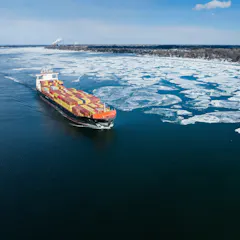
Approximately 8,000 merchant vessels travel the St. Lawrence each year. Its ports have become the catalysts that link trade, development and industrial innovation.

Shipping requires vast amounts of fuel, and the questions of which country is responsible for emissions makes reaching agreements a mammoth and glacial task.
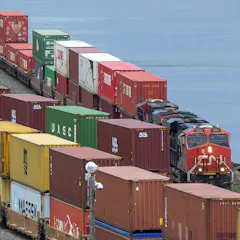
The world needs robust supply chains that are founded on sustainability, collaboration, trust, transparency, visibility and diversification of supply.
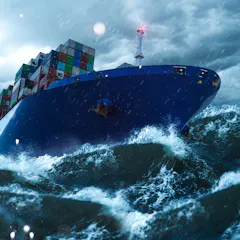
Thousands of shipping containers are lost at sea each year, dispersing Lego, inkjet cartridges and rubber ducks across the world’s beaches.
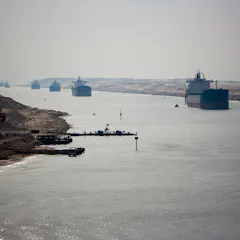
Direct implications for maritime security are unlikely. But there will be ripple effects in the shipping industry and in many commercial sectors.

In early 2020, stranded cruise ships became a stark symbol of the COVID-19 global pandemic. Now it’s seafarers stranded on cargo ships.
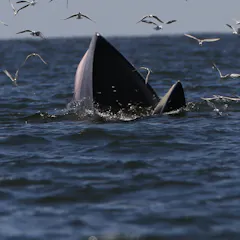
Dead whales usually sink, so most evidence of ‘ship strikes’ quickly disappears beneath the waves.
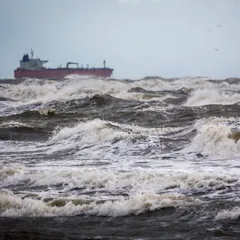
We know how to stop solid minerals converting to a liquid state mid voyage – so why does it still happen?
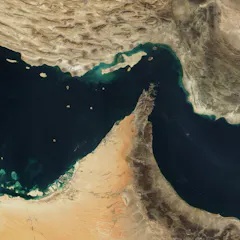
Iran has threatened to shut down this narrow seaway. Here’s why that could be a big deal.
Top contributors
-

Senior Lecturer in Culture & Climate, The University of Melbourne
-
Lecturer in Ecology, Scotland's Rural College
-
PhD Researcher, Whale-Ship Collisions, University of Portsmouth
-
Royal Academy of Engineering Chair in Emerging Technologies - Intelligent & Resilient Ocean Engineering, University of Southampton
-
Associate Professor, International Business, University of Victoria
-
Associate Professor in Environmental Sciences, University of Plymouth
-
Maritime Logistics Expert, Centre for Supply Chain and Logistics (CSCL), Deakin University
-
Postdoctoral Research Fellow, Business, University of Victoria
-
Professor of Civil and Environmental Engineering, University of Delaware
-
Responsable de la coordination des programmes de recherche à la Fondation pour les Etudes et Recherches sur le Développement International (FERDI)
-
Professeur émérite de géographie, Université de Montréal
-
Research Fellow in Energy and Transport Policy, UCL
-
Chargé de recherche, Fondation pour les Etudes et Recherches sur le Développement International (FERDI), Université Clermont Auvergne (UCA)
-
University of Victoria
-
Reader in Energy and Transport, UCL