

Working with and living in spatially complex environments may help delay cognitive decline, though more research is needed.
Articles on Civil engineering
Displaying 1 - 20 of 41 articles
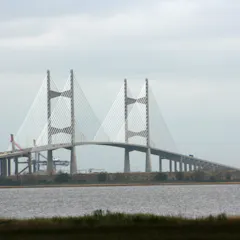
Sensors cannot replace bridge inspectors. They can help engineers see corrosion, cracks, scour and weak magnetic signals that eyes alone can miss.
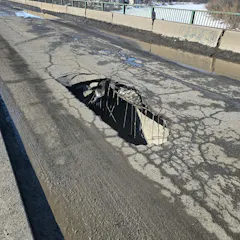
To ensure the safety of Canada’s aging infrastructure, policymakers must be proactive instead of reactive.

A research team has paved plastic-infused roads in Texas and Bangladesh, with promising results.

Due to environmental conditions in Canada, freeze-thaw cycles, road salt and moisture are serving to accelerate cracking and surface deterioration of concrete bridges.
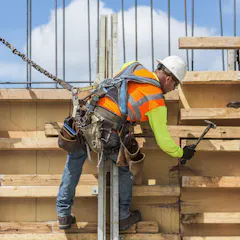
Labor costs – especially for unskilled roles – are climbing fast.
If an engineer makes an improper assumption while designing something, sometimes the consequences are fatal. An engineering professor explains how to reduce risk.
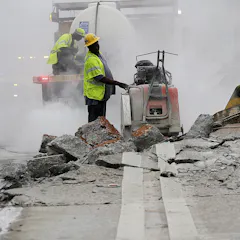
A civil engineer explains why roadways and rails warp and crack in the heat − and points to some innovative ways to keep the US transportation system healthy as long as possible.

A traffic engineer argues that, contrary to his profession’s view, ‘human error’ is not the main cause of deaths in car crashes in the US.
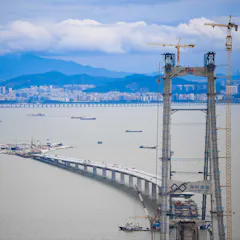
Underwater construction is a complex and difficult task, but engineers have developed several ways to build underwater … mostly by not building underwater at all.

A tonne of carbon dioxide is released for every tonne of cement manufactured from limestone.

The collapse of the Francis Scott Key bridge is already affecting global supply chains.
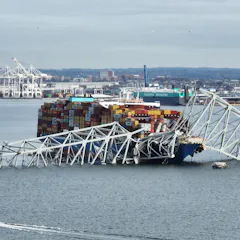
A bridge engineering expert discusses the costs and limitations of building structures to withstand extreme events – and what it takes to prepare the next generation of civil engineers.

We’ll need to learn the lessons from this disaster.
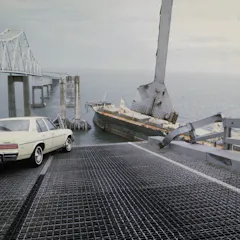
A civil engineer explains why ships taking out bridges is rare, and describes how bridge builders protect the structures from ship collisions.
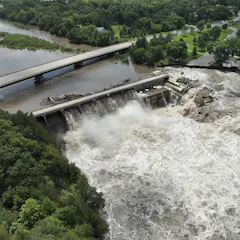
Heavier rainfall and more frequent storms raise the risk of floodwaters running over or around dams, potentially causing them to fail.
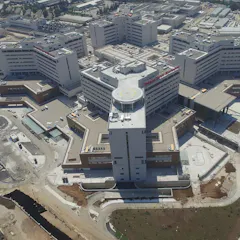
February earthquakes wreaked havoc across Turkey and Syria, killing tens of thousands of people. An engineer originally from Turkey describes what kept some buildings functional while others collapsed.
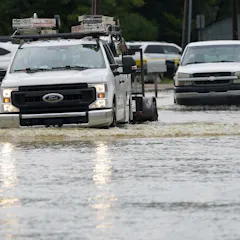
Flash flooding can happen in both urban and rural areas, with deadly results in either setting.

Left turns are dangerous and slow down traffic. One solution? Get rid of them. New research shows that limiting left turns at busy intersections would improve safety and reduce frustrating backups.
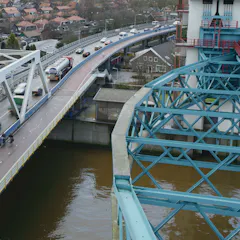
With adaptive design, infrastructure is ready to be expanded in the future. It’s working for the Dutch.
Top contributors
-

Professor of Structural Systems, University of Surrey
-
Assistant Professor in Civil and Environmental Engineering, Brunel University of London
-
Associate professor, Concordia University
-
Associate Professor of Civil and Environmental Engineering, Vanderbilt University
-
PhD candidate, Civil Engineering, Concordia University
-
Assistant Professor of Mechanical Engineering, Binghamton University, State University of New York
-
Professor of Civil and Environmental Engineering, West Virginia University
-
Senior Lecturer, Lund University
-
Lecturer in Engineering, University of Nottingham
-
Associate Senior Lecturer in Evacuation Modelling, Lund University
-
Professor of Classical Studies, Brandeis University
-
Professor of Civil & Environmental Engineering and Earth System Science, University of California, Irvine
-
Associate Professor, Stellenbosch University
-
Professor of Civil and Environmental Engineering, Tufts University
-
Associate Professor of Civil and Environmental Engineering, University of Maine