
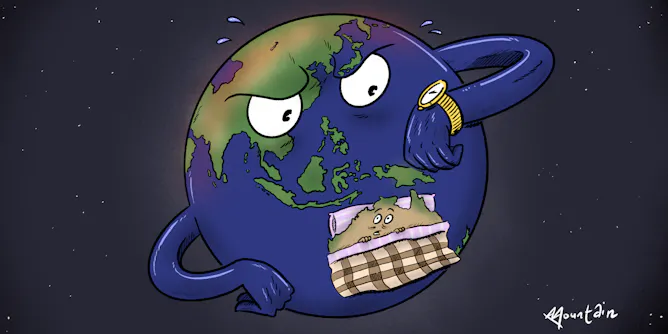
Australia’s top economists say Australia can’t “free-ride”, allowing others to cut emissions while it gets the benefits.
Articles on Carbon trading
Displaying 21 - 32 of 32 articles

If problems in such schemes are not addressed, the credibility of soil carbon trading will be undermined. Ultimately the climate - and the planet - will be the loser.
In setting new tax on the carbon emissions of goods being imported into the bloc, there are two potential disasters for EU to avoid.
CEOs, including at oil companies and airlines, are relying on trees and oceans to capture and store carbon for them, but the numbers don’t add up.
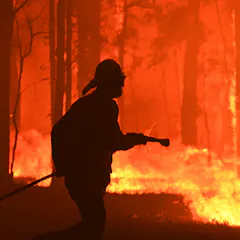
Recent bushfires and extreme weather are just a small taste of what is to come if this week’s climate negotiations in Madrid fail to deliver.
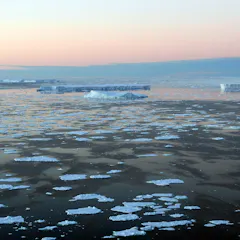
Nations are struggling to agree on how international carbon trading should work under the Paris accord. A weak result would undermine global efforts to fight climate change.

Under the current rules, the federal government takes the most responsibility for buying carbon credits. A blockchain-driven market would be faster, smarter, and much more open.
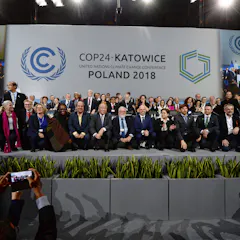
Three years after the Paris Agreement, negotiators have finally agreed (most of) the rules for its implementation. But there is still no way to compel countries to deepen their climate ambitions.
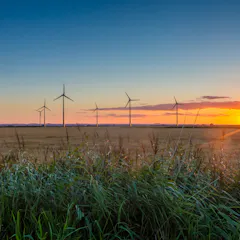
Brexit may be an unexpected boon for the UK’s climate leadership. Here’s how the UK can seize the initiative.
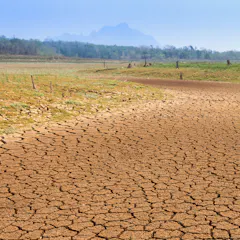
The Trump administration withdrew from the Paris Agreement. But U.S. cities and states are supporting climate change efforts in the developing world regardless.
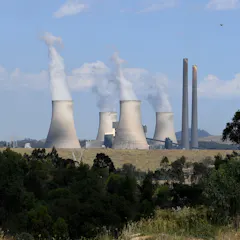
The Finkel Review looks likely to recommend a “low emissions target”, which would award credits to cleaner energy sources, much like the current Renewable Energy Target.

The climate agreement is littered with references to a whole range of new and expanded market-based tools.
Top contributors
-

Professor, Crawford School of Public Policy and Director, Centre for Climate and Energy Policy, Australian National University
-
Professor in Organisation & Sustainability, University of Exeter
-
Senior lecturer, Australian National University
-
Manager, International Research & Projects, Climateworks Centre
-
Senior Analyst, Climateworks Centre
-
Senior Research Fellow, School of Geography, Earth and Atmospheric Sciences, The University of Melbourne
-
Scientia Professor of Economics, UNSW
-
Adjunct Senior Research Fellow, University of New England
-
Visiting Fellow, Crawford School of Public Policy, Australian National University
-
Professor in International Relations, Royal Holloway, University of London
-
Professor, S.J. Hall Chair in Forest Economics, University of California, Berkeley
-
Ph.D. Candidate in Environmental Economics, The University of Melbourne
-
Research Assistant Environmental Governance Lab, PhD Student in Political Science, University of Toronto
-
Senior Research Officer, Center for International Forestry Research – World Agroforestry (CIFOR-ICRAF)
-
Geographer, University of Bern