

Former NASA climate scientist James Hansen has come to the Paris climate talks to push his radical alternative to current carbon pricing schemes.
Articles on Carbon tax
Displaying 141 - 160 of 342 articles

We must tackle the climate challenge by using economic tools to develop a consistent and equitable system for pricing carbon.
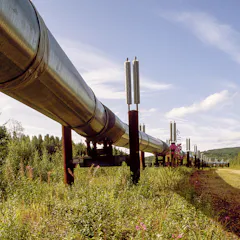
Environmental economists have long argued a carbon price is the best way to factor in the social cost of climate change. Did Obama effectively use a carbon price to nix the Keystone XL pipeline?
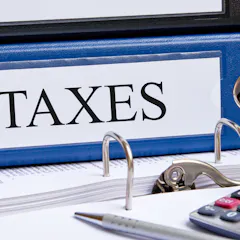
South Africa has sent a strong signal against tax evasion and is planning to introduce a carbon tax. There are also incentives for employers keen on taking inexperienced job seekers.

The VW emissions scandal gives governments every right to increase their supervisory role beyond regulation and to involve themselves to a much larger degree in economic activity.
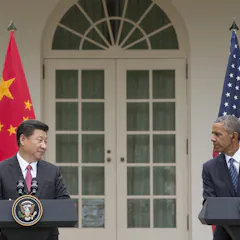
Chinese President Xi Jinping has made a landmark commitment on climate change, pledging to launch what will become the world’s largest and most important emissions trading scheme when it begins in 2017.
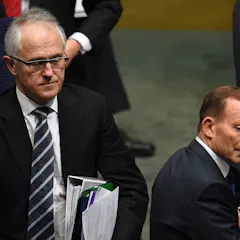
From Hawke-Keating to Rudd-Gillard, climate policy has an uncanny ability to cost Australian political leaders their jobs. And it was a key element in the rivalry between Tony Abbott and Malcolm Turnbull.
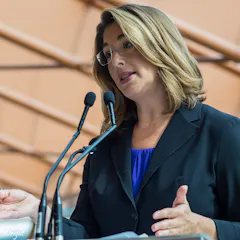
Christopher Wright speaks with Canadian journalist, author and activist Naomi Klein about capitalism's impact on the environment and how it has influenced our responses to climate change.
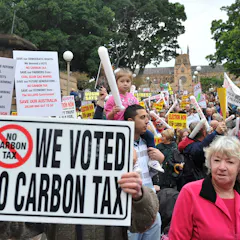
Carbon tax debates have been happening ever since the late 1980s, when policy-makers first started taking the “greenhouse effect” seriously.
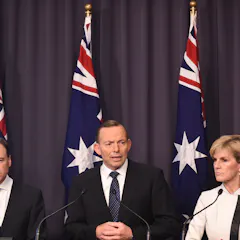
Australia will reduce greenhouse gas emissions by 26-28% below 2005 levels by 2030. Experts respond.
Is ambitious action on climate change a recipe for a significant hit to the economy and our living standards?
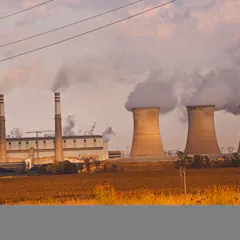
The general response to carbon tax is not a positive one, but it may be something South Africa will need to accept.
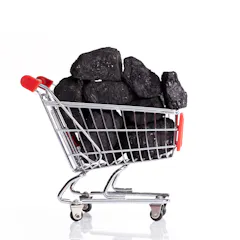
The term ‘carbon tax’ is a political poison in Australia, thanks to the previous carbon tax which was actually an emissions trading scheme. Yet ironically, many economists prefer a tax over an ETS anyway.

The carbon tax repeal was supposed to save the average household A$550. And it might well have done, but teasing out the exact figure amid the myriad other economic factors is a herculean task.
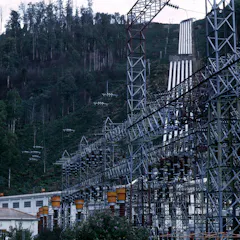
A year after the demise of the carbon tax, we might expect both coal and greenhouse emissions to have bounced back, at the expense of renewables like hydroelectricity. Sure enough, that’s what happened.
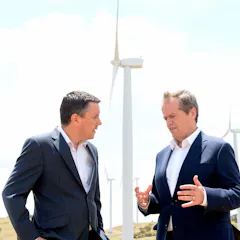
Labor says it hasn’t yet decided what climate policy to take to the next election, although this week’s leak has bolstered the idea that it will involve carbon pricing – a subject with a long and vexed history for the party.
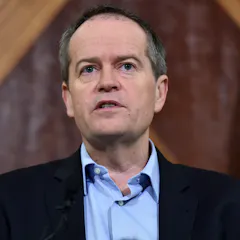
The leak to the Daily Telegraph of an options paper on Labor’s carbon pricing policy has been a kick in the guts for Bill Shorten.
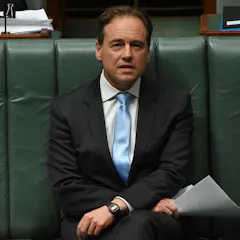
The carbon tax was not a cost or “slug” on the economy – it raised revenue that could be used elsewhere in the economy for public infrastructure or to allow cuts to more economically harmful taxes.
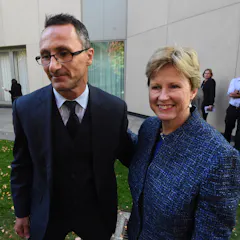
Christine Milne has been seen as an ideological politician. But her record of working with minority governments of both stripes showed she could deliver on her agenda from outside the mainstream.
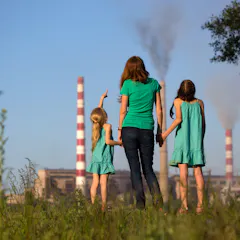
Discouraging carbon emissions via a carbon tax could deliver the government much needed revenue.
Top contributors
-

Senior Fellow in Energy and Climate Change, Grattan Institute
-
Former Visiting Fellow, SPRU, University of Sussex Business School, University of Sussex, University of Staffordshire
-
Professorial Fellow, University of Canberra
-
Professor, Crawford School of Public Policy and Director, Centre for Climate and Energy Policy, Australian National University
-
Associate Professor in Politics and International Relations, School of Social Sciences, Monash University
-
Senior Industry Fellow, Environment and Planning, RMIT University
-
Senior Research Fellow and Associate Professor, Melbourne Climate Futures initiative, The University of Melbourne
-
Climateworks Centre CEO, Monash University
-
Professor and Director, Centre for Environmental Economics and Policy, The University of Western Australia
-
Senior Research Associate, Renewable Energy & Energy Systems Analyst, UNSW
-
Professor of Economics, Monash University
-
Professor of Climate and Environmental Law, University of Sydney
-
Research Fellow, Curtin University
-
Professor and Director of Research, ANU Law School, Australian National University
-
Senior Visiting Fellow in Energy Systems, UNSW