
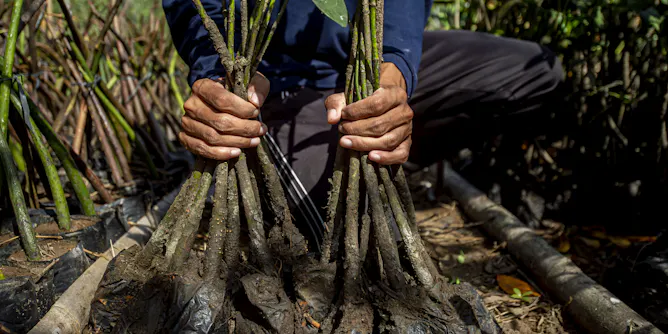
A new study suggests the world’s mangrove forests are expanding.
Articles on Carbon sink
Displaying 1 - 20 of 25 articles
There is no silver bullet for managing forests, but this study answers some historic questions.
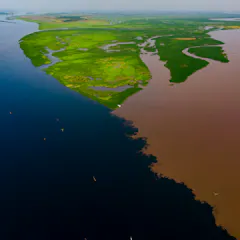
Ancient carbon is leaking from two lakes in the Congo Basin, revealing a previously unknown link between tropical peatlands and the atmosphere.
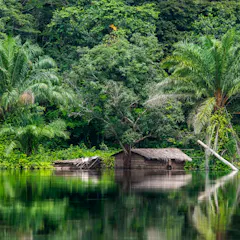
The minerals needed for clean energy are driving widespread forest loss across Africa, much of it far beyond the mine itself and largely preventable.
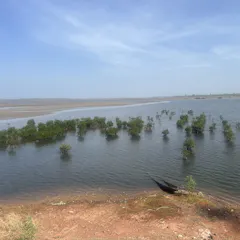
Nature-based solutions like mangrove restoration are key to climate action, but weak monitoring can overstate carbon storage, creating ‘ghost carbon’.
It could be a sign of what’s to come.
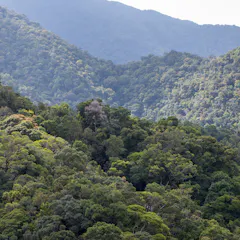
The woody biomass of Australia’s tropical rainforests has already switched from carbon sink to carbon source – and the reason is climate change.
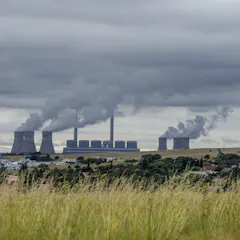
South Africa’s new climate targets cut emissions only modestly by 2035; a cautious path risks missing green investment, even though deeper cuts are within reach.

A thin layer at the ocean surface called the “ocean skin” increases CO₂ uptake by about 7%. That’s equivalent to the CO₂ absorbed by the entire Amazon rainforest each year.
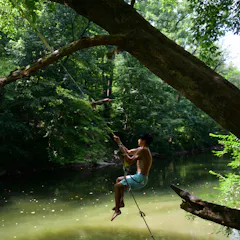
The lush urban forest in northwest Philadelphia helps cool the city and provides other environmental protections.

The scientific and broader community must join together to advance Southern Ocean science and protect this vital natural asset.
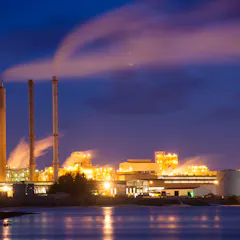
Labor came to power promising real change on climate. But their reliance on accounting tricks, carbon sinks, offsets and a future for gas has cast a very large cloud.
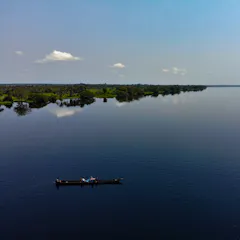
The Ruki River supplies dissolved carbon from forest vegetation and soils to the Congo River.

Seaweed is in the spotlight for so many reasons. It all sounds too good to be true. So can this wonder weed live up to expectations and fulfill its promise to save us from ourselves?
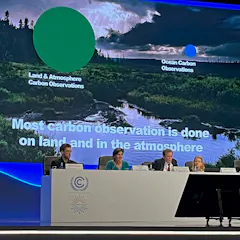
COP27’s agreement on observing the oceans sets a strong foundation for policymakers to invest in internationally linked observation that will help countries better monitor these carbon sinks.
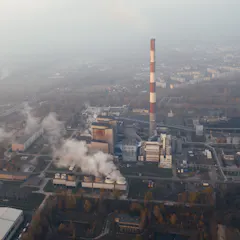
At current levels of emissions, there is a 50% chance the planet will reach the 1.5°C global average temperature rise in just nine years.

The clearing of the Amazon rainforest surged to its highest levels in two decades under the Bolsonaro presidency. The newly elected Lula da Silva has vowed to halt deforestation, but it won’t be easy.
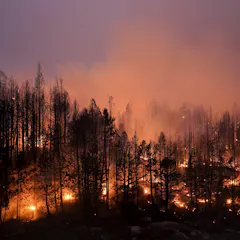
Planting trees and preventing deforestation can store carbon in nature, but the effect may only be temporary. If we also eliminate emissions from fossil fuels, even this temporary effect is important.
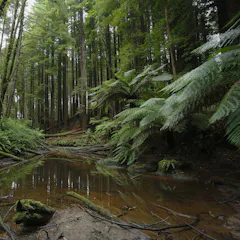
As climate change pressures intensify, ecosystems may lose their ability to bounce back from disasters.
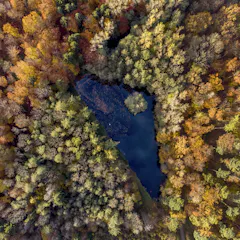
The pledge to end deforestation holds great potential, but Canada has some work ahead if it is to make meaningful progress on the new goal and stop ongoing forest and carbon loss.
Top contributors
-

Research Technician, ETH Zurich
-
Chief Research Scientist, CSIRO Environment; Executive Director, Global Carbon Project, CSIRO
-
Postdoctoral Researcher, ETH Zurich
-
Professor of Sustainable Agrosystems, ETH Zurich
-
Professor, Department of Earth System Science, and Chair of the Global Carbon Project, Stanford University
-
Honorary Professor, Australian National University
-
Senior Research Associate, School of Geographical Sciences, University of Bristol
-
Senior Researcher, Center for International Climate and Environment Research - Oslo
-
Associate Professor and Canada Research Chair in Atmospheric Biogeosciences in High Latitudes, Université de Montréal
-
Researcher, Lund University
-
Snr research fellow in environmental sciences, James Cook University
-
Banting Postdoctoral Fellow, Ocean Sciences, Memorial University of Newfoundland
-
Professor, University of Tasmania
-
Concordia University
-
Distinguished Professor of Climate Science, Simon Fraser University