

New research shows five bacteria are associated with an increased risk of aggressive prostate cancer.
Articles on Cancer diagnosis
Displaying 21 - 38 of 38 articles
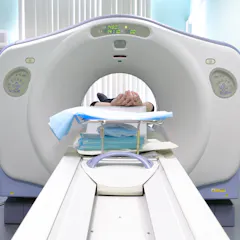
In future health emergencies and possibly further waves of the COVID-19 pandemic, caution needs to be taken when extending cancer waiting times for reasons unrelated to patients’ health-care needs.

The NanoMslide causes potentially cancerous cells to ‘light up’ with vivid colour contrast. It has already been successful in finding early-stage breast cancer cells in human tissue.

New studies highlight the difficulties cancer patients have when discussing their illness with family and medical teams.
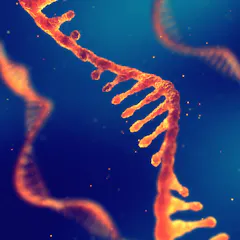
Long non-coding RNAs were long thought to serve no purpose. Now, researchers think differently.
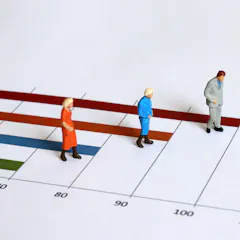
Over a 26 year period, cancer diagnoses have risen by 22%, but deaths from cancer have decreased by an equal amount.

Alex Trebek announced this week that his pancreatic cancer is in remission. A pancreatic cancer specialist explains the difficulties of the disease as well as new treatment advances.
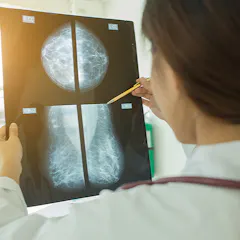
Artificial intelligence is being used to diagnose breast cancers from early mammogram tests.

A new meta-analysis of 39 studies from around the world reveals a major disadvantage.
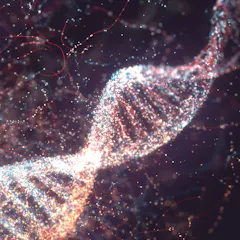
Our research has found that cancer DNA forms a unique structure when placed in water. We used this finding to develop a test that can detect cancerous DNA in less than ten minutes.
A urine test for ovarian cancer could increase survival rates from 20% to 90%.
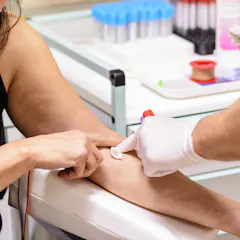
There are currently few effective and non-invasive methods to screen for early stages of cancer. But scientists have now developed a new blood test that promises to detect eight different cancers.

Timely and appropriate investigation of suspicious symptoms, especially blood in the urine, is crucial for the accurate and early diagnosis of bladder cancer.
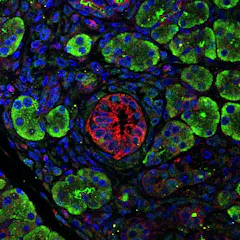
Pancreatic cancer has long been known as the “silent killer” but why is it so difficult to detect?
Modern medicine is increasing our lifespan. But as we survive diseases and live longer, more of us are succumbing to cancer.
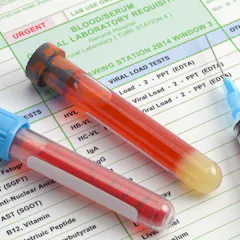
By measuring a cancer cell’s DNA in the bloodstream, scientists can get a snapshot of the cancer itself, which is referred as a “liquid biopsy”.
Computer-aided decision-making has been shown to help in clinical contexts. But winning over doctors and patients is a different matter.
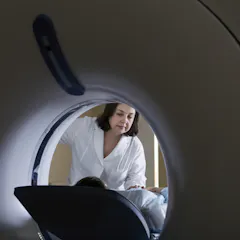
A new research paper has found some cancers aren’t picked up by GPs in the first or second appointments, but it’s because cancer is usually an unlikely explanation for a patient’s symptoms.
Top contributors
-

Professor of Biomedical Sciences, Anglia Ruskin University
-
Associate Professor of Surgery, University of Otago
-
Professor of Māori and Public Health, Te Kunenga ki Pūrehuroa – Massey University
-
Professor of Social and Health Psychology, Te Kunenga ki Pūrehuroa – Massey University
-
Senior Research Officer, Blood Cells and Blood Cancer Division, WEHI (Walter and Eliza Hall Institute of Medical Research)
-
Professor of Sociology, Te Herenga Waka — Victoria University of Wellington
-
Associate Professor of Health Promotion, University of Otago
-
Professor of Sociology & Director, Sydney Centre for Healthy Societies, University of Sydney
-
PhD Student Studying Pancreatic Cancer, Cardiff University
-
Senior Lecturer, School of Psychology and Wellbeing, Post Doctoral Fellow, Manna Institute, University of Southern Queensland
-
Post Doctoral Research Fellow in Melanoma, Edith Cowan University
-
Assistant Professor, Imperial College London
-
Assistant Professor, Department of Human Genetics, McGill University
-
PhD Researcher in Breast Radiology and Consultant Radiographer, Cardiff Metropolitan University
-
Professor and Laboratory Head, WEHI (Walter and Eliza Hall Institute of Medical Research)