

New research has found there is a concerning trend in Canadian political discourse: the tendency to treat politics as little more than sensational entertainment.
Articles on Canadian federal election 2019
Displaying 1 - 20 of 78 articles

Leaks about Chinese interference in Canadian elections isn’t just about politics — it’s also a deeply concerning national security crisis that raises questions about the legitimacy of our elections.
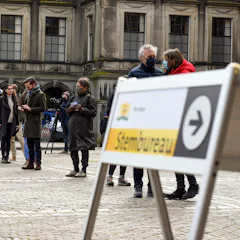
The March elections in the Netherlands, and the fact that a government still hasn’t been formed, illustrate both the benefits and problems with proportional representation.
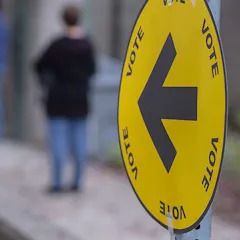
Political parties protect themselves rather than voters in refusing to be bound by privacy laws.

Canada’s new Elections Act may have prevented the type of mammoth election spending seen in the United States via super-PACs, but it’s been at the expense of public debate.
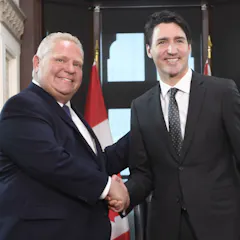
There’s been one notable exception to Doug Ford’s supposed willingness to change direction: the environment.
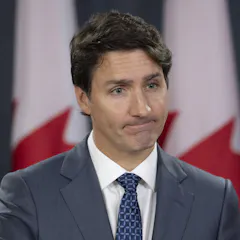
Justin Trudeau will have to change his style of governing in the new minority government. Working in a co-operative government with other political parties could diminish executive dominance.
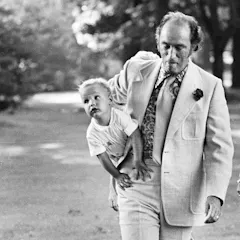
There’s a different Trudeau in office in 2019 than there was in 1972, but Justin Trudeau is also leading a minority government, just as his father did — and the Canada-U.S. relationship is key.

Both climate activist Greta Thunberg and former U.S. president Barack Obama made their presences known during the Canadian election. Was it interference?

There are many winners in a scenario in which Canada’s minority government enacts stronger supports for non-profit housing. The biggest are those who would get secure and affordable homes.

To implement pharmacare, the Liberals will need to negotiate with the provinces, and the mostly Conservative premiers are unlikely to make this easy. The insurance industry also has much to lose.
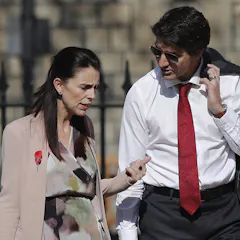
Unlike Canada’s newly elected House of Commons, New Zealand’s parliament reflects the will of voters. So do other proportional representation systems. Canada has plenty of choice.

The Bloc Québécois was written off as politically dead before it aligned itself with the CAQ government’s law on secularism. Now it’s moved into third place in Parliament in a stunning comeback.

In the aftermath of the election, what is striking about many of the policy positions of Canada’s federal parties is their timidity, especially when it comes to climate change.
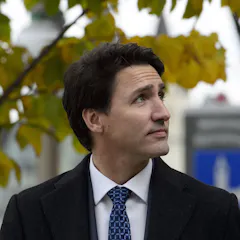
What would the Canadian election results have looked like with electoral reform?

The Bloc surged because the Liberal campaign focused on attacking premiers from other provinces and promised initiatives that already exist in Québec.

Hundreds of thousands of people marched through the streets in support of action on climate change, but that didn’t lead to seats for the Green Party.

The progressive left should not content itself with being a junior partner in Liberal minority governments. In the next election, they should seek to propose a principled, realistic alternative.
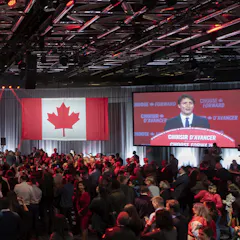
The election results could mean a national pharmacare program will happen, albeit slowly. Canadians can also expect more safe injection sites and money invested in the opioid crisis.
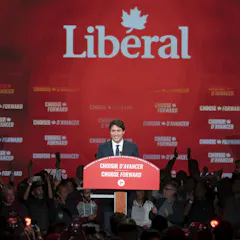
The urgent issues facing Canada during the election are not less urgent now that the election is over. The prime minister is going to have to reinvent himself and commit to some important compromises.
Top contributors
-

Professor, Environmental and Urban Change, York University, Canada
-
Associate Professor, News, Social Media, and Public Communication, Simon Fraser University
-
Associate Professor of Economics, University of Manitoba
-
Associate professor and Founding Fellow, MacEachen Institute for Public Policy and Governance, Dalhousie University
-
Adjunct assistant professor, International Relations, Carleton University; L’Université d’Ottawa/University of Ottawa
-
Professor of Communication Studies; Research Chair on Intersectionality, Violence and Resistance, Concordia University
-
Associate professor, Political Science, Brock University
-
Associate Professor, Department of International Development Studies, Dalhousie University
-
Professor of Sociology, Western University
-
Associate Professor, Institute of Environmental Science and Department of Biology, Carleton University
-
Full Professor, Department of Theological Studies, Concordia University
-
Adjunct professor, Environment and Sustainability, University of Saskatchewan
-
PhD Student and Researcher, Department of Political Science, University of Toronto
-
Professor of Political Science, Concordia University
-
Assistant Professor, Department of Biology, Carleton University