
We’ve come a long way from the first documented successful caesarean. In 1500, Swiss farmer Jacob Nufer operated on his wife after a labour of several days. She went on to have five more vaginal births.
Articles on Caesarean section
Displaying 41 - 50 of 50 articles
As more and more babies are delivered by cesarean section, we need to start investigating what that means for their long-term health.
Humans have always required some form of extra help being born. But how much help is truly necessary – and how much is too much.

Medical intervention in birth is normalised by both maternity care providers and all kinds of media. Our research shows information about the benefits of natural birth help women make better choices.
Last month I attended a protest in London over an incident on the other side of the world. It concerned a woman named Adelir Carmen Lemos de Góes, who was forced to have a caesarean section in Torres…
Caesarean deliveries do not prevent children from developing cerebral palsy despite long-held medical assumptions. According…
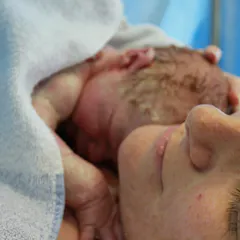
There is a substantial literature on labour and childbirth in medical, midwifery and social scientific research. But we still don’t know much about how labouring women experience that pivotal time when…
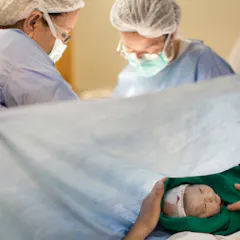
When the movement to promote evidence-based healthcare began in the late 1980s, it started in the field of child birth. So it might be expected that by now, nearly a quarter of a century later, there would…
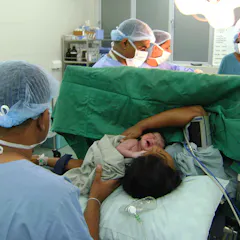
Hospitals provide much-needed medical care and treatment for women who run into difficulty in childbirth. But many women and babies have medical intervention and treatment without good reason. We’ve become…

A study recently published in the British Medical Journal (project Viva) has found that children born by caesarean section have a higher rate of obesity at age three than children born naturally. At first…
Top contributors
-

Professor of Midwifery, Associate Dean Research and HDR, Midwifery Discipline Leader, Western Sydney University
-
Assistant Professor of Obstetrics, Gynecology and Reproductive Biology, Harvard University
-
Research Fellow University of Notre Dame Australia; Adjunct Fellow (National Institute of Complementary Medicine), Western Sydney University, University of Notre Dame Australia
-
Professor of Midwifery Studies, University of Lancashire
-
Associate Professor of Midwifery, Western Sydney University
-
Associate Professor and Clinical Academic Gastroenterologist, Western Sydney University
-
Senior Lecturer in Midwifery, University of Technology Sydney
-
Caroline Homer is a Friend of The Conversation.
Deputy Director (Gender Equity, Diversity and Inclusion), Burnet Institute
-
Adjunct Research Fellow, Western Sydney University
-
PhD Candidate, Department of Community Health Sciences, Cumming School of Medicine, University of Calgary
-
Associate Professor in Public Health, Queensland University of Technology
-
Medical Doctor, Epidemiologist and Biostatistician, University of the Witwatersrand
-
Research Fellow, Queensland University of Technology
-
Professor in Obstetrics and Gynaecology, Lund University
-
Professor of Global Surgery, University of Cape Town