
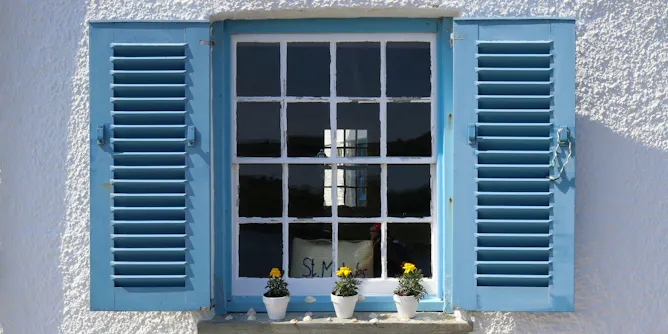
Academics have been testing out how best to deal with heatwaves in two neighbouring homes to see what works.
Articles on Building design
Displaying 1 - 20 of 35 articles

Education systems across southern Africa must better prepare for a hotter future.
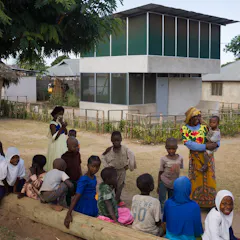
A three year study of Tanzanian children found that changing the way homes are designed can prevent diarrhoea, pneumonia and malaria, and help children grow taller.
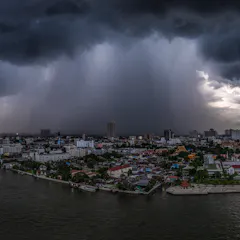
Engineers use giant fans in the Wall of Wind test facility to study the destructive ways these powerful winds can interact with tall buildings.

Construction activity will use up almost half of the world’s remaining carbon budget to keep global warming under 1.5°C unless we totally rethink our approach.

Incorporating nature via biophilic design has interested architects and landscape architects for a long time, but its benefits for neurodiversity are not very well-known.
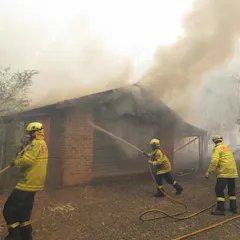
Buildings can be engineered to resist bushfires, but we can’t engineer the many aspects of human behaviour and decision-making that will still put lives at risk.
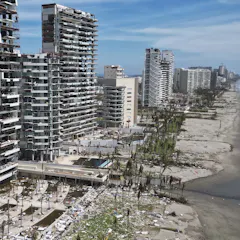
The best science is not always the best engineering when it comes to building codes. It’s also a problem across the US, as an engineer who works on disaster resilience explains.

Air con uses lots of energy – try these things first.

In order to ensure new multi-unit housing prioritizes comfort and health, future residents and building owners should know what design choices to advocate for.

Bioarchitecture draws on design principles from nature to construct buildings that work in ways that help tackle climate change and reverse environmental damage.

Ageing brick apartment buildings of two to three storeys are being redeveloped in many suburbs. Typically, they are knocked down to be replaced by much bigger developments. But here’s an alternative.
A transcript of an episode of The Conversation Weekly published on September 15, 2022.
Follow The Conversation Weekly podcast for new episodes every Thursday.

The test facility in Miami helps building designers prevent future storm damage. With the warming climate intensifying hurricanes, engineers are planning a new one with 200 mph winds and storm surge.

It’s time to rethink these physical environments with peoples’ fundamental human needs at the heart of design.

New research has found that low-rise urban environments are more space and carbon efficient than high-rise buildings which have a drastically higher carbon impact.

99% of people below the floors where the planes struck the twin towers evacuated successfully, although their journey was fraught with danger. Their stories have influenced today’s skyscraper designs.

The World Trade Center buildings were built to withstand wind loads more than 30 times the aircrafts’ weight.

Construction experts explain the various factors that likely came into play, leading to the collapse of a building which had reportedly been sinking for some time.
Top contributors
-

Lecturer in Architecture, Practice and Design, Swinburne University of Technology
-
Senior Lecturer, Nottingham Trent University
-
Associate Science Editor & Co-Host of The Conversation Weekly Podcast, The Conversation
-
Principal Research Fellow, School of Engineering, RMIT University
-
Host, The Conversation Weekly Podcast, The Conversation
-
Associate Dean, School of Property, Construction and Project Management, RMIT University
-
Adjunct Professor of Architecture, University of Technology Sydney
-
Postdoctoral Scholar and Assistant Professor, Taubman College of Architecture and Urban Planning, University of Michigan
-
Emeritus Professor, Faculty of Science, University of Technology Sydney
-
Professor of Architectural Engineering, Al-Nahrain University
-
Lecturer in Built Environment (Architecture), Built Environment Discipline and Research Fellow, ISILC, Victoria University
-
Professor of Engineering, University at Buffalo
-
Head of Art and Design, University of Hertfordshire
-
Senior Lecturer in Construction Technology, The University of Melbourne
-
Research Fellow, School of Civil Engineering, The University of Queensland