
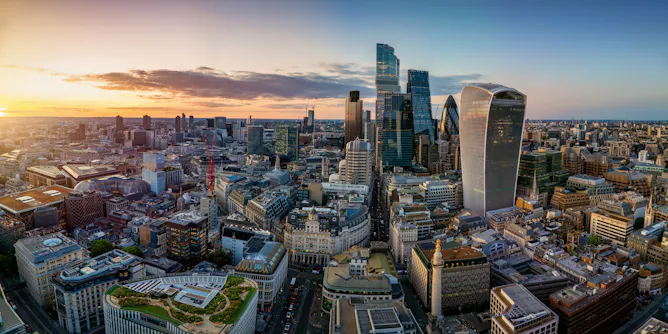
A lack of daylight can lead to stress, sleep disruption and cardiovascular disease.
Articles on Skyscrapers
Displaying 1 - 20 of 30 articles

They’re not what many of us imagine when we think of schools, but building them vertically could make our cities better for everyone.

The pursuit of ‘vanity height’ in skyscrapers is driven by aesthetic appeal and the status of being ‘the tallest’. Redefining how we measure building heights can help cut the environmental cost.

The colorful bubble letters have attracted praise and condemnation, with taggers seeing their work as a gift to the city, while others decry it as rampant vandalism.

Tower cranes come in many different sizes, and many weigh more than 100 tonnes.
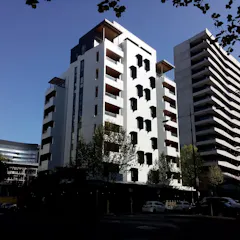
The race to build the tallest timber building makes the news, but mid-rise construction is where using timber can make the biggest sustainability impact.
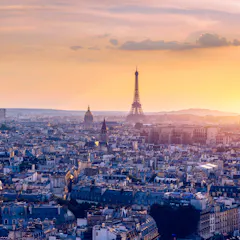
New research has found that low-rise urban environments are more space and carbon efficient than high-rise buildings which have a drastically higher carbon impact.

99% of people below the floors where the planes struck the twin towers evacuated successfully, although their journey was fraught with danger. Their stories have influenced today’s skyscraper designs.
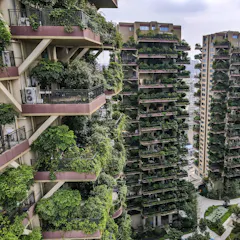
People love to connect with nature and that’s possible with vertical gardens on high-rise developments. But gardens need a gardener to keep things under control.
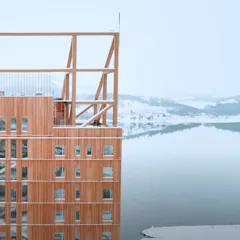
Buildings account for a large proportion of greenhouse gas emissions globally. Sustainably sourced wood could be a better building material.
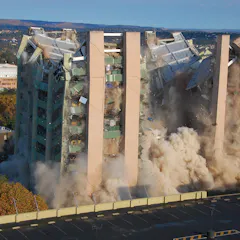
The problems of demolishing high-rise buildings in busy cities point to the need to prepare for unbuilding at the time of building. We’d then be much better placed to recycle building materials.
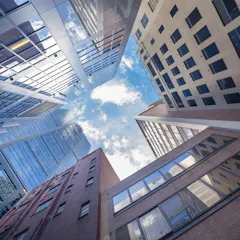
Planning controls in Melbourne were eased 20 years ago, with mixed results, and new limits are now in place. Will other cities that have eased height limits, like Adelaide, avoid the same mistakes?
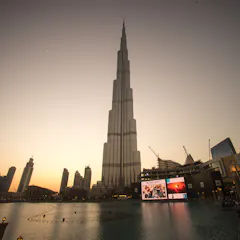
It would be difficult, but we could probably build a tower over 2,000 metres tall, which would be like ten normal skyscrapers on top of each other! This is probably not a very good idea though.
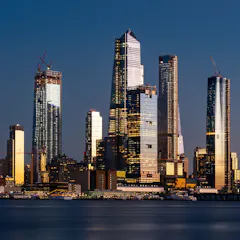
Glass has always been a notoriously energy inefficient building material – but an obsession with aesthetics led architects to ignore its shortcomings.
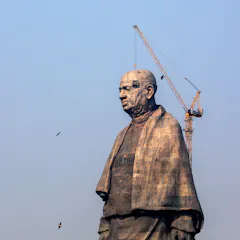
Standing 240m tall, the Statue of Unity celebrates India’s development. But jarringly, it towers over a divisive and environmentally damaging dam project.
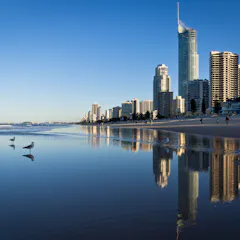
Tall buildings are an increasing feature of Australia’s city landscapes, although they’re still relatively small compared to overseas. But is there a limit on how high we can build?
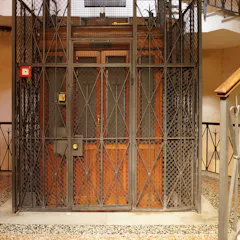
New technology could make it practical to build skyscrapers far taller than even today’s highest – and change how people live, work and play in tall buildings.
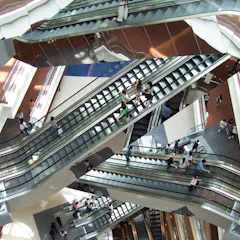
The mall’s inventor, Victor Gruen, envisioned thriving hubs of civic activity, rather than bland, asphalt-enclosed shopping centers. Is his original vision now being realized – or further corrupted?

George Washington had Mount Vernon. Thomas Jefferson had Monticello. Now Trump has his eponymous tower. Can it stimulate a more creative, sustainable approach to building skyscrapers?
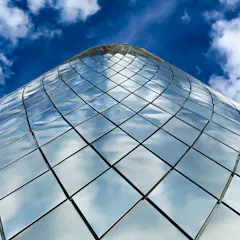
The fifth generation of tall buildings are here, and they’re more efficient than ever before.
Top contributors
-

Head of School and Professor of Architecture, UNSW Built Environment, UNSW
-
Lecturer in Architecture, Practice and Design, Swinburne University of Technology
-
Associate Professor, Building Technology, Università Iuav di Venezia
-
Assistant Professor in Architecture, University of Nottingham
-
Associate professor of Architecture, University of the Witwatersrand
-
Research fellow, The University of Queensland
-
Architectural Technologist and Urban Designer, Nottingham Trent University
-
Senior Lecturer in History, La Trobe University
-
Professor of Organisation Studies, University of Bristol
-
Associate Professor of Urban Design, University of Pennsylvania
-
Professor of HIstory, Lafayette College
-
Professor of Fire Protection Engineering, University of Maryland
-
Associate Professor in Criminology, Macquarie University
-
Lecturer in International Relations, The University of Western Australia
-
Executive Director, Council on Tall Buildings and Urban Habitat; Visiting Professor of Architecture and Urban Planning, Tongji University Shanghai; Research Professor of Architecture, Illinois Institute of Technology