

Keeping a tiny brain area called locus coeruleus functioning properly may stave off symptoms of Alzheimer’s disease and keep the aging brain healthy
Articles on Brain research
Displaying 1 - 20 of 41 articles

Frontotemporal dementia accounts for around one in 20 dementia cases.

If we are shown a lot of heavy bodies, the bodies we rate as attractive get heavier and the bodies we rate as “normal” get heavier.

Three keys to protecting an aging brain are physical activity, intellectual stimulation and annual screenings for dementia.

Without supportive parents, children already under stress may experience a shrinkage in brain volume in an area of the brain that is important for learning and memory.
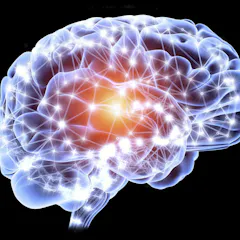
Long overlooked by scientists, white matter may provide clues to some of the brain’s greatest mysteries.
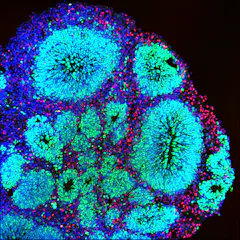
Brain organoids are tiny models that neuroscientists use to learn more about how the brain grows and works. But new research finds important differences between the model and the real thing.
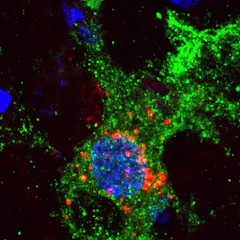
These tiny nanoparticles might provide a new way to see what’s happening in the brain and even deliver treatments to specific cells – if researchers figure out how to use them safely and effectively.
When nerve cells in the brain pass electrical signals to each other, they create tiny electric fields that can be sensed from outside the skull.

Brain signals might work like people navigating without a map – and it’s actually more efficient than you think.

Though the World Health Organization has declared “gaming disorder” an addiction, its – and others’ – concerns about technology use and alleged addiction don’t hold up to scholarly scrutiny.

A new initiative called the International Brain Laboratory is tackling this fundamental mystery of neuroscience in an unusual way.

Repetitive patterns from windows, blinds and stairs are really uncomfortable to look at.

A new study of the brain structure of schizophrenics has revealed an important clue that could help treat hallucinations.

Lesions on a particular region of the brain can cause ‘acquired dyslexia’.

Our minds have always adapted to their environment but advertisers are exploiting opportunities for distraction like never before.
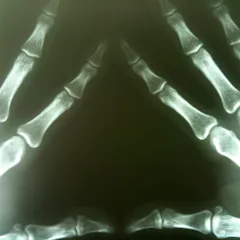
The network of bone cells inside your skeleton rivals your brain in terms of complexity.

New research has found a link between exposure to air pollutants during pregnancy and abnormalities in children’s brains. But how at risk are we?

Technology is making it possible to communicate thought directly from one brain to another.

Humans spend an enormous amount of time and effort thinking about other people. Like primates, birds and even ants, we often learn skills and information from others. In the past, research has extensively…
Top contributors
-

Professor and Head of Epigenetics and Neural Plasticity, Florey Institute of Neuroscience and Mental Health
-
Professor of Biomedical Engineering and Psychiatry, The University of Melbourne
-
Professor of forensic cognition, The Open University
-
Research Assistant Professor in Neuroscience, The University of Western Australia
-
Professor of Clinical Neuropsychology, University of Cambridge
-
Professor of Neuroscience, Royal Holloway, University of London
-
Associate Professor of Psychology, Brandeis University
-
Associate Professor of Neuroscience, Cold Spring Harbor Laboratory
-
Professor of Environmental Health, King's College London
-
PhD researcher in Neuroscience, University of Sheffield
-
Professor, School of Natural Sciences, Macquarie University
-
Associate Professor, University of Kentucky
-
Lecturer in Psychology and Cognitive Science, University of Sheffield
-
Professor, Neuropsychology, University of Westminster
-
Senior Lecturer (Adjunct), Nutritional neuroscientist, Adelaide University