
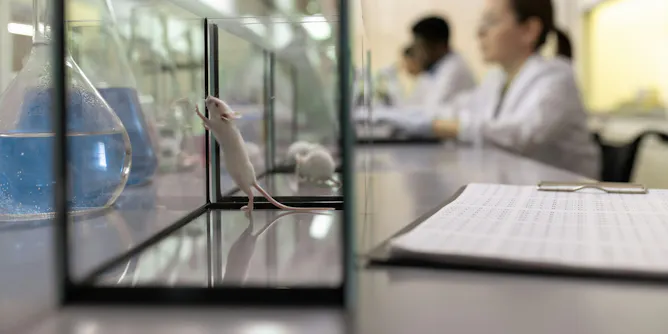
Around 200 million animals are used in lab research around the world each year. Organoids may one day replace them.
Articles on Brain organoids
Displaying all articles
Brain organoids are revolutionising research, but their growing complexity raises unsettling ethical questions.

‘Organoid intelligence’ is still in its early stages, but it’s already raising tough questions.

High-energy particles streaming through space can damage DNA and increase cancer risk, but antioxidants, tardigrades and hibernation could help astronauts make the journey safely.
There are several steps between research on seemingly esoteric subjects and breakthrough medical treatments. Ethical oversight at every stage ensures science and society ultimately benefit.
Glioblastoma is the most aggressive type of brain cancer, causing significant decline in cognitive function. New research suggests a common anti-seizure drug could help control tumor growth.
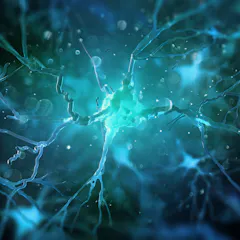
A lump of cells could be given the legal status of a person, or remain a property.
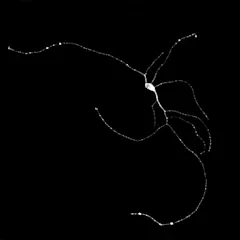
Cell cultures have shown promise in representing diseases. The Petri dish is not as different from a sick person as one might think.
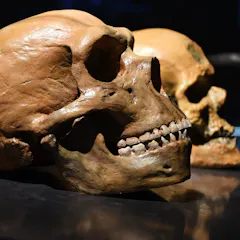
Neanderthal-human hybrid brains grown in the lab give fascinating insights into evolution.
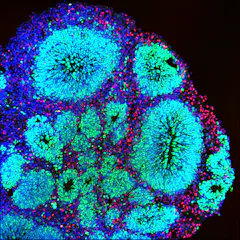
Brain organoids are tiny models that neuroscientists use to learn more about how the brain grows and works. But new research finds important differences between the model and the real thing.
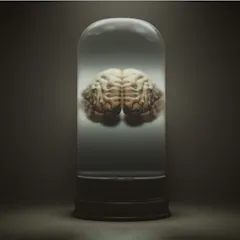
We worry about AI developing consciousness, but brain organoids may be more likely to do so.
Top contributors
-

Post Doctoral Research Fellow, School of Biological Sciences, University of East Anglia
-
PhD Candidate Biomedical Engineering, The University of Melbourne
-
Senior Lecturer in Law, Newcastle University
-
Associate Professor of Genomic Medicine, University of Leeds
-
Étudiant au doctorat en psychologie, Université du Québec à Montréal (UQAM)
-
Professor of Neurology and Director of the Developmental and Stem Cell Biology Program, University of California, San Francisco
-
Université de Montréal
-
Postgraduate researcher in Translational Neurogenetics, Lund University
-
Postdoctoral Fellow in Neurological Surgery, University of California, San Francisco
-
Postgraduate Researcher in Clinical Genomics, Lund University
-
Postdoctoral Scholar in Regeneration Medicine, University of California, San Francisco
-
Associate Professor of Neurological Surgery, University of California, San Francisco
-
Professor of Cognitive Neuroscience, Bangor University
-
Postdoctoral Scholar of Regeneration Medicine, University of California, San Francisco
-
Emeritus Professor of Social Sciences and Health Policy, Wake Forest University