
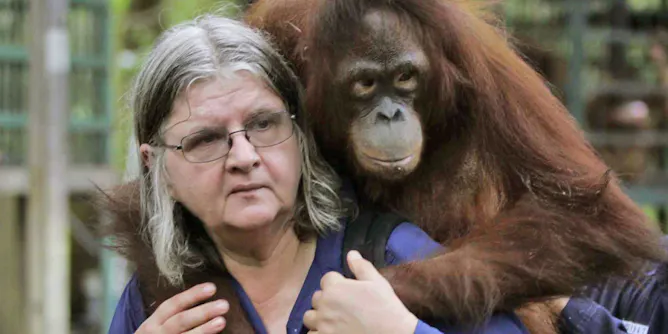
With Jane Goodall and Dian Fossey, Galdikas changed the face of science and opened the world’s eyes to how similar humans are to orangutans and other primates.
Articles on Borneo
Displaying 1 - 20 of 31 articles

In Borneo’s remote villages, locals earn money by recording wildlife — reshaping conservation and redefining how communities value their forests.
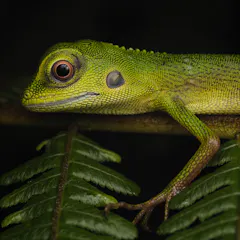
While tropical forests are home to rare species, logged forests still feel and sound like forests, while oil palm plantations are agricultural landscapes.

Male proboscis monkeys are known for their large, bulbous nose appendages. It’s a strange feature to evolve – with new research shedding light on their unlikely origin story.

A recently discovered palm tree has an unusual survival strategy - it flowers and fruits beneath the ground
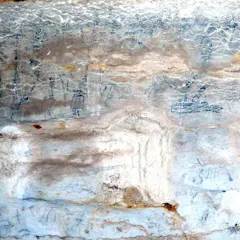
Rock art from a Malagasy cave hints at some remarkable cultural connections.
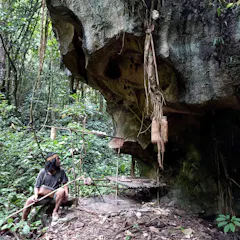
The Punan Batu is one of the most active nomadic hunter-gatherer groups still existing in the world. They have unique characteristics that are different from other groups in Borneo.
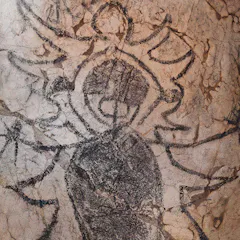
New dates for the rock art in the Gua Sireh cave in Malaysia reveal resistance to frontier violence between 1670 and 1830.
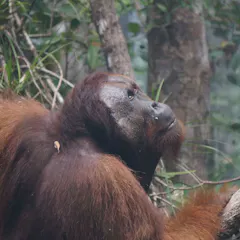
Orangutans are vocal animals, so analyzing their calls during events like wildfires can indicate how smoke is affecting their health.
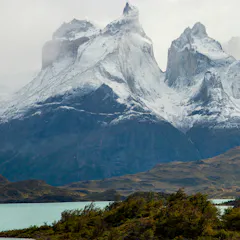
Mountain environments are rich in plant and animal species, but the dual threat of human habitation and climate change means urgent action is needed to protect them.

Can Anwar, the man who wrote a book on “his vision for a more tolerant, pluralistic Asia”, bring together a divided Malaysia?
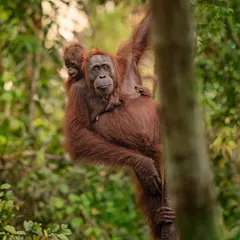
Setting aside half of Borneo would significantly reduce their decline, say experts.
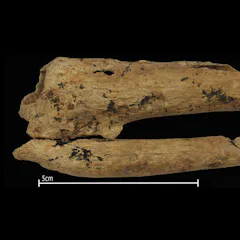
An astonishing discovery from the oldest known grave in Southeast Asia has revised medical history – the previous known amputation surgery was just 7,000 years ago.
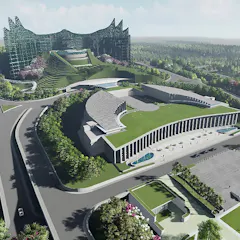
Why is Indonesia planning to build a new capital called Nusantara? Listen to The Conversation Weekly podcast.

In Killernova, celebrations of history, nature and heritage are tinged with despair at contemporary degradation of nature, bringing catastrophic loss.
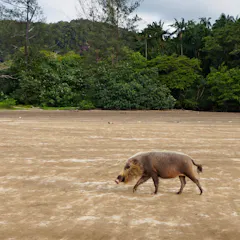
The changing dynamic between Borneo’s pigs and Indigenous people is a powerful reminder of the fragility of the human-nature connection.

Planting trees can sometimes be a carbon-offset box-ticking exercise, but reforestation is a long-term commitment that supports communities, promotes biodiversity and tackles the climate emergency.
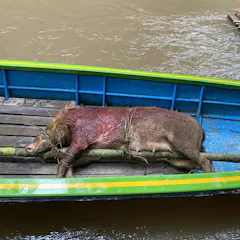
Indigenous people in rural Borneo associate the coronavirus with modern life, not their traditional hunting.
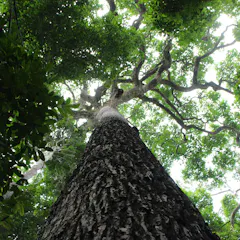
Trees in tropical forests are more than carbon sponges – they’re cultural artefacts.
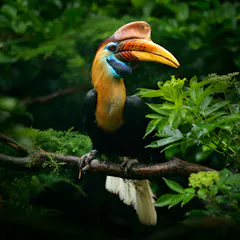
Instead of boycotting palm oil, source it from pastureland and not recently logged forests.
Top contributors
-

Honorary Professor of Conservation, University of Kent
-
Professor of Primate Biology, Liverpool John Moores University
-
Reader in Anthropology, Brunel University of London
-
Postdoctoral researcher in genetics and epigenetics of human populations, Université de Toulouse
-
Honorary Associate Professor, UNSW
-
Honorary Associate Professor, The Crawford School of Public Policy, Australian National University
-
Postdoctoral research fellow, Mochtar Riady Institute for Nanotechnology
-
Researcher in Anthropobiology, Université de Toulouse
-
Professor of Ecology & Evolutionary Biology, University of California, Santa Cruz
-
Associate professor, University of Sydney
-
Head of Communications at Borneo Futures
-
Doctoral Researcher, Sustainability and Complexity in Ape Habitat, German Centre for Integrative Biodiversity Research
-
Professor of Archaeology, Griffith University
-
Research Centre of Archeometry, Badan Riset dan Inovasi Nasional (BRIN)
-
Research Scientist in Population Ecology at Cornell University and Postdoctoral Reseacher, Queen's University Belfast