
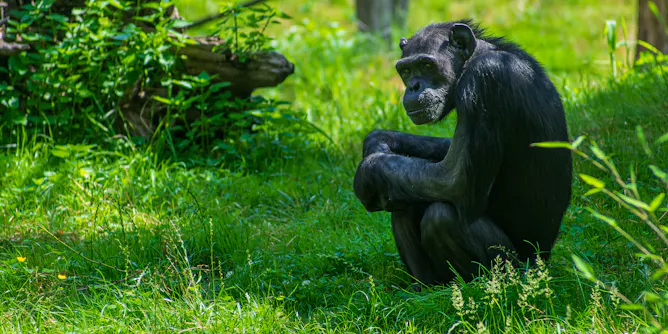
A database of great ape research promises to unlock deeper understanding of their cognition, intelligence and social behaviour.
Articles on Orangutans
Displaying all articles
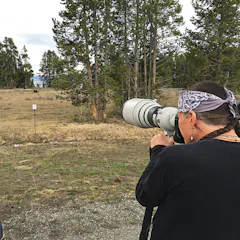
The caption may say that only scientists and trained professionals should handle wild animals, but viewers remember the image, not the words.
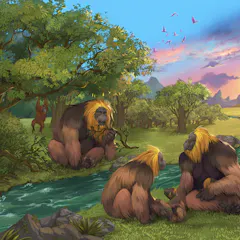
What happened to the three-metre tall apes that once lived alongside orangutans? A new study suggests they were too slow to adapt to a changing world.
Orangutans are vocal animals, so analyzing their calls during events like wildfires can indicate how smoke is affecting their health.

Some animals have belly buttons that are easy to see, but others have ones that are more difficult to spot.

The sheer number of Chinese-funded dams pose a substantial risk to biodiversity. And yet, environmental regulation of these projects has serious flaws.
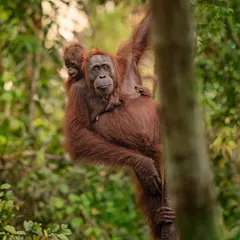
Setting aside half of Borneo would significantly reduce their decline, say experts.

Orangutan mothers use a range of techniques to teach their offspring up the age of five - but their tolerance for sharing their food only lasts so long.
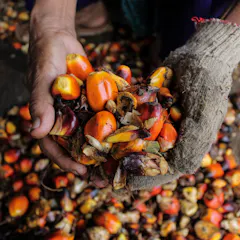
Palm oil is responsible for widespread deforestation and labor abuses, but it’s also cheap and incredibly useful. That’s why many advocates call for reforming the industry, not replacing it.
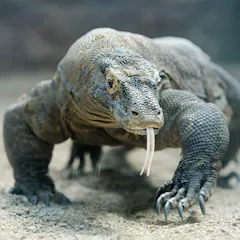
The lawsuit resembles earlier legal efforts to make tobacco companies remedy wrongdoing.
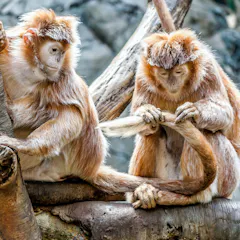
Without adequate information, we can’t prioritise efforts and funding to best protect our primate relatives.
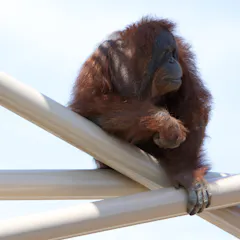
You wouldn’t think a kazoo could tell you much about the origins of language. But you’d be wrong.
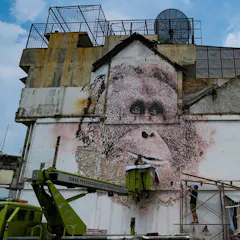
Banksy’s ‘boy in falling snow/pollution’ is part of a worldwide movement of artistic activism against environmental problems and climate change.
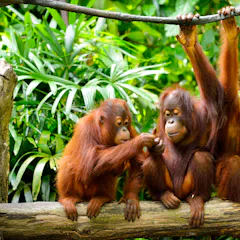
Discovering that orangutans can communicate about things that happened in the past provides new clues to how human language evolved.

Boycotting palm oil would increase production of other crops, such as soy, which actually require more land.

From LGBTQI rights to racial justice, companies are embracing the social issues that matter to their consumers. And, of course, that makes sense.
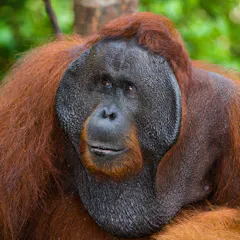
To save the orangutans we must both protect their forests and stop any hunting and killing within them.
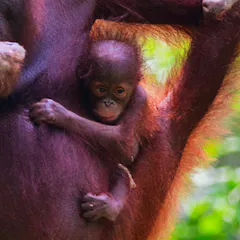
My holiday to Borneo in 2004 was more than just a chance to see incredible wildlife like orangutans and pygmy elephants. It helped crystallise for me the innate nature of scientific thinking.
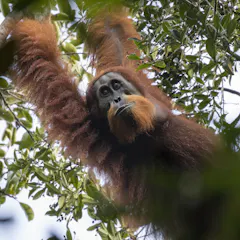
A group of fewer than 800 orangutans in northern Sumatra has been recognised as a new species - and they are already under threat from deforestation.
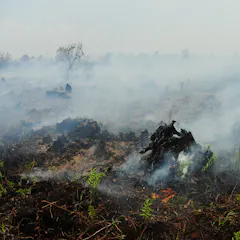
Indonesian peatlands are important to many people: farmers, bureaucrats, businesspeople, and conservationists. But preserving this value for everyone will mean listening to everyone’s concerns.
Top contributors
-

Marie Curie Fellow, School of Psychology and Neuroscience, University of St Andrews
-
Honorary Professor of Conservation, University of Kent
-
Professor of Primate Biology, Liverpool John Moores University
-
Full Professor of Sustainable Finance, Kedge Business School
-
Professor of Consumer Psychology, Anglia Ruskin University
-
Reader in Conservation Science, University of Kent
-
Professor of Bioanthropology, Australian National University
-
Lecturer, Humanities and Social Sciences, La Trobe University
-
Soil Scientist, Australian Centre for International Agricultural Research
-
Australian National University
-
Research Fellow, University of Oxford
-
Professor of Innovation and Entrepreneurship, Nottingham Trent University
-
Associate professor, University of Sydney
-
Associate Professor of Global History, Michigan Technological University
-
Professor, Australian National University