
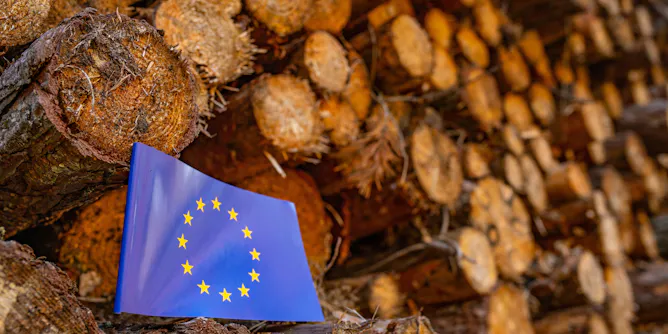
For the EUDR to succeed, this delay must serve as a catalyst for both political and practical reforms — unlocking meaningful progress for forests, farmers, and truly transparent, fair trade.
Articles on Palm oil
Displaying 1 - 20 of 63 articles

Academic publishing system often allows scientific errors to persist because it prioritises profit and prestige over timely correction.
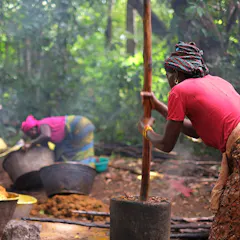
The often-heated and frequently misinformed debate on vegetable oils misses the real point.
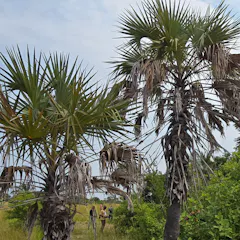
Palms play a vital role in food, culture and livelihoods. A new pan-African network aims to study, protect and conserve the continent’s unique and rare palm trees.
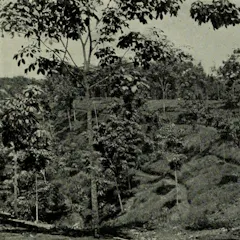
The world’s remaining great primary forests, including those in Borneo, the Amazon and the Congo basin, are still threatened by deforestation. This harmful practice often has colonial origins.

Without appropriate management, seaweed farming programmes could be dangerous for marine biodiversity and the benefits that humans get from the ocean.
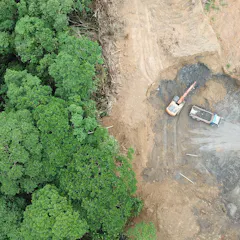
A recently published report sheds light on how 350 big companies and 150 financial institutions are falling behind with goals to halt and reverse deforestation.

Ultra-processed foods are bad for our health and our planet and must be central to any efforts to reduce our carbon emissions, and waistlines.
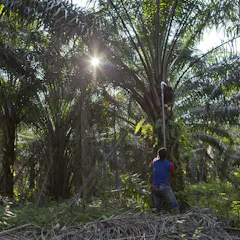
Palm oil is used in half the products sold in global supermarkets. Much of the oil comes from Indonesia where it is grown on plantations that are relatively inefficient, but occupy huge areas of land.

In recent years, Indonesia has slashed the rate of deforestation. That’s why this new crackdown on researchers is so surprising.
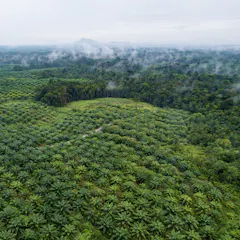
As a researcher of sustainability transition, I still believe we can create a more sustainable palm oil industry in Indonesia, where millions of small farmers rely on palm oil for their livelihood.
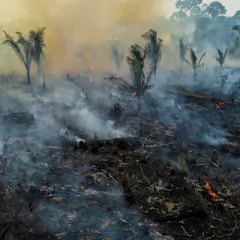
Brazilian President-elect Luiz Inácio Lula da Silva says he will end land clearance in Brazil’s Amazon region. But powerful forces profit from rainforest destruction.
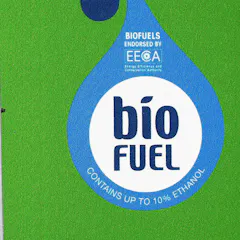
Biofuels are heralded as a climate-friendly replacement of fossil fuels, but encouraging people to drive less and shift to other modes of transport would cut more emissions.
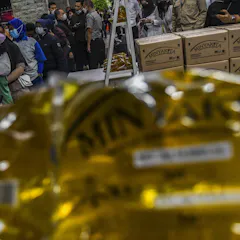
Indonesian government’s interventions in regulating prices and supplies for palm oil and its derivative products were short-lived and have instead created confusion.

Over the past two years, labour restrictions, climate change and violent conflict have contributed to the record-breaking high prices of vegetable oil around the world.
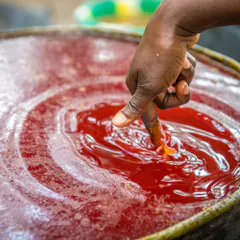
Palm oil is one of the 21st century’s most contentious agricultural commodities, but its relationship with humans goes back thousands of years.

More than 100 world leaders have pledged to end the destruction of forests by 2030 as a way to slow climate change. That will require changing how the world produces four widely used commodities.
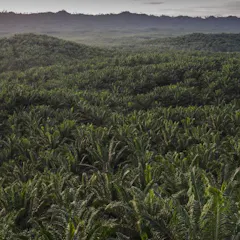
In South Sumatra, the 2015-2018 moratorium reduced the rate of peatland conversion by about 24% compared to the 2000s period.
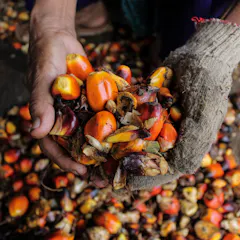
Palm oil is responsible for widespread deforestation and labor abuses, but it’s also cheap and incredibly useful. That’s why many advocates call for reforming the industry, not replacing it.
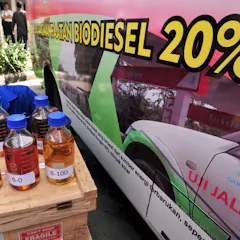
Green diesel may be intended to reduce emissions but it is not necessarily environmentally and socially sound.
Top contributors
-

Distinguished Research Professor and Australian Laureate, James Cook University
-
Honorary Professor of Conservation, University of Kent
-
Head of Business and Human Rights at Norwegian Centre for Human Rights, University of Oslo
-
Associate Professor of Geography and Environmental Studies, Texas State University
-
Professor, Faculty of Environmental Sciences and Natural Resource Management, Wageningen University
-
Emeritus Professor of Biotechnology, University of South Wales
-
Adjunct Associate Professor James Cook University and University Fellow Charles Darwin University, James Cook University
-
Indonesia Country Director dan Senior Scientist, Center for International Forestry Research – World Agroforestry (CIFOR-ICRAF)
-
Researcher and consultant on sustainability transition, Wageningen University
-
Lecturer, Humanities and Social Sciences, La Trobe University
-
PhD candidate, Earth System Science, Stanford University
-
Primatologue, Maitre de Conférence du Muséum National d'Histoire Naturelle au Musée de l'Homme et Vice-President de la Société Francophone de Primatologie (SFDP), Muséum national d’histoire naturelle (MNHN)
-
Researcher, International Institute for Environment and Development
-
Research Fellow, University of Oxford
-
Senior Lecturer, Environmental Soil Science, RMIT University