

Kris Jenner’s ‘new’ face sparked myriad headlines about how she can look so good at 69. It’s the latest iteration of our obsession with people who appear ageless.
Articles on Body image
Displaying 21 - 40 of 166 articles
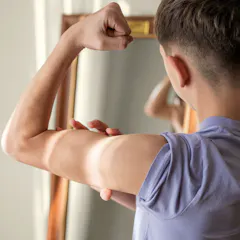
Muscularity oriented disordered eating refers to the disordered eating habits people may adopt in their drive to gain muscle and look lean.

If we are shown a lot of heavy bodies, the bodies we rate as attractive get heavier and the bodies we rate as “normal” get heavier.

What might be causing this heightened risk? There are probably several factors at play.

Do dating apps make you feel worse about yourself? A new review of 45 studies suggests that might be the case.

Research shows that many factors influence how social media can impact – positively and negatively – the wellbeing of young people. But the media and politicians often draw simpler conclusions.

Social media can bombard teenagers with all kinds of content that promotes unrealistic and often unachievable body standards.

Many people report eating as a way of helping them to cope when experiencing difficult emotions. Here’s what you can do about it.

Meta has announced third-party augmented reality filters will no longer be available on its apps as of January 2025. The removal comes far too late.

Health at every size promotes mindful eating and lifestyle behaviours to pursue health and wellness, without focusing on weight loss. Here’s how it compares to traditional weight-loss approaches.
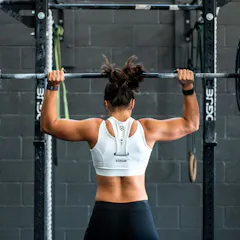
For many women, strength training is empowering, improving confidence and body image.

Our new study found watching just eight minutes of TikTok content focused on dieting, weight loss and exercise had an immediate negative effect on body image satisfaction for young women.

‘Body swapping’ may help people get a clearer idea of what their own bodies are really like.

Some people weigh themselves daily, while others have ditched scales altogether. So what does the evidence say?

A growing body of research points to links between social media use and mental health harms, but establishing clear cause and effect is difficult.
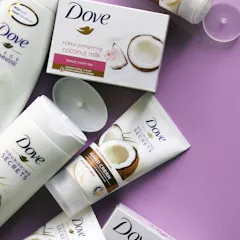
Beauty brand Dove hit the headlines for rejecting AI in its marketing – but there’s more to the claims than meets the eye.

Skinfold tests were once a staple of AFL fitness assessments, but are now banned for junior athletes. Is this a sign footballers have ‘gone soft’, or is there good reason for it?

A recent study showed encouraging people with obesity to interact with others more can keep them alive for longer.

Parents and other supportive adults can learn to recognize young people’s symptoms of disordered eating, which is a spectrum of unhealthy eating patterns and behaviour.

Adopting healthy behaviors and thought patterns around food and nutrition takes time and intentional effort. But it will lead to more lasting change and positive outcomes than quick-fix dieting will.
Top contributors
-

Clinical Psychologist and Senior Lecturer in Psychology, University of Canberra
-
Professor of Social Psychology, Anglia Ruskin University
-
Professor, Head of Body Image, Eating and Weight Disorders Research, Adelaide University
-
Emeritus Professor, School of Psychology and Public Health, La Trobe University
-
Research fellow, UNSW
-
Professor of Health Sciences, Adelaide University
-
Associate Professor in Health and Physical Education, Victoria University
-
Lecturer in Health Psychology, University of Staffordshire
-
Professor in Psychology, Durham University
-
Assistant Professor in the School of Social Sciences, University College Dublin
-
Assistant Professor of Psychiatry, University of Colorado Anschutz
-
Director, Master of Marketing, Swinburne University of Technology
-
Associate Professor of Marketing, Loyola University Chicago
-
Lecturer, University of Leicester
-
Professor of Psychology, University of North Carolina – Greensboro