

Brazil holds 12% of the world’s freshwater reserves and yet growing water insecurity reveals some of the country’s deepest sanitation inequalities, which are particularly relevant to Marajó, its largest coastal island.
Articles on Blue economy
Displaying 1 - 20 of 57 articles

Blue carbon involves more than just counting carbon. It requires governance, finance, policy, and practice. Ultimately, success hinges on people and their skills.
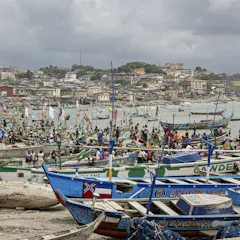
As ocean uses expand, it will be necessary to reduce disputes because they disrupt the environmental sustainability and equity central to a blue economy.

How to shift the ‘grey’ ocean economy that prioritises the unequal extraction of resources towards a ‘blue’ economy that benefits all.
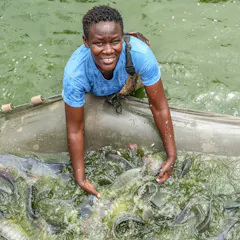
Africa’s small-scale aquaculture practitioners need cold storage facilities to stop their fish from going to waste.
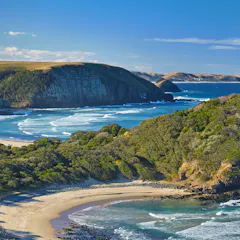
Millions of jobs could be created from sustainable economic ocean development.

The real challenge facing the Mauritian government is how to turn a diplomatic triumph into sustainable economic development.
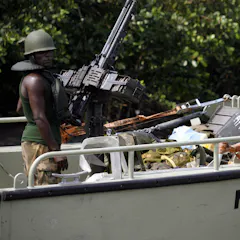
Instead of a winner takes all approach, Africa’s coastal countries should share contested resources.
Global ocean research needs to shift priorities to ensure the health and well-being of our oceans, and by extension, humanity.

The Scottish Association for Marine Science wants to better consider how its research could affect the ocean.

While they can travel vast distances, our research revealed reef manta rays in Raja Ampat live mostly within a relatively small underwater ‘town’ – which urgently needs better protection.
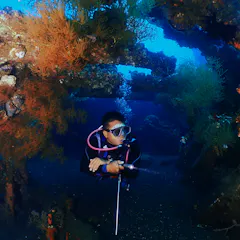
Shipwrecks and their cargo can be sites of conflict – but also opportunity.
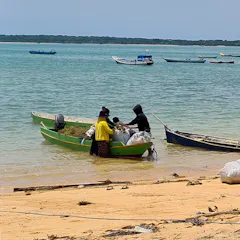
Instead of supporting Indonesia’s seaweed industry, an export ban could lower prices and reduce supply, without helping domestic processors to compete with foreign-owned companies.
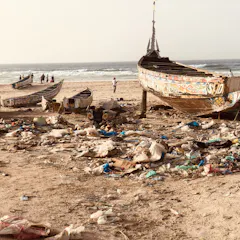
Initiating a circular economy can help coastal west African countries to address plastic pollution with a World Bank fund.
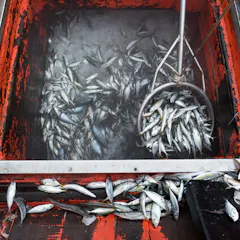
A new ocean treaty could redirect the unsustainable fishing practices that were happening on the high seas to coastal African nations.
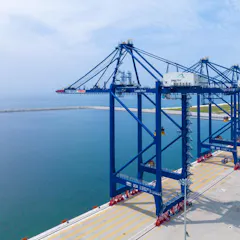
Nigeria’s new marine and blue economy ministry has promise but it must be well run.
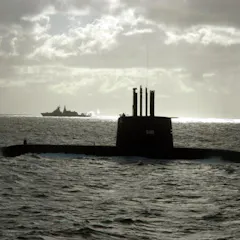
South Africa is a large peninsula on the strategic Cape sea route. Some 90% of its trade flows through its harbours. The navy defends the country’s sovereignty and national interests.
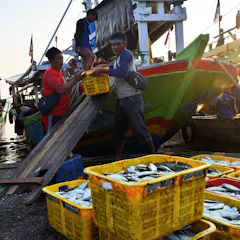
Local fishers with small boats have had little say in Indonesia’s marine and fisheries governance, despite their important roles in ocean protection.
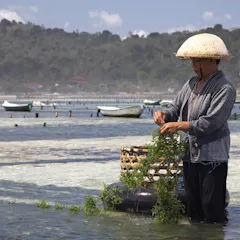
Our recent report identified how to make aquaculture – including shrimp and seaweed farming – more sustainable for Indonesians and for the environment.
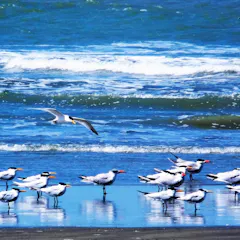
There is only a single mooring managed by French researchers that monitors the impacts of climate change on West African Canary Current.
Top contributors
-

Lecturer in Sustainable Futures, University of St Andrews
-
Professor, School of the Environment, The University of Queensland
-
Research Coordinator, Security Institute for Governance and Leadership in Africa, Stellenbosch University
-
Robert Bartlett Professor of Oceanography, Memorial University of Newfoundland
-
Professor in Economics and Director of the Centre for Blue Governance, UNESCO Chair in Ocean Governance, University of Portsmouth
-
Director of CORDIO in East Africa and Adjunct Fellow, Pwani University
-
Adjunct associate, Universitas Indonesia
-
Anthropologist, The University of Queensland
-
PhD Candidate in Oceans Law and Policy, University of Wollongong
-
Chief Executive Officer, Australian Institute of Marine Science
-
Professor, University of Wollongong
-
Principal and Vice Chancellor, Heriot-Watt University
-
Postdoctoral Researcher in Sustainability Science, Stockholm University
-
Chief Scientist and Research Chair for Inland Fisheries and Freshwater Ecology, South African Institute for Aquatic Biodiversity
-
Chair professor, University of Wollongong