
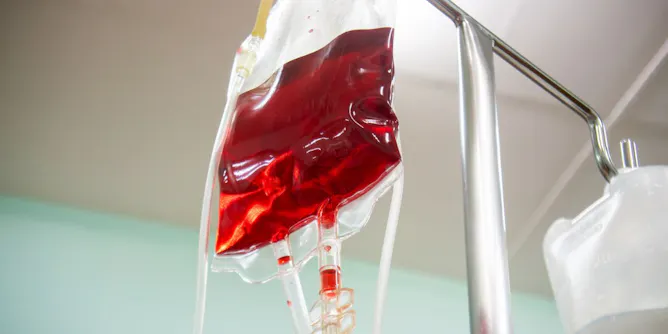
Thousands of Australians unwittingly contracted HIV and hepatitis C before donated blood was routinely tested. Could a new Senate inquiry mean fairer compensation?
Articles on Blood
Displaying 1 - 20 of 95 articles

Research shows acute psychological stress can rapidly alter blood clotting in healthy people.
Blood tests are helpful for monitoring your overall health. But research suggests they can also give us clues about the development of some cancers.
The condition has been nicknamed the ‘Celtic curse’ because it disproportionately affects people of Celtic ancestry.

A study of 38,000 adults identified blood protein signatures linked to higher mortality risk. They cannot predict death, but they could help guide earlier care.

Microplastics in your blood? Orlando Bloom thinks so. Here’s what the science says about detox, dialysis and whether “cleaning” your blood really works.

Chronic venous insufficiency is a disease of the veins, where blood doesn’t flow as well as it should from the legs up to the heart.
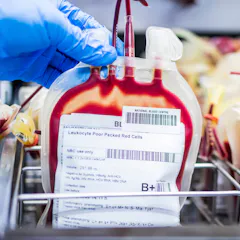
Scientists find 48th blood group in woman with no compatible donors.
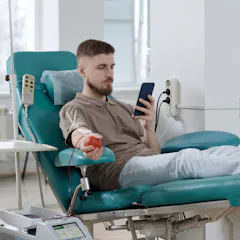
In the future, risk-assessments for whole blood won’t be based on sexual orientation.

The Australian Bureau of Statistics looked at concentrations of 11 types of PFAS, or ‘forever chemicals’, in our blood. Here’s what the results show.
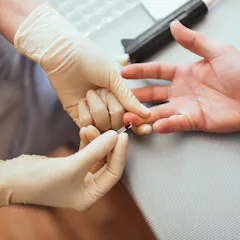
Biotech startup Haemanthus says it can detect illnesses with tiny amounts of blood, urine and saliva. Here’s why that’s more difficult than it sounds.
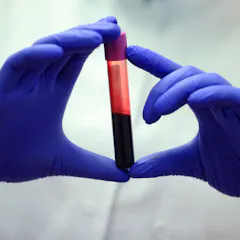
A narrower, more personalized ‘normal range’ could help doctors better diagnose and treat disease in individual patients.
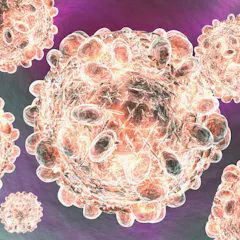
Hepatitis C can be cured but can be difficult to spot until it’s caused liver damage.
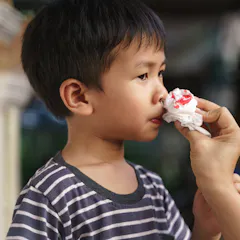
Our blood is red because of something called haemoglobin, which helps carry oxygen around our bodies.

If we need to use forensic techniques in space, we’ll need to understand how things behave differently in microgravity.

Scabs, ear wax and eye crusts might sound, and even look, gross but they do essential work keeping our bodies clear of infection
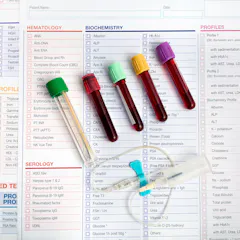
Your blood contains a wealth of information about the state of your health. Analyzing the levels of each component is an important part of diagnosis.
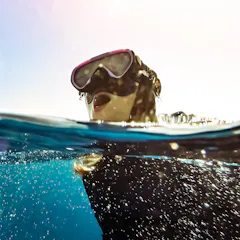
Inhaling air is how you get the oxygen your body needs to turn your food into energy. Other living things use different strategies.

Blood isn’t sterile, and analyzing the bacteria in it could help assess the health of fish and prevent the collapse of their populations.

Horseshoe crabs play a unique role in medicine, but they’re also ecologically important in their home waters along the Atlantic coast. Can regulators balance the needs of humans and nature?
Top contributors
-

Professor of Anatomy, Lancaster University
-
Associate Professor of Medical Sciences, University of Wollongong
-
Adjunct Professor, School of Public Health, University of Technology Sydney
-
Senior Research Officer, Blood Cells and Blood Cancer, WEHI (Walter and Eliza Hall Institute of Medical Research)
-
Senior Research Officer, Blood Cells and Blood Cancer Division, WEHI (Walter and Eliza Hall Institute of Medical Research)
-
Associate Professor of Health and Sport Science, University of Dayton
-
Associate Professor, Public Health Ethics, School of Population Health, UNSW
-
Senior Lecturer, The University of Melbourne
-
Adjunct associate professor, Monash University
-
Senior Lecturer & Deputy- Head of the Medical Education Research Quality Unit, School of Public Health and Preventive Medicine, Monash University
-
Lecturer, Queen's University Belfast
-
Associate Professor of Philosophy, Carleton University
-
Associate Professor of Sociology and Journalism, USC Annenberg School for Communication and Journalism
-
Visiting Assistant Professor of Philosophy, Franklin & Marshall College
-
Professor, School of Medicine, University of Connecticut