
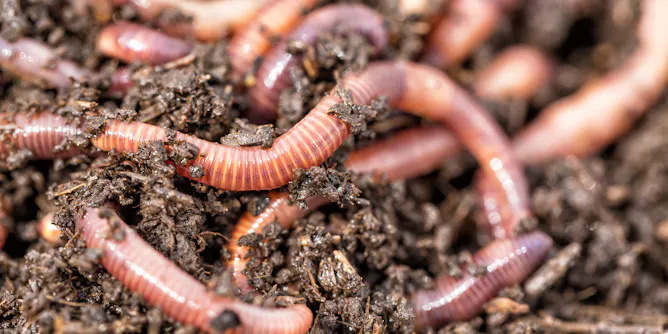
Pink blood, green blood, or no blood at all – when it comes to what’s inside a worm’s body, the answer is more complicated – and fascinating – than you’d think.
Articles on Blood
Displaying 41 - 60 of 95 articles
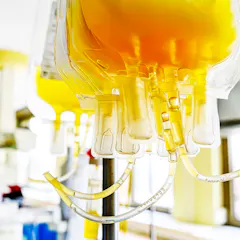
A potential shortage of crucial blood plasma highlights the case for paying Canadians for plasma donations, rather than continuing to import most plasma from the United States, where donors are paid.
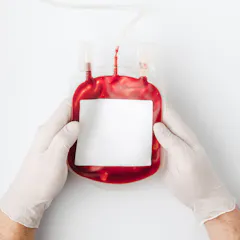
We’re full of blood – around five litres, on average.
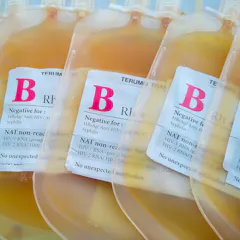
A century old therapy is being tested on patients with COVID-19.

A fetus needs oxygen long before its lungs work and it’s exposed to the air. Some ingenious biochemistry explains how the mother’s blood delivers it.

COVID-19 causes blood clots in some people. If these clots get into the lungs, brain or heart, they can cut off blood supply and oxygen, causing pulmonary embolisms, strokes or heart attacks.

Have you ever felt a piercing pain in your head when you eat something cold?
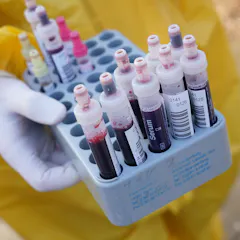
After your body fights off an infection, antibodies remain in your blood. Two researchers explain how tests identify these antibodies and what the data can be used for.
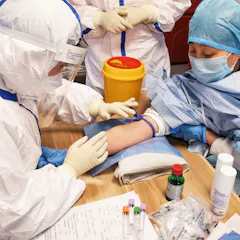
Before a vaccine is available to teach your immune system to ward off the coronavirus, maybe you can directly use molecules that have already fought it in other people.
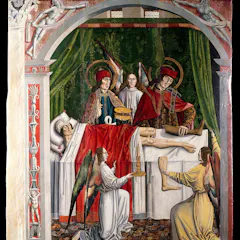
Grisly early experiments laid the foundation of our understanding of how to keep organs ‘alive’ in isolation.
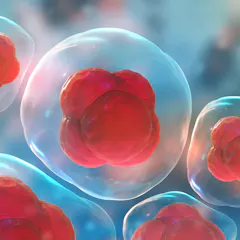
Our bodies are made up of cells that multiply to repair our organs. But organs like our liver and skin are better at regeneration than our brain.

We can answer this question by looking at the differences between the first, second and third layers of our skin.

Trying a new exercise routine? Strapping on a new wearable monitor? An expert in human physiology explains the ins and outs of your heart rate and why it’s a valuable number to understand.
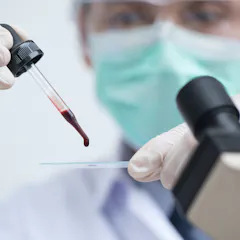
Every person’s blood is identified by type. Why does this matter?

The body tries to plug a wound quickly to stop germs getting in through broken skin and making you sick. But behind the scenes, your blood is working hard to repair a wound.

The white blood cells act as an army of fighting cells, protecting your body from bad cells known as germs. White blood cells can capture germs and even swallow them.

Most of the time, different parts of your nervous system work in balance. But sometimes things can get out of whack – and that’s when you might end up experiencing what medics call syncope.
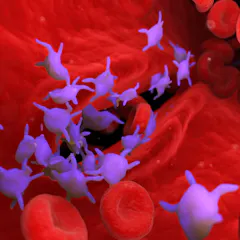
Platelets heal wounds. But they also seem to play a paradoxical role in both promoting and inhibiting the growth of solid tumors.
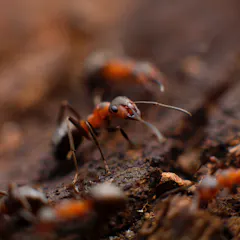
Ants have something similar to blood, but it’s called haemolymph. Some insects use it in unusual ways. When threatened by a predator, blister beetles can squirt haemolymph from their knees.
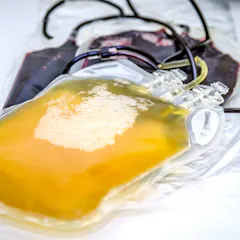
Canada suffers a shortage of vital blood plasma. Paying donors, through a non-profit like Canadian Blood Services, would secure a local supply without lining the pockets of corporate shareholders.
Top contributors
-

Professor of Anatomy, Lancaster University
-
Associate Professor of Medical Sciences, University of Wollongong
-
Adjunct Professor, School of Public Health, University of Technology Sydney
-
Senior Research Officer, Blood Cells and Blood Cancer, WEHI (Walter and Eliza Hall Institute of Medical Research)
-
Senior Research Officer, Blood Cells and Blood Cancer Division, WEHI (Walter and Eliza Hall Institute of Medical Research)
-
Associate Professor of Health and Sport Science, University of Dayton
-
Associate Professor, Public Health Ethics, School of Population Health, UNSW
-
Senior Lecturer, The University of Melbourne
-
Adjunct associate professor, Monash University
-
Senior Lecturer & Deputy- Head of the Medical Education Research Quality Unit, School of Public Health and Preventive Medicine, Monash University
-
Lecturer, Queen's University Belfast
-
Associate Professor of Philosophy, Carleton University
-
Associate Professor of Sociology and Journalism, USC Annenberg School for Communication and Journalism
-
Visiting Assistant Professor of Philosophy, Franklin & Marshall College
-
Professor, School of Medicine, University of Connecticut