

The traditional mode of publishing scientific research faces much criticism – primarily for being too slow and sometimes shoddily done. Maybe fewer publications of higher quality is the way forward.
Articles on Biomedical research
Displaying 41 - 59 of 59 articles

The recent NHMRC funding announcement has renewed criticism about how medical research is funded in Australia. Is the system fair? Or is it stacked against some researchers?

Regulations, funding and public opinion around genetically enhancing future generations vary from country to country. Here’s why China may be poised to be the pioneer.

The rise of personalised medicine, which is mainly based on genetic testing, needs adequate regulation so privacy rights aren’t breached. That’s only one of several issues that must be considered.
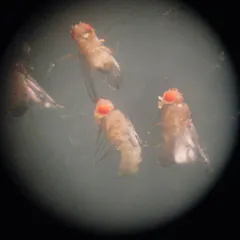
Fruit flies aren’t just a remarkable organism for research. They are also central to a project that aims to provide more at-home research opportunities for African scientists.

Human guinea pigs? On the occasion of Rennes drama, an explanation of what the drug trials in France and how they are controlled.

Meta-analyses that combine many different studies are the gold standard for medical evidence. But they are only as good research they examine.

Today’s medical students are tomorrow’s doctors, and they need to understand public health to better help their patients.

US row might suggest using feotal tissue is new - in fact it’s not only a long-held practice, but essential for many medical breakthroughs.

By forgetting that medicine postpones death rather than saving lives, we persuade ourselves it might somehow keep extending our life and come to view death as a failure of medicine.
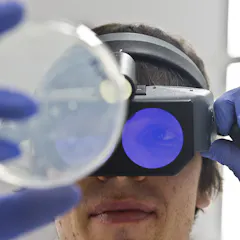
It’s been a great privilege to have been the head of NHMRC for going on a decade. That’s four governments, six health ministers, a funding increase from A$437 million in 2006 to A$859 million today.

Despite significant gains in gender equity over the last few decades, a bias still reigns in one area of medicine. The lack of female representation in both preclinical studies and clinical trials has…

Imagine being pregnant while having a chronic health condition such as diabetes, hypertension, depression or asthma, or being diagnosed with an illness while pregnant. Amazingly, your doctor may not know…
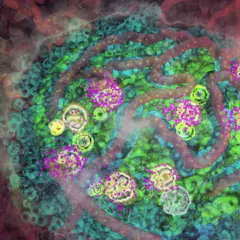
Telling science stories often involves explaining complex interactions between a cast of molecular “actors”, on a set smaller than the wavelength of light, so scientists are increasingly using animation…
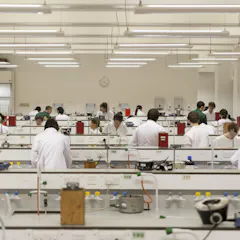
Med City was launched to great fanfare last week by the Mayor of London, Boris Johnson. Bringing together the powerhouses of academic and clinical research at UCL, Imperial, Kings, Oxford and Cambridge…

AUSTRALIA 2025: How will science address the challenges of the future? In collaboration with Australia’s chief scientist Ian Chubb, we’re asking how each science discipline will contribute to Australia…

A study recently published in the peer-reviewed journal PNAS (Proceedings of the National of Academy Sciences) shows that mice are poor models for human inflammatory diseases. The paper, which focused…

The reason we can see, taste and smell, and even why our heart races when we get excited or scared, can be explained by the actions of a family of “gatekeeper” proteins known as G protein-coupled receptors…

In 2009, medical editors from around the world gathered at a Peer Review Congress in Vancouver, Canada, to discuss, among other things, “ghost authorship” of medical research articles. Ghost authorship…
Top contributors
-

Membre du comité d'éthique de l'Inserm, Inserm
-
Associate Professor of Public Policy and Women's Studies, University of Michigan
-
Director of Translational Institute of Medicine (TIME), Queen's University, Ontario
-
Associate Professor of General Pediatrics, University of Florida
-
Professor of Obstetrics and Gynecology, Thomas Jefferson University
-
Senior Lecturer and Co-Director, Policy Ethics and Life Sciences Research Centre, Newcastle University
-
Research officer, Macquarie University
-
Professor of Physiology, Columbia University
-
Professor, Faculty of Law, University of Technology Sydney
-
Associate Professor, Dept of Global Health; Infectious Diseases Specialist, Boston University
-
Lecturer, Department of Zoology, University of Cambridge
-
Professor and NHMRC Investigator Fellow, Institute for Glycomics, Griffith University
-
Secretary-General, International Human Frontier Science Program Organisation; Emeritus Professor, Monash University, Monash University
-
Professor of Biological Sciences, University of Maryland, Baltimore County
-
Senior Research Manager, University of Sydney and Honorary Assistant Professor, Bond University