

Mainstream medical organizations have criticized ‘restorative reproductive medicine,’ but some Catholics who follow church teachings consider it a welcome alternative.
Articles on Biomedical ethics
Displaying 1 - 20 of 28 articles
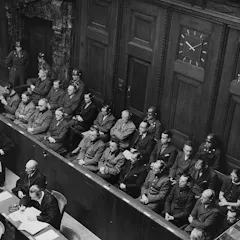
The Nuremberg Code was developed during trials for Nazi officials accused of performing inhumane experiments − but its influence has been far wider.
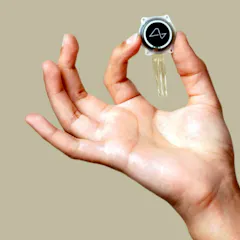
The technology to link human brains with computers is developing quickly – but the path ahead is full of challenges.
Hospital ethics committees and consultants do not make decisions for others, but their input can help support doctors and patients navigate difficult dilemmas.
At the Third International Summit on Human Genome Editing, experts gather to discuss the path forward for CRISPR and other gene-editing technologies
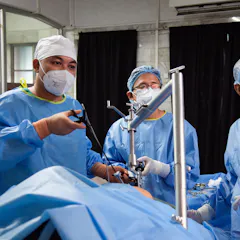
A team of doctors and academics worked together on back-to-basics surgical equipment that is already changing lives.

A bioethicist explains the four ethical principles that guide medical practitioners’ thinking about abortion, such as autonomy and justice.
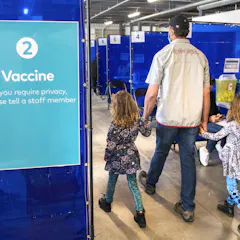
When making the decision whether to vaccinate children aged five to 11 against COVID-19, regulators in Canada must rely on sound ethics as well as sound science.
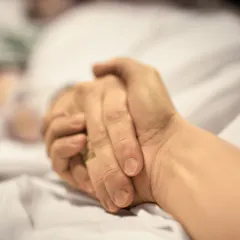
The case for letting people go gentle into that good night.

Medical research to benefit people is first conducted in animals. Creating a new biomedical model by inserting human immune cells into pigs may lead to new insights and treatments.
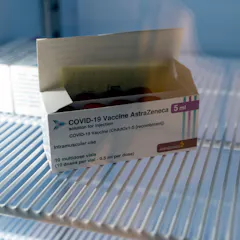
Underlying medicines ‘do no harm’ principle is a deeper claim that it is worse to do harm than to allow harm to happen.
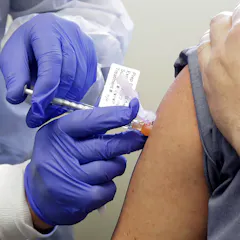
Conventional trials to test coronavirus vaccines are paradoxically slowed down by actions to curb the disease’s spread. Human challenge trials are more controversial, but could speed up the process.
Trying to maximise lives saved will inevitably be contentious and imperfect.

Predicting life expectancy remains in the realm of science fiction, but it may soon be possible. Are we prepared for such information? And who else would benefit from this knowledge?

Yes, there are pros and cons of this new reproductive technology. But there are many other issues about maternal and child health we need to tackle first.
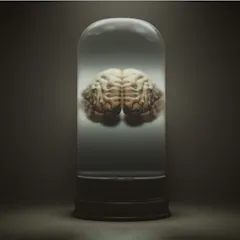
We worry about AI developing consciousness, but brain organoids may be more likely to do so.
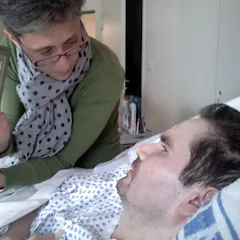
The pope, presidents and parents can voice their opinion on right-to-die cases, but they shouldn’t get to decide.

CRISPR babies may be just the beginning. China has a different take than the West on ethics and how to get ahead in business and other endeavors.
A team in the U.S. is said to have safely and effectively altered human embryos. The news is a reminder that citizens must be consulted on developments potentially affecting the future of the species.
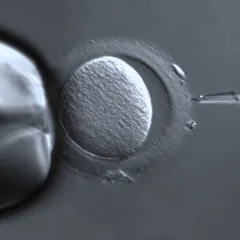
The news may have come as a surprise, but it probably shouldn’t have. A bioethics expert walks through how big a deal this announcement is – and what we should be considering now.
Top contributors
-

Associate Professor of Law (Health Law), Deakin University
-
Chen Su Lan Centennial Professor in Medical Ethics, National University of Singapore; Distinguished Visiting Professor in Law, University of Melbourne; Uehiro Chair in Practical Ethics, The University of Melbourne
-
Consultant Neonatologist and Professor of Ethics, University of Oxford
-
Emeritus Professor of Law, University of Tasmania
-
Research Fellow in Ethics, The University of Melbourne
-
Ph.D. Student in Electrical Engineering, University of Washington
-
Wellcome Trust Research Fellow in Philosophy, University of Oxford
-
Professor, Faculty of Law, University of Technology Sydney
-
Assistant Professor in Biomedical Ethics, National University of Singapore
-
Distinguished Research Professor, Emerita, Dalhousie University
-
Assistant Professor of International Relations, Rutgers University - Newark
-
Assistant Professor of Christian Ethics, Villanova University
-
Clinical research fellow in global surgery, University of Leeds
-
Senior Lecturer in Philosophy of Public Health, University of Cambridge
-
Law Dean; Professor of Law; and Professor of Bioethics & Public Health, Case Western Reserve University