
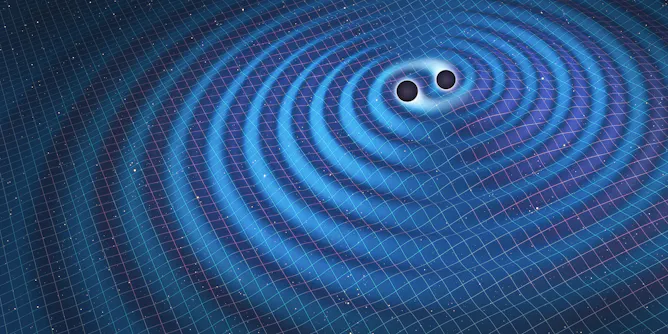
A decade after the first discovery, scientists have used these waves to find a unique merger, a massive binary system and a crystal-clear gravitational wave signal.
Articles on Binary stars
Displaying all articles
It takes a supercomputer weeks to output the properties of one stellar binary. A new study shows AI can do it in a fraction of the time.
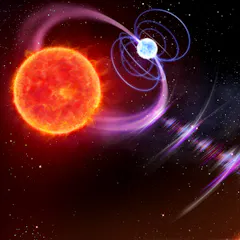
Recently, astronomers have been puzzled by an unknown type of cosmic radio signal. A new breakthrough has finally traced one of them.
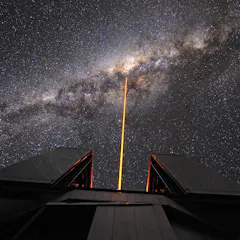
The discovery helps explain a long-running cosmic mystery about why some stars hurtle through space much faster than others.
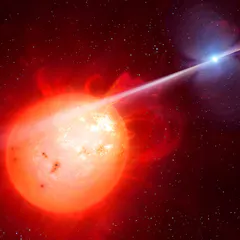
By searching sparsely populated regions of the galaxy, astronomers have for the first time found the source of a kind of signal that has puzzled them for years.
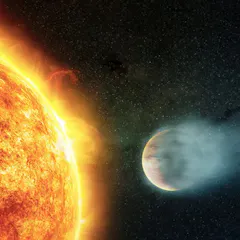
There are several ways in which stars can destroy and swallow their own planets.
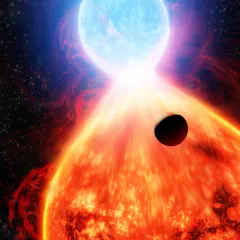
The planet Halla looks like it should have been devoured by its host star, a red giant called Baekdu – but a secret in the star’s past may hold the answer to the planet’s present.
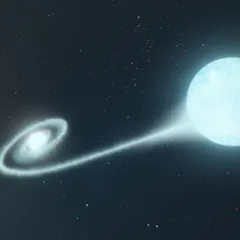
Our Sun will likely go out quietly – but not all such stars do. A new radio detection of a supernova can help us better understand these cosmic cataclysms.
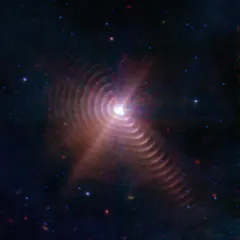
The binary star WR140 is surrounded by an astonishing array of nested shells of dust swirling into space.
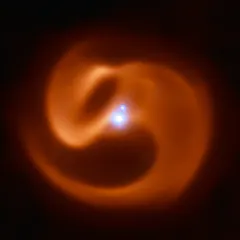
Surprising findings on an exquisite and huge star system in our Milky Way suggest future potential for an extremely rare gamma-ray burst. This event has never been observed in our galaxy.
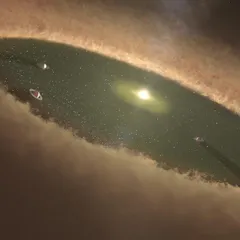
Why isn’t there an endless variety of planets in the universe? An astrophysicist explains why planets only come in two flavors.

Radio flare may be the result of a giant star orbiting some unusual object – a combination we have never seen before.

The signal came in on ANZAC Day, ripples in space-time from the merger of two neutron stars an estimated 500-million light years away. But where it happened is still a mystery.
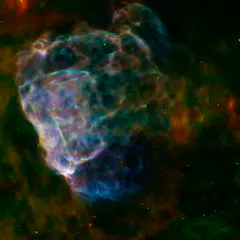
A massive star, with a radius 500 times that of our sun, exploded. But the supernova fizzled – it was weak and dim. Figuring out what went wrong led to insights about how rare binary star systems form.
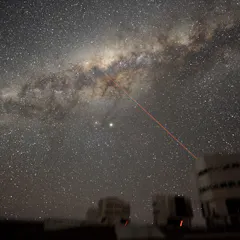
A cosmological event could have unleased the huge comet or asteroid that led to the demise of the dinosaurs.
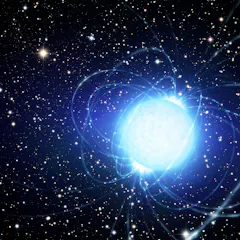
Magnetars are stars that are incredibly dense, rapidly spinning, amazingly hot and – as their name suggests – are the most magnetic objects known in the universe. The magnetic field on the surface of a…
Top contributors
-

Astrophysicist, University of Sydney
-
Senior Curator (Astronomy), Museums Victoria Research Institute; The University of Melbourne
-
Graduate student of Astronomy, California Institute of Technology
-
Planetary Astrophysicist, Assistant Professor, Louisiana State University ; Arizona State University
-
Dean of Science, University of California, Santa Cruz
-
Adjunct Fellow, School of Mathematical and Physical Sciences, Macquarie University
-
Postdoctoral Researcher in Astronomy, Stockholm University
-
Postdoctoral Researcher in Radio Astronomy, University of Sydney
-
Professor, Monash University
-
Research fellow, The University of Western Australia
-
Professor, Radio Astronomy, University of Sydney
-
Astronomer, University of Sydney
-
Associate Professor of Astrophysics, University of Portsmouth
-
Radio Astronomer, Curtin University
-
Senior Lecturer in Physics, Western Sydney University