

Signs in languages other than French could be seen as an outstretched hand in yet another episode of linguistic tensions, but also as an indicator that French is indeed losing ground.
Articles on Bilingualism
Displaying 41 - 60 of 112 articles
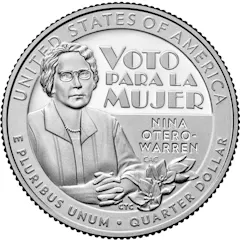
As a women’s rights activist, Nina Otero-Warren fought for the right for women to vote in New Mexico. Now, her image is featured on the US quarter.

Ukrainian language education in the Canadian Prairies was shaped by shifting policies governing non-English immigrant settler language instruction in a larger settler colonial context.

Non-standard ways of speaking are often deemed inferior, affecting schooling, social lives and job prospects.

For most Québec residents, there is broad consensus that French should be protected. But many of us believe that multilingualism need not threaten French.

The federal government must appeal this ruling — not because it disagrees with it, but because such a consequential decision requires greater appreciation of the Crown and its constitutional nuances.

Linguistic rights are human rights that apply to majorities and minorities alike, not just at the discretion of those who hold power.

Following the Sept. 20 federal election, an important question must be asked: How is the Canadian electoral process accommodating the country’s increasing linguistic diversity?

Computational modeling can predict language therapy response in bilingual people with aphasia. In the future, this could help clinicians identify the best language for treatment.

Which languages get to “count” as bilingual in Canada? And who gets to be the “right” kind of bilingual?
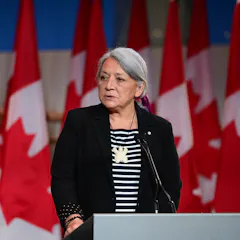
Being Canada’s next governor general will be Mary Simon’s most challenging diplomatic mission yet.

Experts disagree on what makes someone truly bilingual, and how the human brain accesses multiple languages.

Pitting the representation of historically marginalized groups on the Supreme Court against another constitutionally protected minority — Canada’s francophones — is a misguided race to the bottom.

The federal government’s ambitious new plan to modernize the 51-year-old Official Languages Act is the most significant proposal on the status of French in Canada since 1982.

A recent survey reveals a general uneasiness about using French among both francophone and anglophone public servants in administrative regions where bilingualism is required.

Studies of bilingualism show that accents and vocabulary can change depending on your circumstances.

There are plenty of reasons why our road signs should be in both te reo Māori and English. And no, bilingual signs don’t cause accidents.

Why the benefits of bilingualism aren’t consistent.

Gaelic speakers need opportunities to use their language in a wide variety of social and everyday settings to avoid its presence being eroded.

The benefits of a bilingual education are huge.
Top contributors
-

Full Professor, Research Chair in Language Rights, Faculty of Law | Professeur titulaire, Chaire de recherche Droits et enjeux linguistiques, Faculté de droit, L’Université d’Ottawa/University of Ottawa
-
Associate professor, Universidad Nebrija; UCL
-
Professor of Linguistics and English Language, Lund University
-
Reader in Linguistics (Bilingualism), Bangor University
-
Professor Emerita, Department of Teaching and Learning, Stockholm University
-
Vice-Dean and Full Professor, Common Law Section, L’Université d’Ottawa/University of Ottawa
-
PhD Student, Interdisciplinary Studies, University of New Brunswick
-
Senior Lecturer in the School of Languages and Applied Linguistics, The Open University
-
Senior lecturer, University of Technology Sydney
-
PhD Candidate, Faculty of Law, L’Université d’Ottawa/University of Ottawa
-
Professor of Linguistics, University of York
-
Professor of African Language Studies, University of the Western Cape
-
Senior Lecturer in Linguistics (Bilingualism), Bangor University
-
Associate professor, Department of Political Science / Professeure agrégée, Département de science politique, Queen's University, Ontario
-
Profesor Asociado (Lingüística Aplicada), Universidad Nebrija