

As Canada’s French language teachers flee the profession, online Professional Learning Communities promise to reverse this trend, stimulating creativity, camaraderie and leadership.
Articles on Bilingualism
Displaying 81 - 100 of 112 articles

A bilingual future is in Wales’s best interests.

Research shows many concepts are best learned in the language that the learner understands.

Learning languages rewires the brain and changes how we perceive time.

Turns out the way you are exposed to new languages could be the key.

Textbooks in sufficient quantities are effective in improving the quality of education but in Africa language poses a problem to how pupils interact with the material they are taught.

English-speaking rugby referees are aiming to improve their foreign language skills – but how will this affect the game?

For bilingual children, the constant switching between languages is like a frequent exercise for the ears and the brain.

Schools and universities in post-colonial contexts still operate within the logic of coloniality. This is starkly illustrated by their language policies.

Researchers have found that some individuals have a ‘language aptitude,’ which depends on how their brain is organized.

People who speak two or more variations on a language get the same cognitive benefits as multilingualists.

The EU may claim it is “united in diversity” but the reality is very different.

Research suggests that bilinguals have less insight into the way they perform tasks than people who only speak one language.

Research shows babies begin to learn language sounds before they’re even born. What about babies who hear two languages from birth? Can a baby brain specialize in two languages?
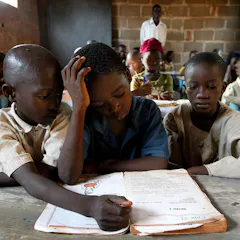
There are many layers of complexity at play in the way that South African schools use and teach languages.

More Indians are fluent in the hybrid of Hindi and English than they are in English.

Parents shouldn’t be concerned if their bilingual child is slower to develop their vocabularly, because in most cases this is just a temporary lag.

People growing up with two or more languages have social and cognitive advantages.

Bilingual children’s progress in learning vocabularly depends on their parents.

India has learned valuable lessons about language and bodies of knowledge that could be applied in South Africa’s universities.
Top contributors
-

Full Professor, Research Chair in Language Rights, Faculty of Law | Professeur titulaire, Chaire de recherche Droits et enjeux linguistiques, Faculté de droit, L’Université d’Ottawa/University of Ottawa
-
Associate professor, Universidad Nebrija; UCL
-
Professor of Linguistics and English Language, Lund University
-
Reader in Linguistics (Bilingualism), Bangor University
-
Professor Emerita, Department of Teaching and Learning, Stockholm University
-
Vice-Dean and Full Professor, Common Law Section, L’Université d’Ottawa/University of Ottawa
-
PhD Student, Interdisciplinary Studies, University of New Brunswick
-
Senior Lecturer in the School of Languages and Applied Linguistics, The Open University
-
Senior lecturer, University of Technology Sydney
-
PhD Candidate, Faculty of Law, L’Université d’Ottawa/University of Ottawa
-
Professor of Linguistics, University of York
-
Professor of African Language Studies, University of the Western Cape
-
Senior Lecturer in Linguistics (Bilingualism), Bangor University
-
Associate professor, Department of Political Science / Professeure agrégée, Département de science politique, Queen's University, Ontario
-
Profesor Asociado (Lingüística Aplicada), Universidad Nebrija