
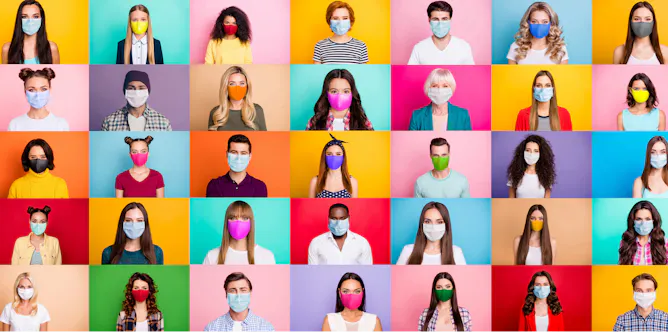
Wearing face masks hides our facial expressions and affects our social interactions. They make it harder for us to read facial expressions and can contribute to racist perceptions.
Articles on Bias
Displaying 121 - 140 of 220 articles
Though hypocrites seemingly relinquish their moral authority, the trial against Socrates shows us that our favoritism for public figures is stronger than our judgments of their hypocrisy.
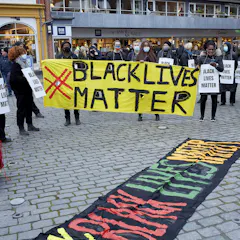
The death of Phillip Mbuji Johansen highlights how courts fail to consider entrenched racial biases when they assess what amounts to ‘intent’.

Women and people of color continue to appear on ballots less often than white men, and that, in part, is due to concerns by American voters that others will not view these candidates as electable.

No news isn’t necessarily good news. News is powerful, and helps us to stay connected and informed. But it’s important we regulate our news consumption - particularly during times of crisis.

The gender gap in computing performance has dramatically narrowed, but a confidence gap remains.

White people are often defensive when they’re called out for these subtle snubs and insults. But researchers have found that microaggressions correlate with racial bias.
Why are women and people of colour under-represented in politics? Part of the problem is strategic discrimination, or concern about other people’s biases.

Irrational behaviour during difficult circumstances is rooted in deeper cognitive and evolutionary psychological mechanisms. Many reflect what are called emergency decision and purchasing contexts.

Just because YouTube recommends a video doesn’t mean it has medically valid information.
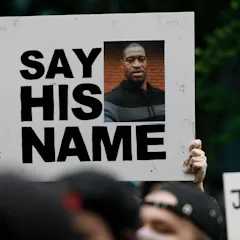
Half a century after the federal government voided Jim Crow laws, the criminal justice system still discriminates against African Americans.
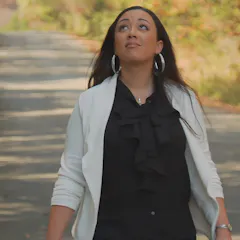
Dan Birman, director of the new Netflix feature documentary ‘Murder to Mercy: The Cyntoia Brown Story,’ discusses his filmmaking process and the importance of the case.

Involving family and friends in decisions or rethinking the meaning of “getting back to normal” helps protect against cognitive bias and its harmful consequences.
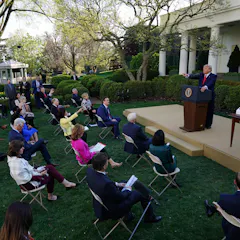
Though political elites complain about what the media covers, and how they cover it, research shows that ideological bias among media outlets is largely nonexistent.

Researchers and public health officials still don’t know how widespread nor how deadly the coronavirus really is. Random testing is a way to quickly and easily learn this important information.
As the 2020 elections near and disinformation campaigns ramp up, an expert on media literacy offers advice you can use to develop habits to exert more conscious control over your news intake.

Is making sense of a story more important than getting at its truth? Looking at the treatment of myth in ancient Greece may help us navigate what is true, and whether that matters.
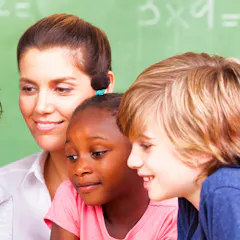
Becoming friends with classmates from different backgrounds can help people reject negative stereotypes. And teachers are able to help make that happen.
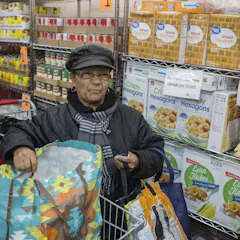
An often invisible force is undercutting support for policies that help Americans facing economic hardship.
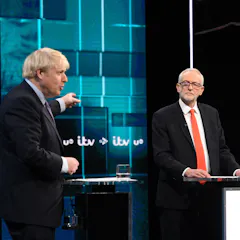
Factchecking became politicised during UK election campaign. But what does it really add to public awareness?
Top contributors
-

Ph.D. Candidate in Psychology, Northwestern University
-
Professor of Economics and Education Policy, New York University
-
Senior Lecturer in the School of Psychology, University of Lincoln
-
Professor of Marketing and Everett W. Lord Distinguished Faculty Scholar, Boston University
-
Professeur de Sciences Comportementales, membre du groupe de recherche CNRS-GREGHEC, HEC Paris Business School
-
Associate Professor of Communication, University of Utah
-
Professor of Informatics and Computer Science, Indiana University
-
Yale University
-
Assistant Professor of Psychology, University of Georgia
-
Senior Research Fellow, Melbourne School of Psychological Sciences, The University of Melbourne
-
Visiting Professor, Graduate School of Public & International Affairs and the Faculty of Law, L’Université d’Ottawa/University of Ottawa
-
Assistant Professor of Educational Psychology, The University of Texas at San Antonio
-
Associate professor, Psychiatry, Western University
-
Associate Professor of Computing and Information, University of Pittsburgh
-
Associate Professor of Education, University of Southern California