
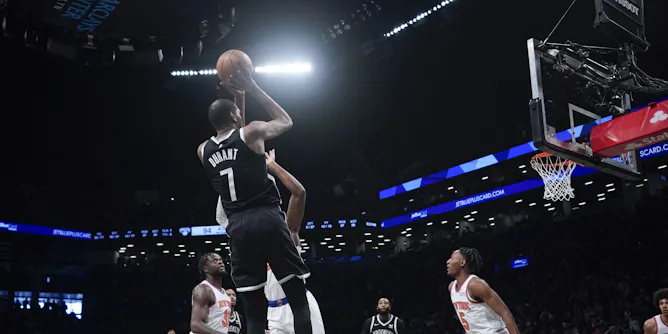
A study shows that a select group of NBA players really do go on hot streaks by making more shots in a row than statistics suggest they should.
Articles on Bias
Displaying 101 - 120 of 220 articles
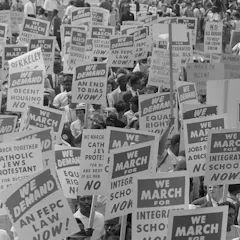
A new book argues that bias is at the root of many social divisions and inequalities, but remains optimistic about our capacity to change.
Finding out what goes on behind jury decisions and the biases that influence them is hugely important if the criminal justice system is to work properly.

Anchoring bias meant we found it hard to get rid of the first bit of information we heard.

Instead of assuming that science skeptics are motivated by ignorance, or selfishness, we should listen to them and try to understand and address their actual concerns.
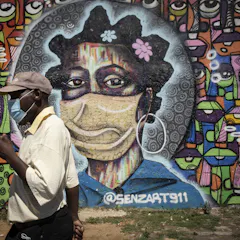
It was the biases of its ‘first world’ which prevented South Africa from mobilising the energies and talents of most of its people against COVID-19.

It’s human nature to unconsciously rely on quick rules to help make spur-of-the-moment decisions. New research finds physicians use these shortcuts, too, which can be bad news for some patients.
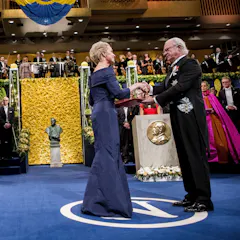
Science fields are improving at being more inclusive. But explicit and implicit barriers still hold women back from advancing in the same numbers as men to the upper reaches of STEM academia.

Undergraduate programs are springing up across the US to meet the burgeoning demand for workers trained in big data. Yet many of the programs lack training in the ethical use of data science.
Politicians of all stripes, computer professionals and even big-tech executives are calling on government to hit the brakes on using these algorithms. The feds are hitting the gas.

There’s plenty to critique about sorority culture. But going after Southern accents is punching down.

How we read messages is as important as what we write when it comes to happy workplace relations – especially in lockdowns or when working from home.

The motives and biases behind our actions shape how we see the world and everything in it. Understanding our biases means we can contain their negative influence and advance justice in our society.
The accusation of bias is like kryptonite for responsible news organizations: the stronger their piety to the ideal of objectivity, the more vulnerable they are to complaints made in bad faith.
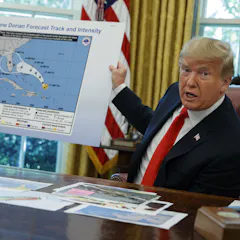
Politics always influences what questions scientists ask. Their intertwined relationship becomes a problem when politics dictates what answers science is allowed to find.

New research found colour played a major role skewing researcher bias — pretty, vibrant flowers get more scientific attention than dull plants, regardless of their ecological significance.
The concept that journalists should be objective is outdated and impossible. Instead, good reporters use life experiences to ask fresh questions.
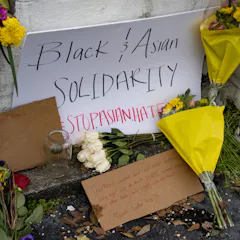
Bias-motivated attacks became a distinct crime in the 1980s. But police investigate only a fraction of the roughly 200,000 hate crimes reported each year – and even fewer ever make it to court.
Whenever you hear about a new bit of science news, these suggestions will help you assess whether it’s more fact or fiction.
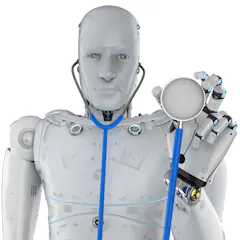
Some AI systems make faulty assumptions about women and nonwhite men, which can lead to misdiagnoses. Overcoming this bias takes legal, regulatory and technical fixes.
Top contributors
-

Ph.D. Candidate in Psychology, Northwestern University
-
Professor of Economics and Education Policy, New York University
-
Senior Lecturer in the School of Psychology, University of Lincoln
-
Professor of Marketing and Everett W. Lord Distinguished Faculty Scholar, Boston University
-
Professeur de Sciences Comportementales, membre du groupe de recherche CNRS-GREGHEC, HEC Paris Business School
-
Associate Professor of Communication, University of Utah
-
Professor of Informatics and Computer Science, Indiana University
-
Yale University
-
Assistant Professor of Psychology, University of Georgia
-
Senior Research Fellow, Melbourne School of Psychological Sciences, The University of Melbourne
-
Visiting Professor, Graduate School of Public & International Affairs and the Faculty of Law, L’Université d’Ottawa/University of Ottawa
-
Assistant Professor of Educational Psychology, The University of Texas at San Antonio
-
Associate professor, Psychiatry, Western University
-
Associate Professor of Computing and Information, University of Pittsburgh
-
Associate Professor of Education, University of Southern California