

People who object to affirmative action were more likely to discriminate against job candidates with Black-sounding names than those who supported it, whether or not they had to rush.
Articles on Bias
Displaying 61 - 80 of 220 articles

Potential inaccuracies in CDC high school surveys may have created an exaggerated perception that LGBQ youth engage in risky behaviors, new research shows.
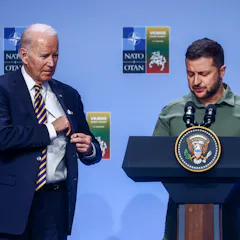
An analysis of over 1,000 headlines shows key differences in how US media portray the aggressors and victims in the two conflicts.

Far from a touchy-feely community, research shows online platforms such as Airbnb tend to strengthen users’ narcissism and class biases.

Creating bias-free AI systems is easier said than done. A computer scientist explains how controlling bias could lead to fairer AI.
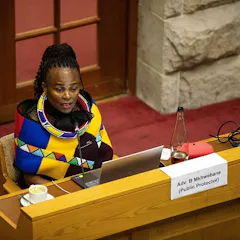
Past controversies and their impacts show how important it is to make the right appointment to the position.
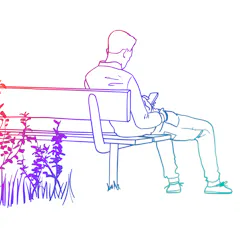
New research shows that frequent posters appear needy, which pushes up against the expectation that ‘real men’ be stoic and self-sufficient.

Regardless of the input, AI image generators will have a tendency to return certain kinds of results. This is where the potential for bias arises.

A survey of nearly 900 politicians in Germany, Switzerland, Belgium and Canada reveals that they systematically overestimate their electorate’s conservatism on a range of issues.
Unlike a human editor, AI cannot explain their decisions or reasoning in a meaningful way. This can be a problem in a field where accountability and transparency are important.

Public data about individual donors’ political contributions supports the perception that American academia leans left.

Companies that want to avoid the harms of AI, such as bias or privacy violations, lack clear-cut guidelines on how to act responsibly. That makes internal management and decision-making critical.

Software you may already use every day can track your productivity for your employer.

Teachers judged the same math work differently based on whether the work was associated with male or female names.

We can now store information outside of our brains, and use computers to retrieve it. That ought to make learning and remembering easy, right?

Understanding how hiring managers evaluate candidates can help us understand current hiring prejudices and, hopefully, help us overcome them.

People tend not to think that their own emotions could simply be wrong. But research shows that people excessively dislike others who disagree with them.

From Aristotle to Darwin, inaccurate and biased narratives in science not only reproduce these biases in future generations but also perpetuate the discrimination they are used to justify.
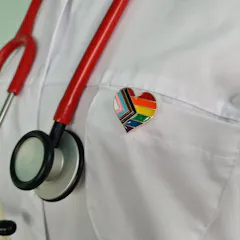
Though some LGBTQ+ health care providers may try to separate their personal and professional identities, the prejudice they experience highlights their queerness in the clinic.

After decades of effort to reduce discrimination in the workplace, a cultural change may be happening that will enable people to move past their unconscious biases.
Top contributors
-

Ph.D. Candidate in Psychology, Northwestern University
-
Professor of Economics and Education Policy, New York University
-
Senior Lecturer in the School of Psychology, University of Lincoln
-
Professor of Marketing and Everett W. Lord Distinguished Faculty Scholar, Boston University
-
Professeur de Sciences Comportementales, membre du groupe de recherche CNRS-GREGHEC, HEC Paris Business School
-
Associate Professor of Communication, University of Utah
-
Professor of Informatics and Computer Science, Indiana University
-
Yale University
-
Assistant Professor of Psychology, University of Georgia
-
Senior Research Fellow, Melbourne School of Psychological Sciences, The University of Melbourne
-
Visiting Professor, Graduate School of Public & International Affairs and the Faculty of Law, L’Université d’Ottawa/University of Ottawa
-
Assistant Professor of Educational Psychology, The University of Texas at San Antonio
-
Associate professor, Psychiatry, Western University
-
Associate Professor of Computing and Information, University of Pittsburgh
-
Associate Professor of Education, University of Southern California