
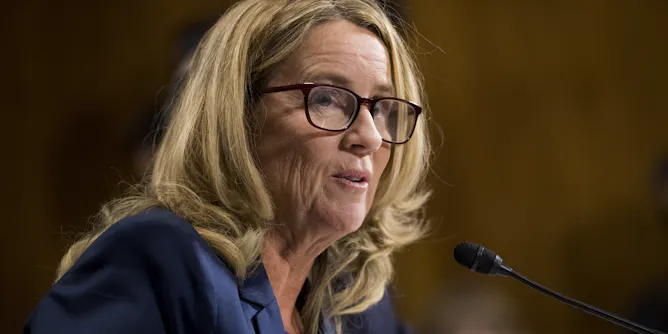
Women, like men, are susceptible to bias when it comes to defending those in their ‘in-group’ from accountability for sexual assault.
Articles on Bias
Displaying 161 - 180 of 220 articles
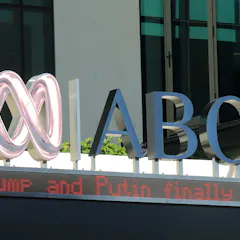
After a dramatic week at the ABC that sees them without a permanent managing director nor a chair, there remain serious questions about government interference and the broadcaster’s independence.
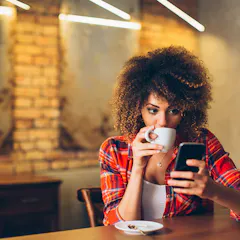
A new study suggests perceptions of how strongly people of color identify with their race can have a big impact on their job prospects and how much money they earn.
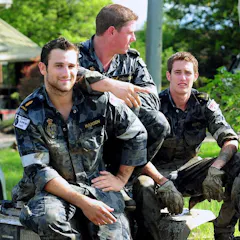
While many military veterans do well on campus, not everyone feels welcome or their views matter. Here’s what universities can do better.
The public broadcaster tries to cater to all views, but sometimes that’s a dangerous strategy.
More interracial couples are appearing on TV and in advertising. But is media exposure enough to change attitudes?
It’s a psychological quirk that when something becomes rarer, people may spot it in more places than ever. What is the ‘concept creep’ that lets context change how we categorize the world around us?
Our neural circuits lead us to find comfort in those like us and unease with those who differ, resulting in a battle between reward and distrust. But these brain connections aren’t the end of the story.
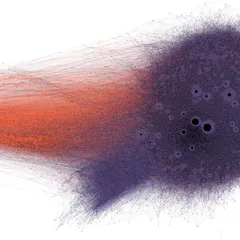
Information on social media can be misleading because of biases in three places – the brain, society and algorithms. Scholars are developing ways to identify and display the effects of these biases.

Starbucks is implementing implicit bias training for its employees in the United States and Canada. Even though we are not aware implicit biases, they lead to discriminatory behaviours.
It can be unpleasant to be mistaken for someone of a different gender. When an algorithm does it secretly, it’s even more concerning – especially for transgender and gender-nonconforming people.
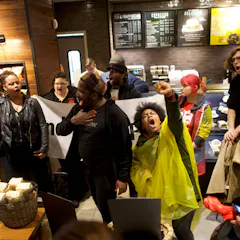
Starbucks is giving this training to its employees, but it’s still so new that there’s no standard format and little research yet on whether it’s effective.
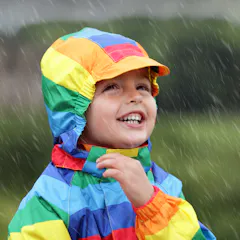
Human beings seem to be born wearing rose-colored glasses. Psychologists are interested in how this bias toward the positive works in the very young – and how it fades over time.

In the cockpit of an aircraft, the hierarchy between captain and co-pilot is strictly respected. At the risk, sometimes, of poor decision-making.
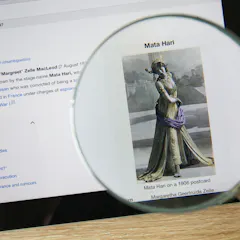
Wikipedia’s coverage on women is less comprehensive, and its volunteer editor base is mostly male. What can be done to change the numbers?
Women are underrepresented in academic science. New research finds the problem is even worse in terms of who authors high-profile journal articles – bad news for women’s career advancement.
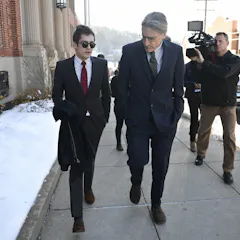
A majority of white Americans now believe that white people experience racial discrimination, and memes like #ItsOkayToBeWhite are only fanning the flames.
Prejudice and stereotypes are part of why social inequality persists. Social scientists use tests to measure the implicit biases people harbor and see how much they relate to actions.
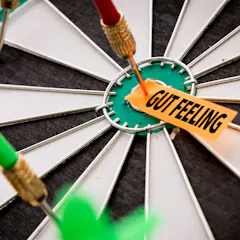
Intuition is just one of many factors that shape what you believe.
Five years after a major sexism scandal, Silicon Valley’s misogynist culture remains strong and pervasive – and history reveals the stakes could be as high as the entire US tech sector.
Top contributors
-

Ph.D. Candidate in Psychology, Northwestern University
-
Professor of Economics and Education Policy, New York University
-
Senior Lecturer in the School of Psychology, University of Lincoln
-
Professor of Marketing and Everett W. Lord Distinguished Faculty Scholar, Boston University
-
Professeur de Sciences Comportementales, membre du groupe de recherche CNRS-GREGHEC, HEC Paris Business School
-
Associate Professor of Communication, University of Utah
-
Professor of Informatics and Computer Science, Indiana University
-
Yale University
-
Assistant Professor of Psychology, University of Georgia
-
Senior Research Fellow, Melbourne School of Psychological Sciences, The University of Melbourne
-
Visiting Professor, Graduate School of Public & International Affairs and the Faculty of Law, L’Université d’Ottawa/University of Ottawa
-
Assistant Professor of Educational Psychology, The University of Texas at San Antonio
-
Associate professor, Psychiatry, Western University
-
Associate Professor of Computing and Information, University of Pittsburgh
-
Associate Professor of Education, University of Southern California