

By listening in on their nightly hunts, scientists discovered that small, fringe-lipped bats are unexpectedly able to efficiently take down prey nearly their own size.
Articles on Behavioral ecology
Displaying all articles
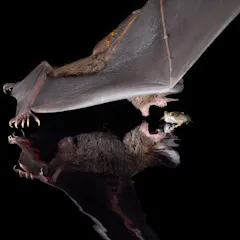
By listening to a frog call, adult bats can tell which prey are palatable and which are poisonous. Young bats must acquire this ability over time.
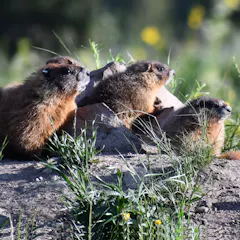
Multilevel selection is a controversial concept originally proposed by Darwin. A new study found evidence for it in the wild in a group of marmots scientists have been observing for more than 60 years.
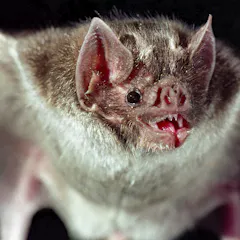
A behavioral ecologist explains the reciprocal social relationships vampire bats maintain, in sickness and in health.
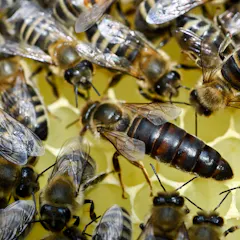
A queen’s main job in the hive is to lay eggs and pass genes on to offspring. But many bee species do just fine without queens or big colonies.

A number of theories try to explain how cultural differences come to be. A new study quantifies how such factors as resource abundance, population density and infectious disease risk can contribute.

Life in a honey bee hive is all about cooperating for the collective good.
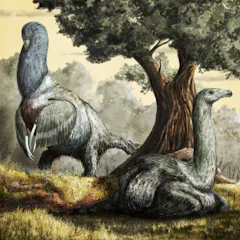
New research suggests some dinosaurs buried and protected eggs in groups.

Richard Thaler won the 2017 Nobel Prize in economics for his groundbreaking work incorporating how humans actually behave into economic thinking.
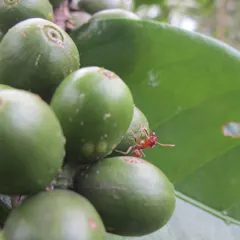
Azteca ants are self-appointed protectors of coffee plants on Mexican plantations. But they have a lot to contend with from other insects.

Man-made noise changes the way animals respond to danger – but prairie dogs have a surprising reaction.

New study reveals competition can trigger mass evictions in even the most cooperative of animal social groups.
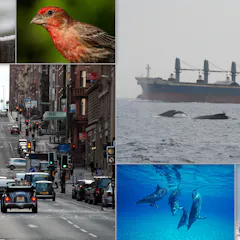
Noise pollution, whether on land or under water, can affect animals in interesting – and not always positive – ways.
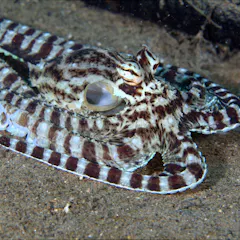
Last week, a new frog capable of shape-shifting, was discovered. Though many other animals use camouflage, there are only a few other species known which can actually shift their shape.

Slow, lazy, stupid? It’s time to update your impression of the crocodilians. These animals are up to amazing things that we’re only beginning to observe and recognize.
Top contributors
-

Associate Professor of Biology, Tufts University
-
Lecturer in the School of Applied Sciences, Edinburgh Napier University
-
Senior Lecturer in Zoology, Bangor University
-
Staff Scientist, Smithsonian Tropical Research Institute, Smithsonian Institution
-
Assistant Professor of Biology, Providence College
-
Professor of Biology, Framingham State University
-
Associate Professor of Psychology, Arizona State University
-
Ph.D. Student in Social Psychology, Arizona State University
-
Assistant Professor of Ecology and Evolutionary Biology, University of Tennessee
-
Postdoctoral Fellow in Behavioral Biology, Naturalis Biodiversity Center
-
Professor of Ecology and Evolutionary Biology, Institute of the Environment and Sustainability, University of California, Los Angeles
-
Executive Director, UCSB Natural Reserve System, University of California, Santa Barbara
-
Professor of Biological Sciences, Purdue University
-
Research Assistant Professor of Psychology, University of Tennessee
-
Research Associate in Animal Behavior, The University of Texas at Austin; McGill University