
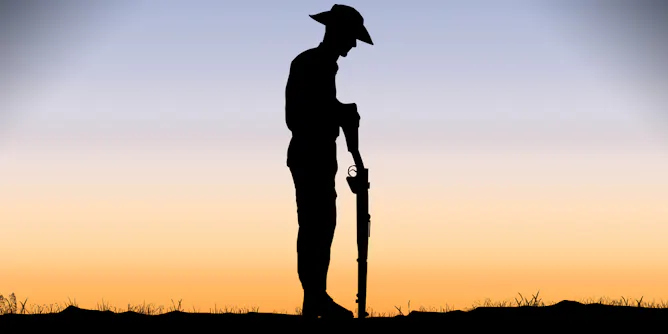
In 1960, historian Ken Inglis wondered if Anzac functioned as a secular religion in Australian society. In 2017, we can confidently answer: yes, it does.
Articles on Australian history
Displaying 361 - 380 of 459 articles
Snake bite treatments have changed remarkably over the past 200 years. But most, if not all, made sense in their historical context.

We check the facts on how Australia’s foreign aid spend has changed over time.
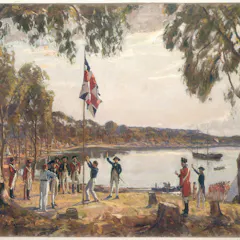
The marking of our national day has long been fraught, and this year is no exception.
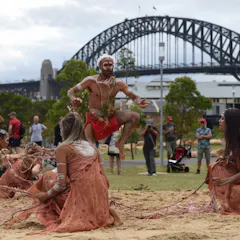
Protesting about Australia Day is a smokescreen to obscure the real problems that many Aboriginal Australians face today.
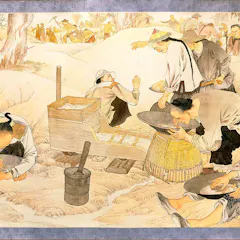
Historians may not be the media stars they were in the 1980s, but understanding our history remains vital to understanding ourselves.
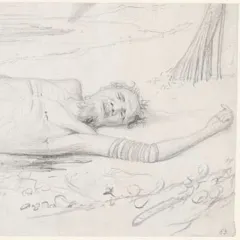
The English navigator had a habit of fair-mindedness. But did it affect the way he related to local Aboriginal people as he circumnavigated Australia?
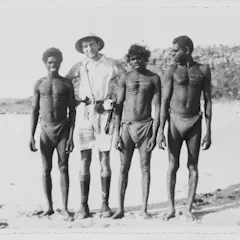
The book Red Professor: the Cold War Life of Fred Rose tells of a progressive anthropologist who was stymied by non-Indigenous people in powerful positions. Sadly, it’s a narrative that still resonates today.
Compared to the male-dominated STEM disciplines and social sciences like philosophy and political science, Australian history has been remarkably feminised. Indeed there may be more women historians here than in the UK or US.

Australian history is already a hotly contested discipline but is it time to broaden our definitions of the canon? Might an indigenous rock painting or a novel or a poem constitute a work of history?
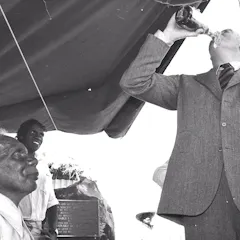
A new book reveals the drama and comedy of Prime Minister Gough Whitlam’s famous “hand back” of Gurindji land in 1975, following the Wave Hill Walk-Off 50 years ago – and the bittersweet aftermath.
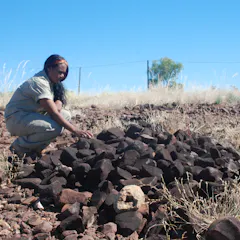
The Gurindji people of the Northern Territory made history 50 years ago by standing up for their rights to land and better pay. But a new book reveals the deeper story behind the Wave Hill Walk-Off.

They should be our pre-eminent national writing prizes. Instead, these awards bob on the vast sea of daily politics, occasionally getting dumped by a breaker.
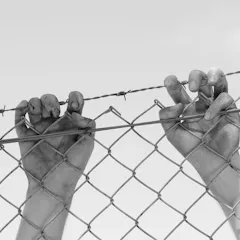
Australia’s history of dealing with asylum seekers has been a long and chequered one, paving the way for the hardline bipartisanship we see today.
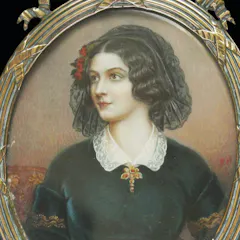
The early goldrush was a topsy-turvy time for rebellious women, such as the globetrotting dancer Lola Montez. An exhibition showcasing goldfields jewellery spotlights this era when penniless immigrants could dress like queens.
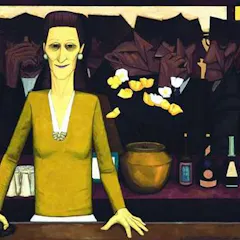
Since the earliest days of British colonisation, authorities have sought to limit the problems associated with alcohol by licensing its sale and limiting the times and places where it is drunk.
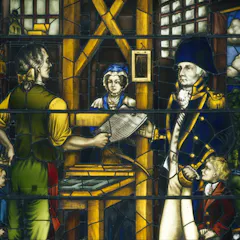
What science issues did Australia’s first newspaper - edited by a convict - discuss in its letter pages? The same ones we talk about today: the environment, education and health.
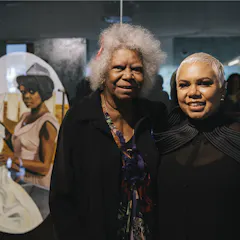
Boneta-Marie Mabo’s art responds to a colonial past in which Aboriginal women were fetishised as “black velvet”. But it also celebrates strong women, including her activist grandmother Bonita Mabo.

Australia still rests too heavily on its luck, and not enough on its brains.
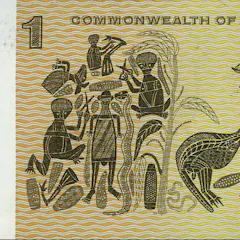
Australia’s original $1 note featured artwork taken without permission from Aboriginal artist, David Malangi. He was later given $1000, a medallion and a fishing kit, but archival evidence sheds new light on the affair.
Top contributors
-

Professor in Public History, University of Technology Sydney
-
Director, Vice-Chancellor's Centre of Public Ideas (CoPI) and Donald Horne Professor of History and Public Ideas, University of Canberra
-
Emeritus Professor, Institute for Culture and Society, Western Sydney University
-
Professor of History and Professor of Public Engagement, La Trobe University
-
Wesfarmers Chair of Australian History, The University of Western Australia
-
Senior Lecturer in History, La Trobe University
-
Senior Lecturer in Linguistics, Monash University
-
Sir John Monash Distinguished Professor, Monash University. Deputy Director ARC Centre of Excellence for Indigenous and Environmental Histories and Futures, Monash University
-
Professor of History, President, Australian Historical Association, Macquarie University
-
Professor, Australian and Aboriginal History, Faculty of Arts, Design and Architecture, Convenor: Indigenous Land & Justice Research Group, UNSW
-
Professor Emeritus of Media and Culture, Griffith University, Griffith University
-
Professor in History, University of Tasmania
-
Professor of Linguistics, Monash University
-
Professorial Fellow in History, School of Historical and Philosophical Studies, The University of Melbourne
-
Professor, Critical Indigenous Studies and Director of The Centre for Global Indigenous Futures, Macquarie University