
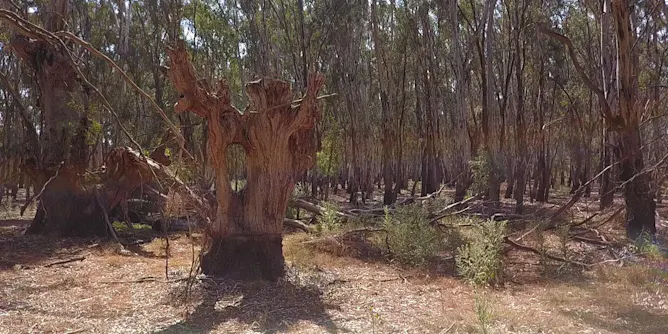
In the forests around the Murray River, Victoria’s Watti Watti people have trained trees to mark significant cultural locations in the landscape.
Articles on Australian history
Displaying 321 - 340 of 459 articles
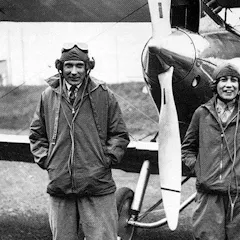
Thousands of Australian women took flight to the US in the early 20th century, escaping sexism at home for success overseas. They included architects, artists, dentists and an economist who advised JFK.
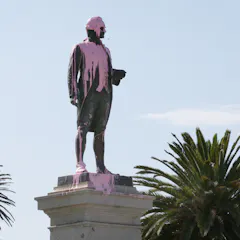
The federal government will spend nearly $50 million over four years to commemorate Captain Cook’s first landing. But some have questioned the spend.

Essays On Air: Australia’s property boom and bust cycle stretches back to colonial days
The Conversation, CC BY58.7 MB (download)
Australia's property market is slowing and many are contemplating a possible bust. But today's episode of Essays On Air reminds us that since colonial days, Australia's property market has had its ups and downs.
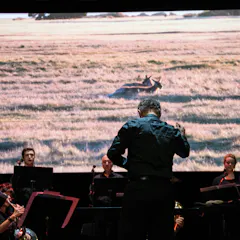
A Tasmanian Requiem brings together Western and Aboriginal voices to confront the violence of the state’s Black War. It shows what a historical reckoning, and reconciliation, might look and sound like.
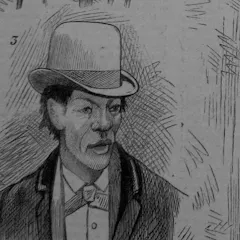
Fook Shing spent 20 years as a Melbourne gumshoe. He policed the thriving Chinese community – claiming opium as an expense – but was never promoted above his entry rank of detective third class.
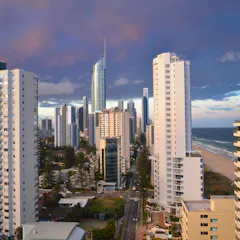
Behind the built-up glitz of Surfers Paradise lies a deep history that has been written and overwritten in successive layers that have become thinner and thinner as time goes on.
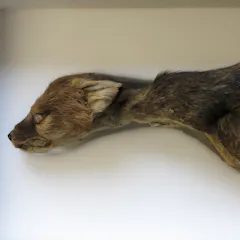
More than 160 thylacine specimens lie in museum collections in the UK. The sight of their bodies is a shocking reminder of loss.
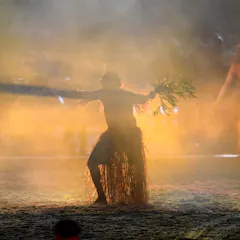
Events like the Commonwealth Games opening ceremony present history as a simplistic story of progress and reconciliation.
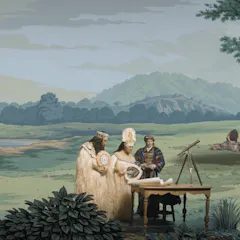
Lisa Reihana’s video installation Emissaries combines Indigenous actors and performance techniques to reenact Captain Cook’s encounters across the Pacific.
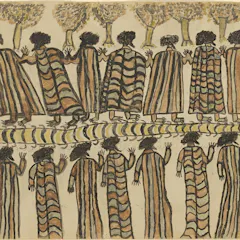
Colony at the NGV pairs colonial art with Indigenous responses, in an effort to create dialogue about Australia’s history.
Irish influence on Australian English is much like the influence of the Irish on Australians themselves — less than you’d expect on the surface, but everywhere once you start looking.
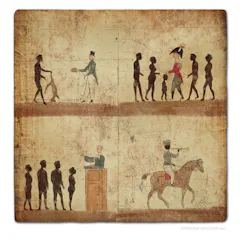
In the early days of colonial Tasmania, the British used threatening picture boards to communicate with Aboriginal people, giving them a choice between conciliation and death.

When did Australia’s human history begin?
The Conversation, CC BY16.6 MB (download)
Today's episode of Essays On Air, the audio version of our Friday essay series, seeks to move beyond the view of ancient Australia as a timeless and traditional foundation story.

Lindeman’s Ben Ean Moselle was the ultimate wine for everyone in the 1970s. But as Australia grew wealthier, its fortunes faded in competition with other, ‘finer’ wines.
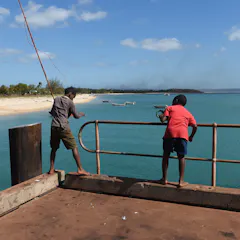
In an article published in the lead up to Australia Day, WA Liberal Party policy committee chairman Sherry Sufi said “native title can only exist if Australia was settled, not invaded”. Is that right?
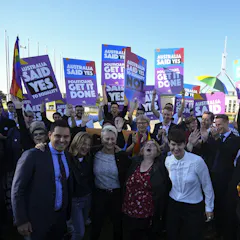
A new survey asking Australians to rank the most significant events in their lifetimes show that same-sex marriage, September 11 and the apology to the Stolen Generations matter most.
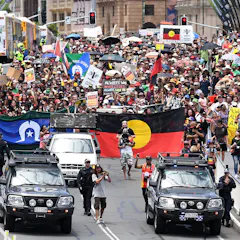
Reconciliation between the Settler and First Nations populations is a self-evident prerequisite for Australia cutting the ties of colonial dependency with Britain to stand on our own.
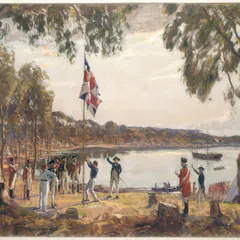
As it becomes ever more entangled in battles over the meaning of our history, Australia Day will find it difficult to foster common belonging and social cohesion.
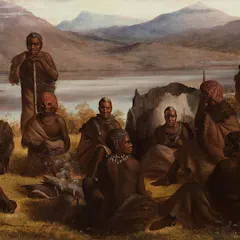
That colonial wars were fought in Tasmania is irrefutable. More controversially, surviving evidence suggests the British enacted genocidal policies against the Tasmanian Aboriginal people.
Top contributors
-

Professor in Public History, University of Technology Sydney
-
Director, Vice-Chancellor's Centre of Public Ideas (CoPI) and Donald Horne Professor of History and Public Ideas, University of Canberra
-
Emeritus Professor, Institute for Culture and Society, Western Sydney University
-
Professor of History and Professor of Public Engagement, La Trobe University
-
Wesfarmers Chair of Australian History, The University of Western Australia
-
Senior Lecturer in History, La Trobe University
-
Senior Lecturer in Linguistics, Monash University
-
Sir John Monash Distinguished Professor, Monash University. Deputy Director ARC Centre of Excellence for Indigenous and Environmental Histories and Futures, Monash University
-
Professor of History, President, Australian Historical Association, Macquarie University
-
Professor, Australian and Aboriginal History, Faculty of Arts, Design and Architecture, Convenor: Indigenous Land & Justice Research Group, UNSW
-
Professor Emeritus of Media and Culture, Griffith University, Griffith University
-
Professor in History, University of Tasmania
-
Professor of Linguistics, Monash University
-
Professorial Fellow in History, School of Historical and Philosophical Studies, The University of Melbourne
-
Professor, Critical Indigenous Studies and Director of The Centre for Global Indigenous Futures, Macquarie University