
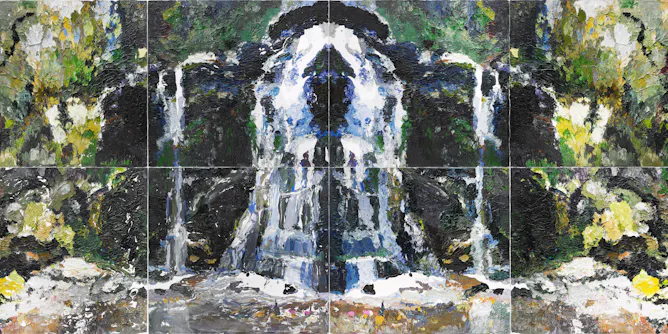
Australia has a lesson to learn from Germany when it comes to reconciling with a shameful past. Artists are taking the lead in ‘When silence falls’, a formidable exhibition.
Articles on Australian history
Displaying 381 - 400 of 459 articles
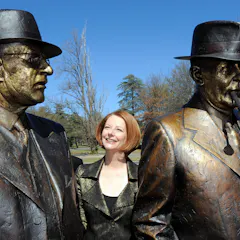
Alfred Deakin and his contemporaries invented the Australian prime ministership. But it was not settled as a platform for national leadership until John Curtin and Ben Chifley’s time.
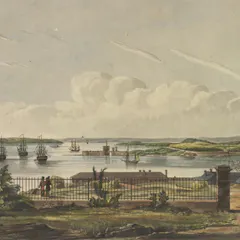
Charles Darwin visited Australia 180 years ago, and while here, he had a revelation that helped spark his insight into evolution by natural selection.

Tom D.C. Roberts has crafted a book full of remarkable insights into a central figure in Australian corporate and political history, a figure hitherto enveloped in family mythology: Keith Murdoch.
Sir John Kerr probably made his own decision to dismiss the Whitlam government much earlier than he acknowledged publicly while alive – but he came to this conclusion in discussion with others.

Contemporary circus and circus-infused physical theatre are amongst Australia’s most innovative and in-demand cultural exports. It’s a performance craft with a proud history behind it.
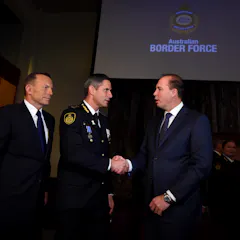
The Australian Border Force represents a significant departure from earlier ways of managing the border.

In our era of 24-hour news, outrage and hyperbole seem to be par for the course. But as Sr John Madden’s 1909 “gravest peril” speech illustrates, overblown moral panic, to fit an agenda, is nothing new.
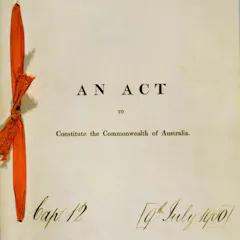
The problem with constitutional recognition lies in the way in which it changes the nature of the constitution away from a procedural document by introducing issues of identity into it.

Iconic murderers such as Martha Rendell electrify our imaginations and passions. The turn of the century case demonstrates why fiction can be such an effective vessel for history.

‘History and fiction journey together and separately into the past; they are a tag team, sometimes taking turns, sometimes working in tandem.’ Enjoy the second part of our series, Writing History.
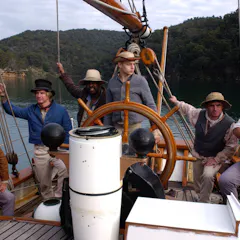
Today, a convict ancestor is a matter of pride. But for past generations, including some convicts themselves, it was a shame that had to be hidden at all costs.
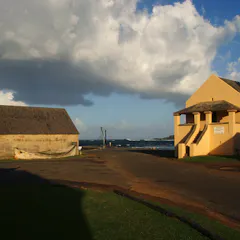
Federal parliament has passed legislation that removes Norfolk Island’s self-government but strong local views about the tiny island’s independence have deep historical roots.
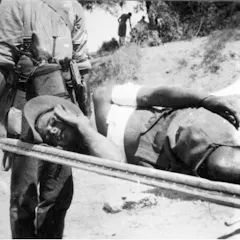
Never has the Anzac tradition been more popular and yet never have its defenders been more chauvinistic, bellicose and intolerant of other viewpoints.
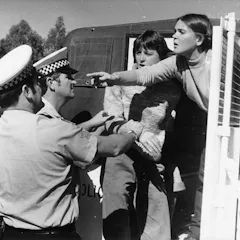
Protests on Anzac Day, rather than being ‘utterly alien to Australians’, have a long tradition and embody the democratic right to dissent for which the troops fought.
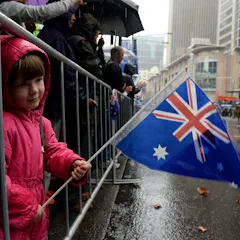
Australia has continually faced a returned soldier crisis. This is something that marked men returning from all the wars of modern memory – from the Great War to Afghanistan and Iraq.
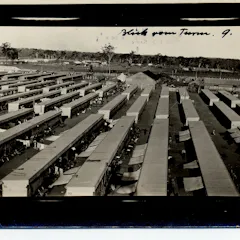
The story of the German–Australian community offers an alternative view of Australia’s history as a nation.

There is a complicated story involving the Anzac legend and the left between the 1920s and the 1960s which historians have barely begun to untangle.
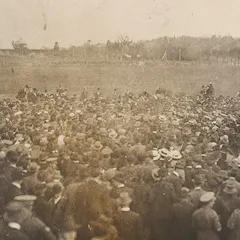
The democratic freedoms Australians hold dear today – freedom of the press, assembly and speech – were won on home soil by courageous women and men who sacrificed much, but rarely recognised for it.
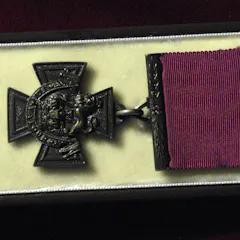
Australians now seem so fascinated by the Victoria Cross that such attention has begun to get in the way of a balanced perspective on its place in military history.
Top contributors
-

Professor in Public History, University of Technology Sydney
-
Director, Vice-Chancellor's Centre of Public Ideas (CoPI) and Donald Horne Professor of History and Public Ideas, University of Canberra
-
Emeritus Professor, Institute for Culture and Society, Western Sydney University
-
Professor of History and Professor of Public Engagement, La Trobe University
-
Wesfarmers Chair of Australian History, The University of Western Australia
-
Senior Lecturer in History, La Trobe University
-
Senior Lecturer in Linguistics, Monash University
-
Sir John Monash Distinguished Professor, Monash University. Deputy Director ARC Centre of Excellence for Indigenous and Environmental Histories and Futures, Monash University
-
Professor of History, President, Australian Historical Association, Macquarie University
-
Professor, Australian and Aboriginal History, Faculty of Arts, Design and Architecture, Convenor: Indigenous Land & Justice Research Group, UNSW
-
Professor Emeritus of Media and Culture, Griffith University, Griffith University
-
Professor in History, University of Tasmania
-
Professor of Linguistics, Monash University
-
Professorial Fellow in History, School of Historical and Philosophical Studies, The University of Melbourne
-
Professor, Critical Indigenous Studies and Director of The Centre for Global Indigenous Futures, Macquarie University