
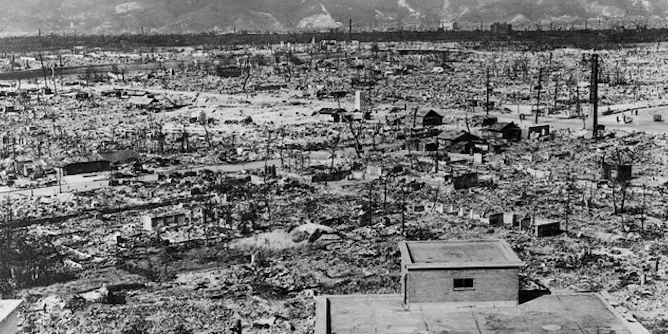
US military censors contained information after the bombings at Hiroshima and Nagasaki, leaving Americans with a limited understanding of the impact of radiation.
Articles on Atomic bombs
Displaying 21 - 28 of 28 articles
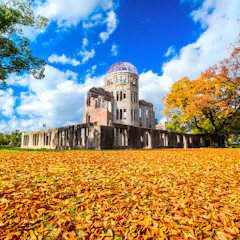
The average age of survivors is now 80. In five years, very few of these first-hand witnesses will be around to remember the event. Many of their stories are in danger of being lost forever.
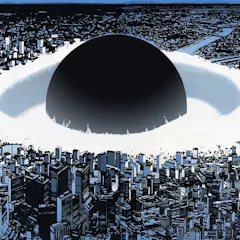
In the wake of the atomic bombs, a number of Japanese animators would question mankind’s relationship with technology.
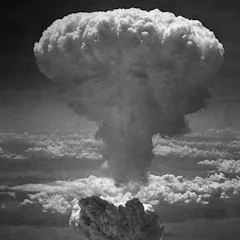
News of the Hiroshima bombing spread quickly to the US public but, thanks to science fiction writers, atomic bombs were discussed more before the war began than during it.
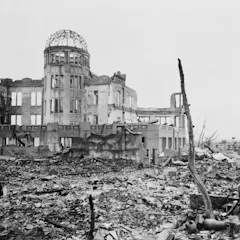
John Hersey’s article Hiroshima (1946) is seminal in historical and literary terms: the shocking realities of the atomic bomb demanded a new way of writing.
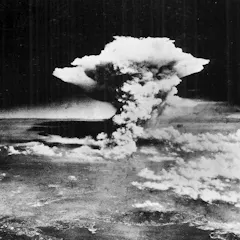
Hollywood has kept its distance from the bombing of Hiroshima, 70 years ago, and novelists, aside from sci-fi authors, have largely ignored the catastrophe as a means of exploring human nature. Why?
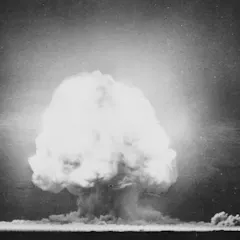
The first atom bomb test seventy years ago today marks the start of a change in Americans’ thinking about radiation. On balance, our nuclear anxieties endure today.
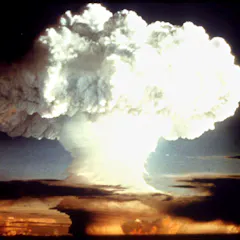
A number of states have given up on pursuing nuclear disarmament through the Non-Proliferation Treaty. Instead they are moving to create a new legal mechanism for banning nuclear weapons
Top contributors
-
 Timothy J. Jorgensen is a Friend of The Conversation.
Director of the Health Physics and Radiation Protection Graduate Program and Professor of Radiation Medicine, Georgetown University
-
Assistant Professor of History, Mississippi State University
-
Associate Professor in English and American Literature, Nottingham Trent University
-
Professor of Nuclear Physics, Michigan State University
-
Professor in Human Rights and International Law, University of Newcastle
-
Professor and head of professional development GRS, James Cook University
-
Professor of History, Claremont Graduate University
-
Adjunct Professor of Political Science, Villanova University
-
Affiliated Researcher, The Open University
-
Professor of Physics, Michigan State University
-
Associate Professor of International Relations, The University of Queensland
-
Lecturer in Contemporary Literature, La Trobe University
-
Visiting assistant professor, Universidade Federal do ABC (UFABC)
-
Professor of Religious Studies, DePaul University
-
Senior Lecturer in Geotechnical Engineering, University of Sheffield