

It’s hard to believe, but big storms and hurricanes are caused by tiny particles moving around in the atmosphere.
Articles on Atmosphere
Displaying 101 - 120 of 120 articles

According to a new study, the oceans have absorbed more heat from climate change than previously thought. This could mean the Earth will warm even faster in the future than scientists have predicted.

Scientists studying the atmosphere found help in an unlikely place – the aerial bombing campaigns of World War Two.
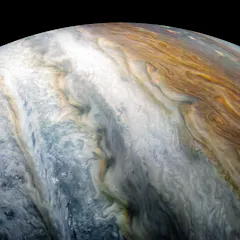
Jupiter’s bands are one of its most striking features – and can be seen from Earth – but they only go so deep within the giant planet. Now scientists think they know why.
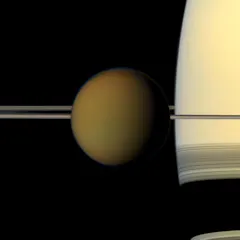
Titan is more than a billion kilometres from our Sun but occasionally it’s shadow can be seen here on Earth, with the right technology. That’s what scientists gathered in Western Australia to observe.
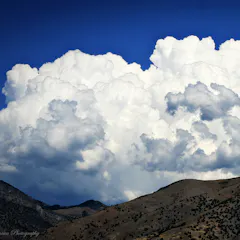
Even a small cloud can weigh as much as four tonnes – but gravity, chemistry and temperature keep them floating in the sky.

Wind is just air moving from one place where there is high pressure to another place where there is low pressure.

The science of red skies can also help us understand how stars form.
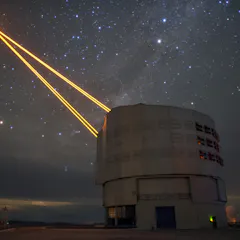
How exactly do the stars twinkle in the night sky? As it turns out, the answer is full of hot air… and cold air.
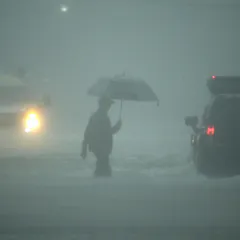
An expert in extreme weather events explains why the rain – and thus flooding – associated with Hurricane Harvey has been ‘unprecedented.’

Meteorology researchers across the country are prepping experiments for the mini-night the eclipse will bring on August 21 – two minutes and 36 seconds without the sun in the middle of the day.

Canadians love to paddle on them and camp beside them, but our boreal lakes offer more than just peace and beauty. They could provide clues to how life on Earth began.

The true radiation risk from commercial flying has nothing to do with security scans. A radiation expert explains how much cancer risk the most frequent of flyers take on when they take to the skies.
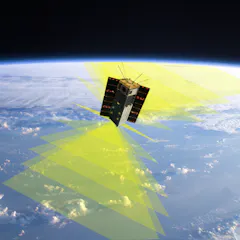
As technology advances, tiny satellites no bigger than a loaf of bread have advanced from just proving they work to being big contributors in answering science questions.
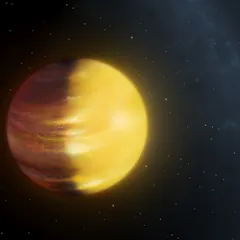
Ruby and sapphire clouds may be hovering over exoplanet HAT-P-7b.
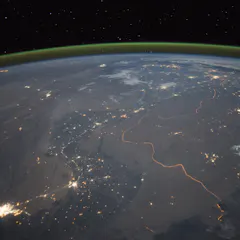
Here’s how to tell airglow from northern lights.
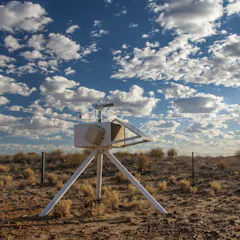
A leading NASA scientist has asked CSIRO to stay in its global network that monitors atmospheric dust and pollution. The data are vital to understand the effects on weather and climate.
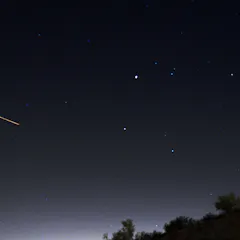
Hunting for meteorites in the vast Pilbara is hard work, but even a tiny speck can tell us a great deal about the sky billions of years ago.

Ice cores tell us vital information about how the world’s climate has changed - and how it will change in the future.
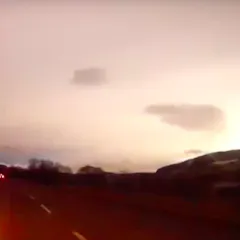
Was it a UFO? Was it a high-tech plane? Here’s what lucky people really saw over Scotland on February 29.
Top contributors
-

Professor of Geology and Environmental Geosciences, University of Dayton
-
PhD Candidate, University of Southern Queensland
-
Professor of Atmospheric Science, Colorado State University
-
ARC Future Fellow and Associate Professor in Climate Science, ARC Centre of Excellence for 21st Century Weather, The University of Melbourne
-
Professor of Ocean Sciences, University of Liverpool
-
Professor of Atmospheric Chemistry, University of Canterbury
-
PhD Candidate in Comparative Literature, Western University
-
Emeritus Professor of Atmospheric Sciences, University of Hawaii
-
Professor (Physics), University of Southern Queensland
-
Timothy J. Jorgensen is a Friend of The Conversation.
Director of the Health Physics and Radiation Protection Graduate Program and Professor of Radiation Medicine, Georgetown University
-
Associate Professor of Geography, University of South Carolina
-
Professor, Environmental Geochemistry, University of Waterloo
-
Geologist, Monash University
-
Professor of Atmospheric Science, University of Leeds
-
Professor of Space and Atmospheric Physics, University of Reading