
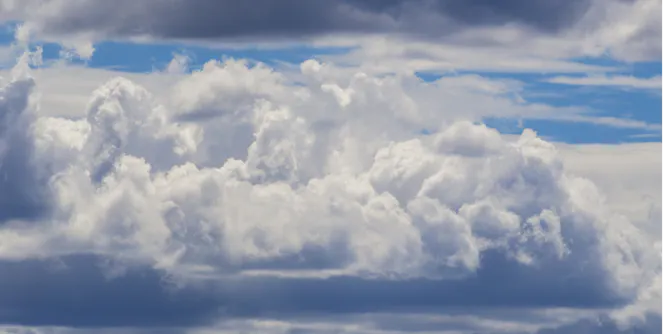
Clouds affect Earth’s weather and climate in many ways. New research suggests that the presence of microplastic particles could alter these processes.
Articles on Atmosphere
Displaying 21 - 40 of 120 articles

These powerful ‘rivers in the sky’ provide a huge share of annual precipitation in many regions, including California. They can also melt sea ice, with global climate implications.

As a record-hot summer comes to a close, an atmospheric scientist explains how global warming drove long periods of extreme heat.
While space is mostly empty, it does have some matter and particles spread throughout it.
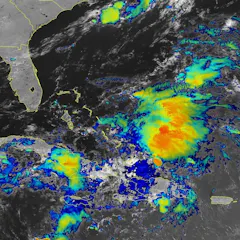
New techniques are helping forecasters spot potentially dangerous storms earlier than ever.

An atmospheric scientist explains how hail forms and what to do if you’re suddenly being pelted by giant ice chunks falling from the sky.
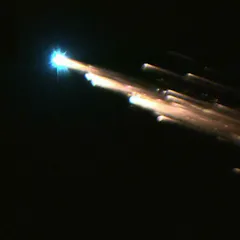
Burnt-up satellites could dump hundreds of tonnes of aluminium in the stratosphere every year. An atmospheric chemist explains what that might mean
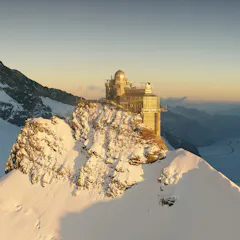
HCFCs were a temporary replacement for CFCs, the initial subject of the 1987 Montreal protocol.
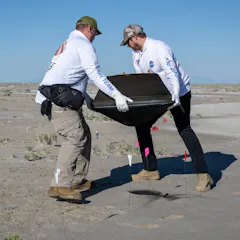
Scientists don’t often have the time to get all their equipment set up to study incoming meteors from space. Instead, they can study capsules from space missions as ‘artificial meteors.’
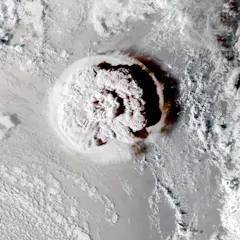
Our new research predicts how Hunga Tonga’s vast underwater eruption in 2022 will change winters worldwide for years to come – as far away as Australia, North America and even Scandinavia.
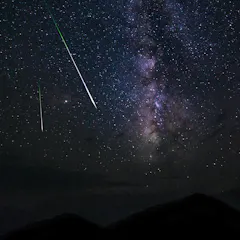
When rocks from space fall towards Earth, they usually don’t do any damage – here’s why.
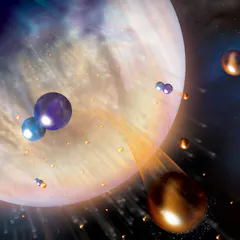
Studying Venus’ water loss can help scientists better understand how planets go from potentially habitable to incapable of supporting life.
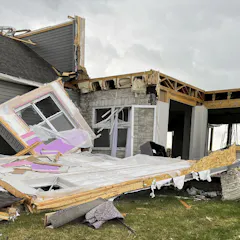
A powerful storm system produced dozens of destructive tornadoes over three days that tore apart homes in Oklahoma, Nebraska and Iowa. A meteorologist explains the conditions that fueled them.
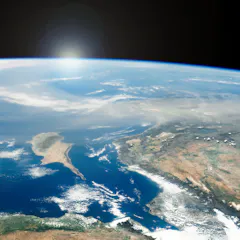
New research reveals our understanding of dust’s role in the environment is far from settled.
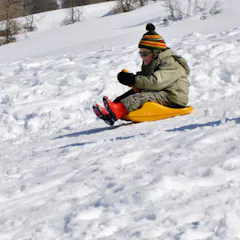
There are an infinite number of paths an ice crystal can take before you touch it.
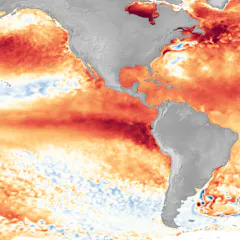
An atmospheric scientist explains how El Niño works, this year’s oddities and why this phenomenon doesn’t last long.

There’s a rule of thumb that rainfall intensity increases by about 7% per degree Celsius as temperatures rise. But the increase is much higher in the mountains, scientists found.
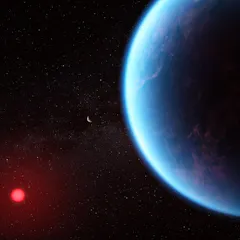
The results are intriguing, but analysing the atmospheres of exoplanets is no easy task.
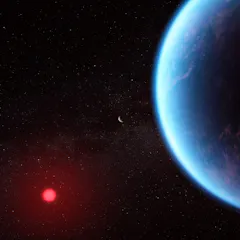
The James Webb Space Telescope has detected key carbon-bearing molecules on the potential ocean world K2-18b, including tantalising hints of a substance produced by tiny plankton on Earth.
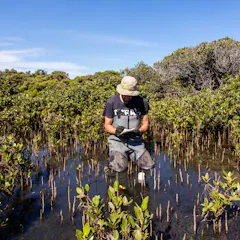
The last time methane in the air rose so fast, Greenland warmed by 10°C within decades.
Top contributors
-

Professor of Geology and Environmental Geosciences, University of Dayton
-
PhD Candidate, University of Southern Queensland
-
Professor of Atmospheric Science, Colorado State University
-
ARC Future Fellow and Associate Professor in Climate Science, ARC Centre of Excellence for 21st Century Weather, The University of Melbourne
-
Professor of Ocean Sciences, University of Liverpool
-
Professor of Atmospheric Chemistry, University of Canterbury
-
PhD Candidate in Comparative Literature, Western University
-
Emeritus Professor of Atmospheric Sciences, University of Hawaii
-
Professor (Physics), University of Southern Queensland
-
Timothy J. Jorgensen is a Friend of The Conversation.
Director of the Health Physics and Radiation Protection Graduate Program and Professor of Radiation Medicine, Georgetown University
-
Associate Professor of Geography, University of South Carolina
-
Professor, Environmental Geochemistry, University of Waterloo
-
Geologist, Monash University
-
Professor of Atmospheric Science, University of Leeds
-
Professor of Space and Atmospheric Physics, University of Reading