
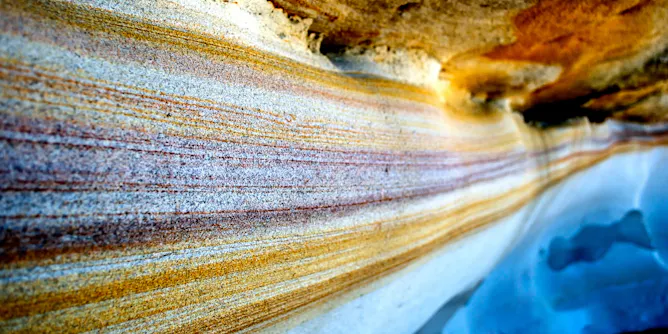
Our activities now affect the entire planet. But there’s a vital debate over when we started disrupting these systems. Was it 1950 – or hundreds and thousands of years earlier?
Articles on Atmosphere
Displaying 41 - 60 of 120 articles
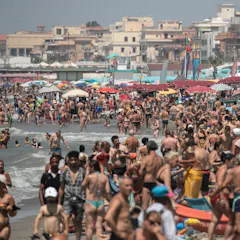
The predicted El Niño is a worry, but it doesn’t guarantee the record-breaking heat we’re seeing in parts of the Northern Hemisphere.

What fossil records tell us about when the Earth was first covered by plants.

It can be disruptive or refreshing, and we feel it every single day. But do you ever stop to think what creates wind on our planet?

From bushfires in Australia to insect-borne disease outbreaks in Colombia.

Molecule by molecule, a snowflake grows and eventually begins to fall. A scientific look at the amazing nature of snowflakes and snow.

The sky looks blue on a sunny day – but at night we can see the faint glow of its true colour.

Millions of people around the world suffered through deadly flooding and long-lasting heat waves in 2022. A climate scientist explains the rising risks.

When something disrupts the smooth, laminar flow of high-altitude winds, your flight might get a little bumpy.
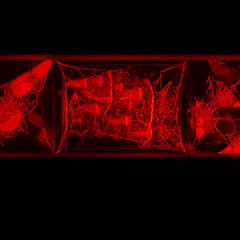
This new exhibition at Hobart’s Mona captures Tomás Saraceno’s collaborations with research institutes.
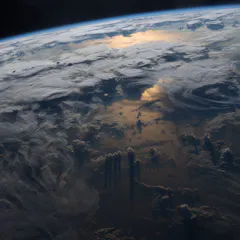
We should not rule out taking a closer look at exoplanets that have a poorly oxygenated atmosphere.
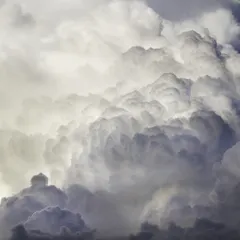
On Australia’s rainiest days, more than 30 trillion litres can fall from the skies.
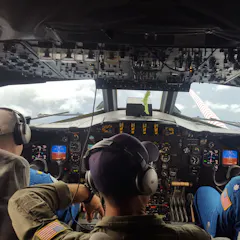
The meteorologist leading NOAA’s 2022 hurricane field program describes flying through eyewalls and the technology in these airborne labs for tracking rapid intensification in real time.
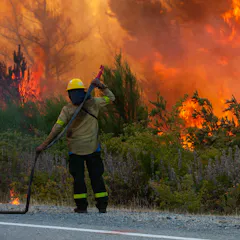
Climate change’s assault on the natural world may explain mystery methane emission surge.
New catalytic converters can remove toxic chemicals from the exhaust fumes of combustion-engine cars.
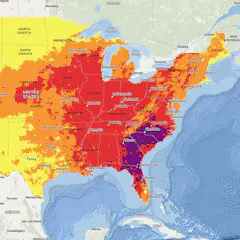
Heat domes are a dangerous part of summer weather.
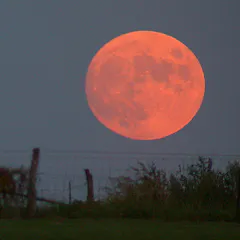
The Moon illusion is what makes the Moon look giant when you see it rising over a distant horizon. An astronomer explains what causes this awe-inspiring trick of the mind.
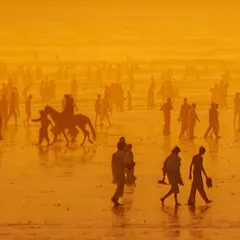
If fossil fuel burning stopped, emerging research suggests air temperatures could level off sooner than expected. But that doesn’t mean the damage stops.
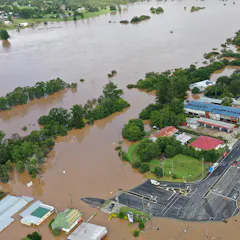
A weather system called ‘atmospheric rivers’ is causing this inundation. In March last year, an atmospheric river brought 800kg of water vapour over Sydney every second.
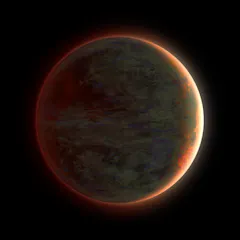
Scientists have mapped the entire atmosphere of ultra-hot exoplanet WASP-121b.
Top contributors
-

Professor of Geology and Environmental Geosciences, University of Dayton
-
PhD Candidate, University of Southern Queensland
-
Professor of Atmospheric Science, Colorado State University
-
ARC Future Fellow and Associate Professor in Climate Science, ARC Centre of Excellence for 21st Century Weather, The University of Melbourne
-
Professor of Ocean Sciences, University of Liverpool
-
Professor of Atmospheric Chemistry, University of Canterbury
-
PhD Candidate in Comparative Literature, Western University
-
Emeritus Professor of Atmospheric Sciences, University of Hawaii
-
Professor (Physics), University of Southern Queensland
-
Timothy J. Jorgensen is a Friend of The Conversation.
Director of the Health Physics and Radiation Protection Graduate Program and Professor of Radiation Medicine, Georgetown University
-
Associate Professor of Geography, University of South Carolina
-
Professor, Environmental Geochemistry, University of Waterloo
-
Geologist, Monash University
-
Professor of Atmospheric Science, University of Leeds
-
Professor of Space and Atmospheric Physics, University of Reading