
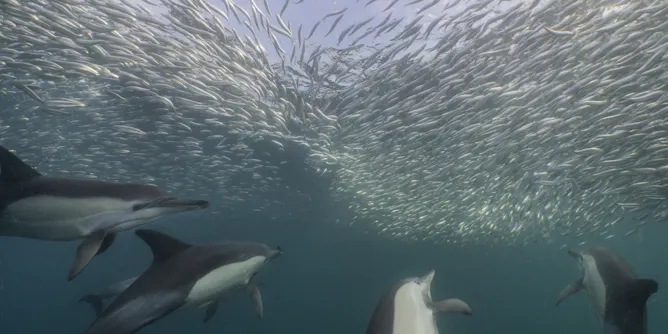
Sardines from the cold waters off South Africa’s Atlantic coast are attracted to cold water upwelling in the Indian Ocean. When the upwelling ends, they are trapped in water that is too warm for them.
Articles on Atlantic Ocean
Displaying 41 - 60 of 72 articles
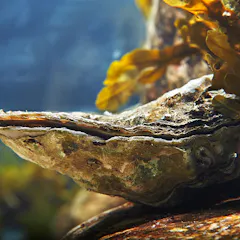
Nanoplastics and arsenic can affect some of the most basic functions of oysters.
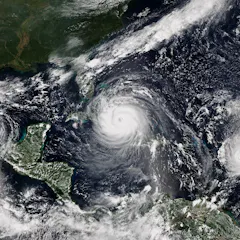
To get a sense of how bad the 2021 hurricane season will be, keep an eye on the African monsoon, ocean temperatures and a possible late-blooming La Niña.
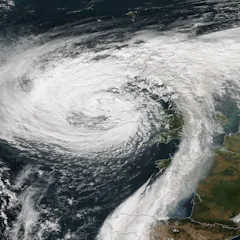
Storms which originate in the tropics and reach Europe aren’t as rare as scientists once thought.
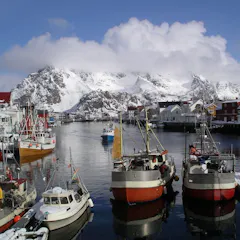
A novel approach to fisheries management would see fishers taking control of their own catches.
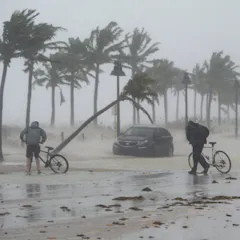
Economic recovery and carbon neutrality are linked. Both depend on the ocean’s ability to continue to regulate climate.

With research that offers new insights, there is increased hope for improved climate predictions and better preparation for severe weather conditions.
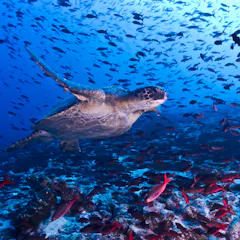
Marine protected areas will be important for achieving the ocean Sustainable Development Goals.
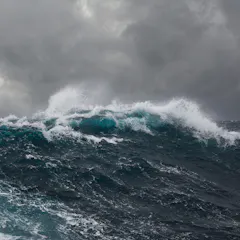
Oceans 21 is a Conversation international series examining the history and future of the world’s ocean.
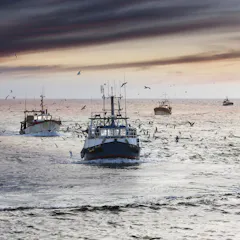
The Atlantic Ocean is still growing physically, but humans are over-harvesting its rich fisheries. The most famous one – North Atlantic cod – has become a textbook example of harmful overfishing.
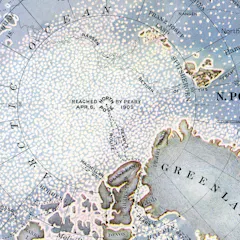
The pattern of autumn sea ice growth has been completely disrupted. The director of the National Snow and Ice Data Center explains what’s happening.
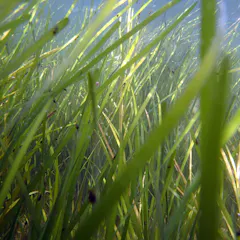
Healthy seagrasses form underwater meadows teeming with fish and shellfish. A successful large-scale restoration project in Virginia could become a model for reseeding damaged seagrass beds worldwide.
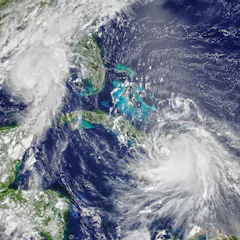
It’s only happened twice since naming started in 1950, and there’s an unusual twist to where many of the storms formed this year.
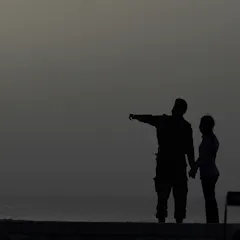
From June through October, it’s not unusual for huge Saharan dust plumes to blow across the Atlantic. They can darken skies but also bring calmer weather and electric sunsets. Here’s how they form.
A group of leading black, queer and feminist academics held a colloquium to reconsider a seminal blackness studies text – offering new ways of thinking about the decolonial project.
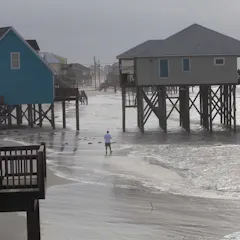
‘Building back better’ refers to making communities more disaster-proof and resilient after they take a hit. But instead, some US owners are building back bigger homes in vulnerable places.

The return of white sharks to Cape Cod, Massachusetts was a tourism success story – until a shark killed a swimmer. Can the Cape’s residents and visitors learn to share the ocean with these apex predators?
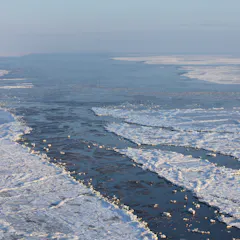
Since 2005, the Barents Sea has become too warm for sea ice to exist south of the Polar Front.
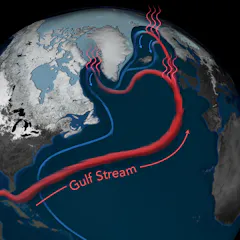
How we showed the Atlantic circulation system is its weakest for 1,600 years.
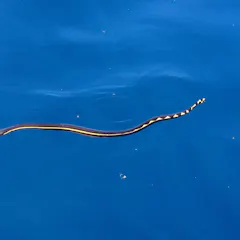
Sea snakes spend their lives in the water, giving birth to live young at sea, so why are they only found in some of the world’s oceans? The answer lies in a combination of climate and geography.
Top contributors
-

Senior Research, Euro-Mediterranean Center on Climate Change; Professor of Ocean and Climate Dynamics, Georgia Institute of Technology
-
Atmospheric Science Educator, Georgia Institute of Technology
-
Professor of Tourism Management and Economics, North-West University
-
Professor of Marine and Coastal Sciences, Rutgers University
-
Researcher, Institute for Climate and Atmospheric Science (ICAS), University of Leeds
-
Professor in sea level and flooding, University of Southampton
-
Professor of Marine Geology and Director of the Climate Change Consortium of Wales, Bangor University
-
Professor of Oceanography, Old Dominion University
-
Postdoctoral research fellow at Sorbonne University and University of Cape Town, University of Cape Town
-
Professor of Oceanography and Climate, University of Southampton
-
Professor, School of the Environment, The University of Queensland
-
Professor Emeritus of Fish Biology and Fisheries, University of Leicester
-
Associate Professor in Social and Maritime History, University of Reading
-
Assistant Professor of Earth, Ocean & Environment, University of South Carolina
-
Director of Research for the Center for the Blue Economy, Middlebury College