
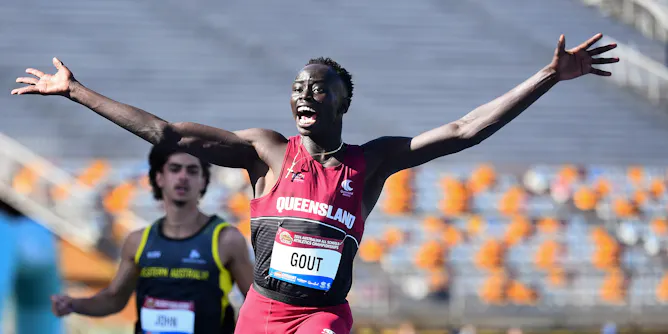
Gout Gout has captured Australia’s and the world’s attention. What will he be working on as the LA and Brisbane Olympics loom?
Articles on Athletics
Displaying 21 - 40 of 144 articles

The standard advice is to replace your runners after 500–800 kilometres. But science shows it could be more or less – here are the three signs to look out for.

A slimmed down version is on the cards.
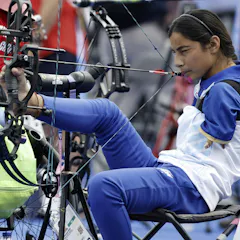
While technology presents challenges around fairness, it also offers solutions.
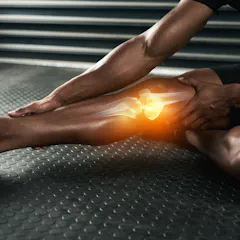
For every athlete who wins a medal, there will be many whose dreams are shattered by injury.
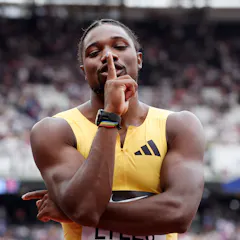
How to win while you’re working from home.
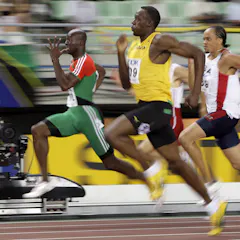
Your sprinting skills have a lot to do with genetics, but your brain also plays a big role.

A plans for ‘Enhanced Games’ with no restrictions on performance-enhancing drugs would be bad for athletes and for sport itself.
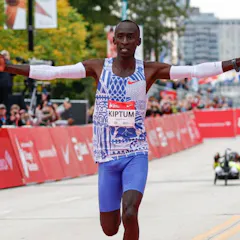
Kiptum – and to some extent Kipchoge – have done just enough to make the ‘sub-2’ moment a likely reality in the next few years.

Fluctuations in sex hormones are associated with inflammation peaks and troughs. These could potentially influence athletic performance.

Scientists analyzed 100,000 baseball games, from the days of Mickey Mantle and Willie Mays to Aaron Judge. Here’s what they learned about the climate’s growing role.
Why some now talk about ‘meaningful’ rather than fair competition in elite sport.
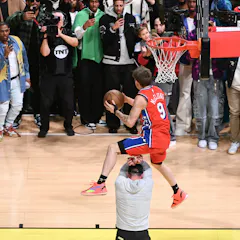
NBA player Mac McClung may have just ‘saved’ the annual dunk contest, but scoring methods could still be improved, a dunking expert says.
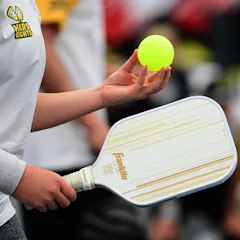
Headlines about pickleball’s exploding popularity abound. But the less visible social undercurrents of an emerging sport ultimately shape its long-term future.
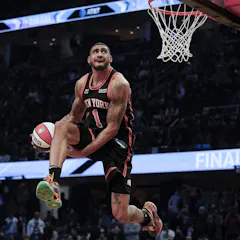
A new database could pave the way for a more fair and consistent way to score slam dunks, a self-described ‘dunk scientist’ says.

As people age, the chemical signaling pathways in muscles become less potent, and it gets harder to build muscle and maintain strength. But the health benefits of strength training only increase with age.
CC BY-NC-ND9.86 MB (download)
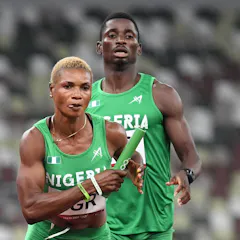
Greater focus on grassroots sports to identify and nurture talent is a sure path to regaining Nigeria's lost glory in athletics.
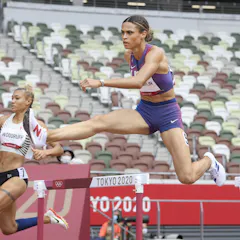
‘Super spikes’ and a springy track can’t take all the credit for lightning-fast sprint times at the Tokyo Olympics
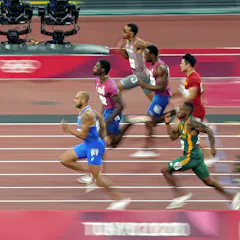
Muscles alone can’t produce the power for Olympic success. The elastic propulsion for fast movement comes from the tendons.

Usain Bolt can run at about 6 body lengths a second. An arachnid in California can do 322.
Top contributors
-

Senior Lecturer, Faculty of Health Sciences and Sport, University of Stirling
-
Senior Lecturer in Sport and Exercise Psychology, The Open University
-
Professor of Kinesiology, Penn State
-
Director of Research and Professor of Psychology and Behavioural Nutrition, Leeds Beckett University
-
Research Leader, Sport, Institute of Sport, Exercise and Active Living, Victoria University
-
Professor of Sports Law, Melbourne Law School, The University of Melbourne
-
Associate Professor and Kahandas Nandola Professor of Sports Administration, Ohio University
-
Professor of Social Inclusion - UTS Business School - Co-Lead UTS Disability Research Network - Australian Centre for Olympic and Sport Studies - Centre for Sport, Business and Society, University of Technology Sydney
-
Assistant Professor, School of Media, Toronto Metropolitan University
-
Research Fellow in Anti-Doping, Leeds Beckett University
-
Associate Professor of Sport Management, University of Technology Sydney
-
Director of Sport, Performance and Health, Heriot-Watt University
-
Professor of AfroEurasian Sport, EM Lyon Business School
-
Clinical Research Manager, University of Kentucky
-
Senior Lecturer in Ethics, Department of Sport and Exercise Sciences, Swansea University