

Was Aristotle bald, or did he have plenty of hair? Modern tech makes photo-realistic depictions of ancient figures a breeze, but they may not be exact.
Articles on Aristotle
Displaying 21 - 40 of 88 articles

If you have spent 40 years of your life working 40 hours a week, retirement isn’t just a financial consideration, writes a philosopher.

The secret of the successful speeches at the Democratic National Convention lies in three words with origins in ancient Greece: ethos, pathos and logos
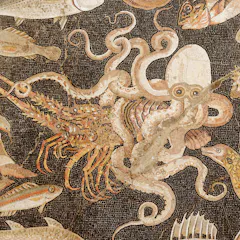
Through reports and testimonies from everyday people, ancient polymaths were able to learn a great deal about the natural world. But sometimes it was hard to separate fact from fiction.

Humans have watched and learned from animals who treat their ills with bioactive plants. This animal wisdom has a scientific name: zoopharmacognosy.

Scarlett Johansson said one of the five voices used for OpenAI’s new product sounded very like her.

In religious traditions, patience is more than waiting, or even more than enduring a hardship. But what does patience look like? And when should we not exercise patience?
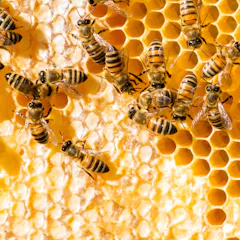
What makes us human? Greek and Roman thinkers were preoccupied with this question. And some of their observations of animals foreshadowed recent findings in the behavioural sciences.

Has Jeff Koons’ latest high-profile stunt just proved that space is the new frontier for art?

What is healthy self-love? Psychology experts and philosophers have long debated the question.

Politics is about appearances as much as policy. But it’s possible to make an informed judgment about political leaders, if we know what to look for.

The psychology of disagreement offers insight into why there is such a strong polarisation in opinions surrounding London’s expanded Ulez.
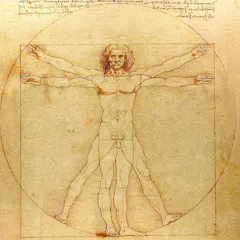
Art and science may seem like opposites, but throughout history the disciplines have fed off each other − and still do today.

Aristotle believed that the biggest and most widespread source of political tension is the struggle between the haves and the have-nots. More than 2,000 years later, he’s got a point.
Jean-Paul Sartre broke with Aristotle’s essentialism, but both philosophers would agree that to philosophise is to learn how to live.

For any kind of human relationship to work, it must have great friendship at its core.

Ancient Greek philosophers despised the Sophists’ rhetoric because it searched for relative truth, not absolutes. But learning how to do that thoughtfully can help constructive debates.

A scholar of ancient Greek philosophy writes about Aristotle’s timeless advice on how to nurture and keep friendships.

Tantrums and overflowing nappies are no fun. But happiness is more than a bunch of pleasant feelings, as influential philosophers have argued.

The idea of healing benefits and emotional catharsis through reading is intuitively appealing. But does it work that way? Jane Turner Goldsmith finds answers in neuroscience, philosophy and more.
Top contributors
-

Assistant Teaching Professor of Philosophy, Missouri University of Science and Technology
-
Assistant Professor of Philosophy, University of Minnesota Duluth
-
Managing Director of the McCourtney Institute of Democracy, Associate Research Professor, Political Science, Co-host of Democracy Works Podcast, Penn State
-
Rachel Hadas is a Friend of The Conversation.
Professor of English, Rutgers University - Newark
-
Professor of Natural Philosophy in the Department of Physics, University of York
-
Assistant Professor of Writing, USC Dornsife College of Letters, Arts and Sciences
-
Research Fellow, Center for Philosophy and History of Science, Boston University
-
Professor of Communication and Journalism, Texas A&M University
-
Lecturer in Classics and Ancient History, The University of Western Australia
-
Associate Professor, School of Management and Marketing Te Kahui Kahurangi, Te Kunenga ki Pūrehuroa – Massey University
-
Distinguished Professor in the Department of Medicine and Director, The Centre for Medical Ethics & Law, Stellenbosch University
-
Head of Media and Communications, James Cook University
-
Associate Professor of Philosophy of Education, University of Birmingham
-
Senior Lecturer in Bioethics in Department of Medicine, Faculty of Health Sciences, University of Cape Town
-
Vice-Chancellor, James Cook University