

An educated citizenry is the key to making self-government succeed, Founding Father Thomas Jefferson said.
Articles on Plato
Displaying 1 - 20 of 55 articles

Star Trek has endured because it repeatedly returns to a universal question: what does it mean to be human?

The Theban Sacred Band – made up of ‘lovers and their loves’ came to be known for their strength, discipline, and ferocity.

When AI hands us an answer, we risk bypassing the process through which learning happens.

For the Greeks, sophrosyne was an ideal second to none. It’s just as important today, in an age of internet addiction and misinformation – but harder to come by.

What should we call the words that this ultramodern technology produces? For clues, a professor looks to some of the world’s earliest authors.

Alternative educational movements offer insights about how to help university students find purpose and hope as they navigate an increasingly complex world.

Though they lived centuries apart, Aristotle and Tsunetomo both explored what it means to live virtuously, and the risks of wanting praise or recognition.

How can time feel so obvious, so woven into the fabric of our experience and yet, for thousands of years, remain the bane of every thinker who has tried to explain it?
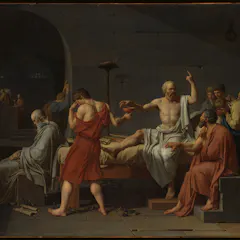
Democracy has been with us since it was founded in Athens in the 6th century BCE. Like some of today’s voters, the ancient Greeks were also divided over its merits.

For the classical Greeks, citizenship was a binding relationship of reciprocal duties and obligations owed to all other citizens. The law, they believed, was king.
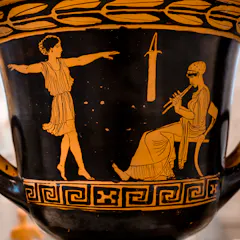
The Greeks and Romans figured out music and exercise go hand in hand more than 2,000 years ago – long before science backed it.

German philosopher Paul Tillich’s writings about affirming oneself in the face of anxiety, repression and meaninglessness ring as true today as in the 1950s.

The End tells the story of a wealthy family who survived the collapse of the climate and civilisation in a bunker inside an abandoned mine.
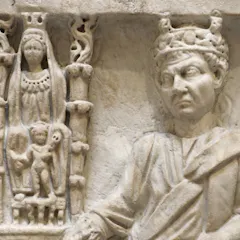
There may have been fear of gender-diverse people in the ancient world, but they played a crucial role. In Rome, they were viewed as vital to the city’s safety.

According to Plato, love’s aim is not to complete us, but to inspire us to grow and become the best human being we can be.

Ruling is a skilled trade, Plato argues. And like any other trade, not everyone has the talent or the training to be good at it.
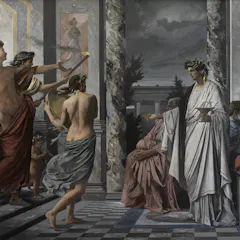
Written at a time when there were different norms around sexual morality, Plato’s Symposium is one of the principal sources of the Greek philosopher’s views on love and beauty.

In most cases, it’s reasonable to expect that groups of protesters will abide by the law. But there are times when doing so diminishes the effectiveness of the protests.

Events that the media describe as ‘apocalyptic’ reflect changing anxieties about the future.
Top contributors
-

Professor in Philosophy, Australian Catholic University
-
Professor of Classics, University of Oxford
-
Assistant Professor in Philosophy and History, Bond University
-
Associate Professor in Philosophy, University of Nottingham
-
Professor of Philosophy, Maryland Institute College of Art
-
Assistant professor of Classical Studies, Boston College
-
Lecturer in Classics and Ancient History, The University of Western Australia
-
Department Chair and Professor of Philosophy, Rochester Institute of Technology
-
Associate Professor of Philosophy of Education, University of Birmingham
-
Senior Lecturer in Philosophy and Ethics, Nottingham Trent University
-
Associate Lecturer in Philosophy of Education, University of the Witwatersrand
-
Professor of Classics, Middlebury College
-
Professor and Director of the Stoneygate Centre for Excellence in Empathic Healthcare, University of Leicester
-
Senior Lecturer, UNSW
-
Senior Lecturer in Philosophy, University of Lancashire