

As the National Science Foundation starts giving out fewer grants, people worldwide will potentially lose out from potential research findings that could help improve their lives.
Articles on University research
Displaying 1 - 20 of 62 articles

Canada should redress age biases in the ranking system that serves as the primary mechanism for skilled workers to attain permanent residence in the country.

The Trump administration is leaning away from dramatic funding cuts and settlements with universities, and more toward standard tactics to try to limit funding.

A small portion of university research funding comes from individual donors. Most universities have policies in place to protect against wrongdoing.

Universities need to move away from competing over rankings, and instead focus on building a collaborative educational system that puts collective well-being first.
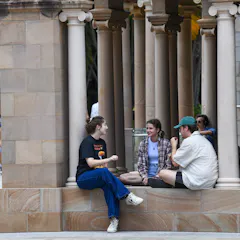
Last week in Sydney, we saw a melodrama acted out that could stand in for the state of Australian universities more generally.

Canadians deserve better access to the research they fund through their tax dollars.

The latest government showdown over the budget risks not only a shutdown but jobs, regional economies and America’s competitiveness in AI and other advanced fields.

In open-source endowed research positions, professors release all of their intellectual property. Surveys of academics in the U.S. and Canada find most like the idea.

The key to supporting science innovation is funding and shaping it at its earliest stages, while innovative ventures are still housed within universities — and even before the ventures are founded.

Academics described their universities as exploitative, oppressive, toxic and fiscally driven. They felt themselves being dehumanised and demoralised by management. Most reported feelings of burnout.
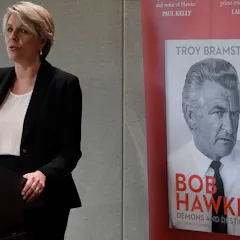
Higher education didn’t feature heavily in the election campaign, yet the sector has high expectations of the new government. The key is the idea of an accord and the change in approach it implies.

Talk of “breaking down the barriers” is all too often a cover for breaking down academic disciplines to create administrative flexibility.

Australia has world-class research but low rates of research commercialisation by global standards. The scale and cultural focus of the government’s plan mean it could have an impact on this problem.

Universities have long been developing research, talent and technology that, with the right mix of industry and government support, will allow Australia to emerge as a green export and R&D leader.

Academics in all areas have deep concerns about their ability to undertake research during the pandemic and the flow-on effects of this. Women and early career researchers were particularly hard hit.

After 11 years of Excellence in Research for Australia, the time and costs for universities and the value it creates for other sectors (none of which made submissions to a recent review) are unknown.

The sameness of the way in which universities present themselves is based on a shared view of what they think stakeholders want. Behind the official facade it’s more like ‘organised anarchy’.

Facing protests by students and academics over its Liberal Party links and generous funding by the Morrison government, the centre’s most important test will be whether it respects academic freedom.

The lack of dedicated funding and support for research commercialisation, on top of the other obstacles academics face, means Australia’s poor performance is no mystery.
Top contributors
-

Professor Emeritus and Former Deputy Vice Chancellor, The University of Melbourne
-
Distinguished Professor of Political Science, Crawford School of Public Policy, Australian National University
-
Adjunct research fellow, Swinburne University of Technology
-
Honorary Principal Fellow, Melbourne Centre for the Study of Higher Education, The University of Melbourne
-
Associate Professor, Bond Business School, Bond University
-
Director of Research, US Studies Centre, University of Sydney
-
Associate Professor, Melbourne Centre for the Study of Higher Education, The University of Melbourne
-
Professor of Higher Education Policy, Monash University
-
Principal policy adviser, Queensland University of Technology
-
Dean of Research, Adelaide University
-
Postdoctoral Fellow, University of Sydney
-
Chair, The Conversation Media Group
-
Dean, USC Dornsife College of Letters, Arts and Sciences
-
Professor of Archaeology, College of Humanities, Arts and Social Sciences, Flinders University
-
School Education Program Director, Grattan Institute