
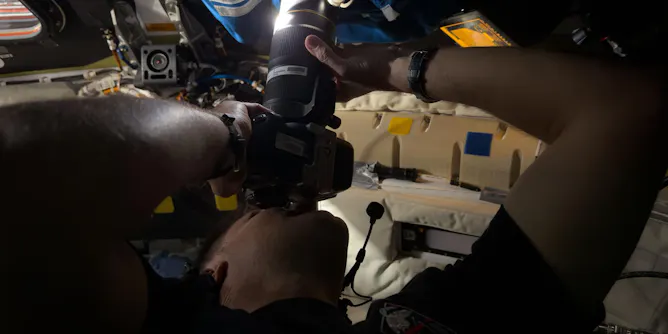
A photography expert explains how a photographer makes artistic decisions that an AI algorithm or robot can’t replicate.
Articles on Apollo program
Displaying 1 - 20 of 33 articles

A space historian explains how the Artemis II crew reimagined some Apollo-era photos and found spectacular new angles.
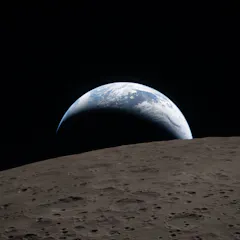
Artemis II astronauts updated the iconic 1968 image during their 2026 loop around the Moon.
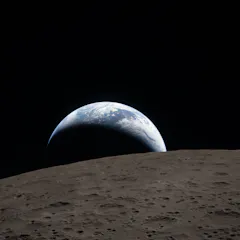
From geology training on Mushuau Innu First Nation territory in Labrador, to a new NASA Science Evaluation Room, Gordon Osinski takes us behind the scenes of Artemis II.
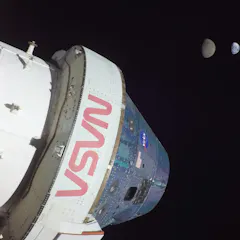
NASA’s Artemis II mission took decades of policymaking, engineering and financial support.
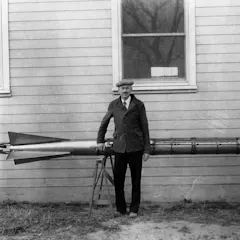
From World War II to the Apollo era, the space shuttle program and today’s privately developed commercial rockets, the landscape of spaceflight has changed dramatically.
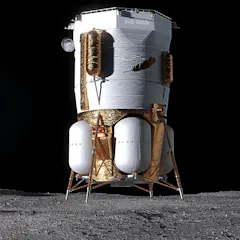
The US space agency has opened up a lunar lander contract held by Space X to competition.
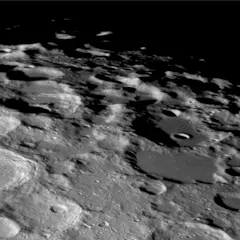
Wearing the wrong shoe on Earth can lead to injury. Researchers still need to figure out the physical consequences of spending a long time walking around on the Moon.
Both Stephen Alexander’s elementary teachers and televised NASA missions throughout the ‘60s influenced his journey into science. He recounts NASA’s legacy, 65 years after the agency’s inception.
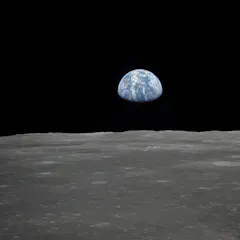
The Artemis II mission is scheduled for launch in late 2024 and is a critical step towards NASA’s goals of establishing a permanent human presence on and near the Moon.
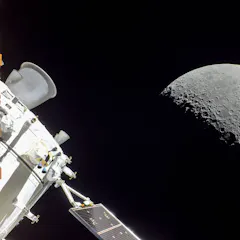
With more than 100 lunar missions planned in coming years, space junk near the Moon could become an issue for humanity. No agency tracks lunar space junk, so two astronomers decided to do it themselves.
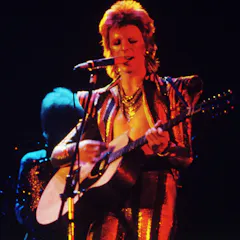
In June 1972, the first United Nations conference on the human environment coincided with the release of David Bowie’s iconic Ziggy Stardust album. Both still feel disturbingly relevant today
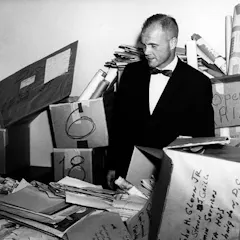
John Glenn would have turned 100 on July 18, 2021. Today’s space program is a giant leap more inclusive than when he made his pioneering orbit of the Earth in 1962.
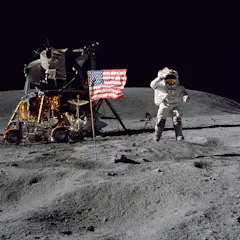
A systems engineering expert applies the same method NASA’s Project Apollo engineers used to offer a systematic approach to deciding on school reopening at a local level.
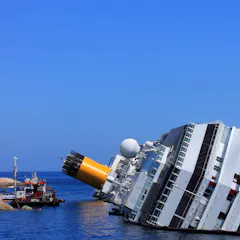
Is it possible to plan for the unforeseen? Some basic principles allow careful preparation to be reconciled with quickly shifting circumstances.
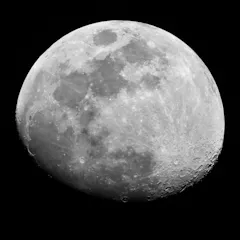
The Apollo missions to the Moon helped our understanding of the cosmic origin of craters on our lunar neighbour, and here on Earth.
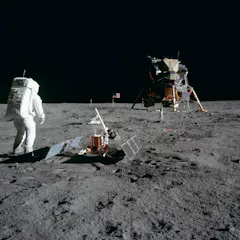
The technologies behind weather forecasting, GPS and even smartphones can trace their origins to the race to the Moon.
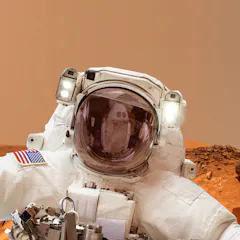
As commercial spaceflight companies lower the cost of reaching space, nations can launch more missions. But while astronauts are great for whipping up enthusiasm, is a manned mission worth the cost?
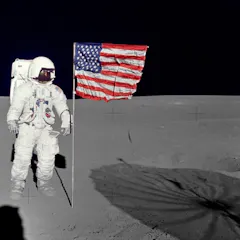
This year the Apollo 11 mission turns 50 - but what does the future hold for the Moon? The ephemeral shadows cast by human artefacts may soon be joined by more permanent scars of lunar mining.
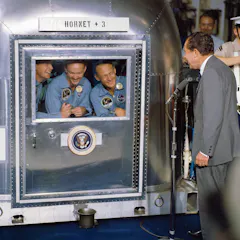
Objects left on the Moon are not just abandoned rockets and rovers. There is a lot of historic and sentimental memorabilia. Some of it hints at a mission that the first Moonwalkers almost forgot.
Top contributors
-

Associate Professor in Archaeology and Space Studies, Flinders University
-
Senior Lecturer in Physics, Nottingham Trent University
-
Associate Professor of Critical Media Practices and Digital Humanities, University of Colorado Boulder
-
Professor of Planetary Science and Astrobiology, Birkbeck, University of London; Honorary Associate Professor, UCL
-
Assistant Director of the Global Systems Institute, University of Exeter
-
Research Associate - Creative Industries, Flinders University
-
Postdoctoral research associate, The Open University
-
University of Kent
-
Postdoctoral research associate, University of Oxford
-
Professor of Space Physics, Lancaster University
-
Doctoral Candidate in Energy and Economics, UCL
-
Planetarium Director, NASA Airborne Astronomy Ambassador, University of Wisconsin-Milwaukee
-
Professor and Program Director, Systems Engineering and Design, University of Michigan
-
Professor of Planetary Science, University of Arizona
-
Dean, USC Dornsife College of Letters, Arts and Sciences