

A survey looking at 500 Floridians finds that Gen Zers are far more anxious than older generations.
Articles on Anxiety disorders
Displaying 1 - 20 of 49 articles

Whether real or just a test, emergency alerts activate the same neural circuits involved in real danger.

A panic attack is a sudden, intense feeling of fear or discomfort. Here’s what it looks like in children – and how to respond.

One in 140 children under the age of eight have selective mutism.
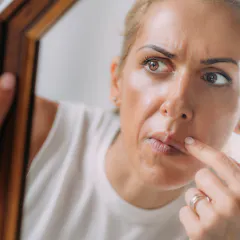
About a quarter of those with body dysmorphic disorder attempt suicide or struggle with ideas of suicide. Fortunately, medication and therapy have proved highly effective at treating the disorder.

Anxiety is the most common mental health issue facing children and adolescents. But research shows that early screening – including in school settings – can identify children who are at risk.

A study of students across Canada between 2004 and 2015 provides an estimate of anxiety symptoms in kindergarteners, and can serve as a baseline for comparing children’s anxiety after COVID-19.

Up to 20% of US children have an anxiety disorder, and many suffer in silence.

The loss of income, economic and food insecurity, fear of infection, and death of family members resulted in feelings of frustration, anxiety and depression.
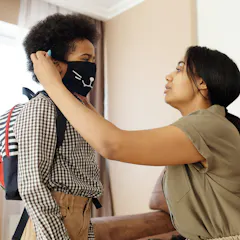
When you layer a pandemic on top of back-to-school, many children may struggle with separation anxiety. Here are some strategies parents can use to help reduce anxiety in their children.

Moving between in-person and virtual schooling affects children with anxiety disorders like selective mutism. In addition, access to diagnosis and support is delayed because of pandemic restrictions.

Teaching deaf babies sign language improves the success of cochlear implants – and also safeguards their long-term physical and mental health.
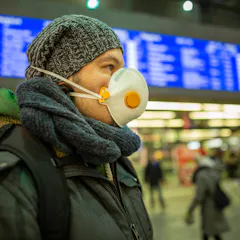
Stop constant checking and stay social.
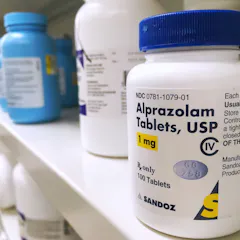
Benzodiazepines, or benzos, are some of the most widely prescribed drugs in the US. They are meant to be used only short-term, but thousands use them long-term. That’s a big worry.

Music for pleasure, self-expression and emotional regulation.

Around 20% of young Australian women had a diagnosis of depression or anxiety in 2017 compared with 12.8% in 2009. But the proportion of people reporting significant symptoms has remained stable.

Half of Australians feel lonely for at least one day a week, while one in four feel lonely for three or more days. This can impact on sleep, heart health and levels of anxiety.
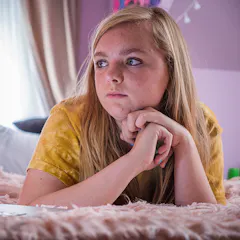
Almost a third of American adolescents have anxiety disorders. Researchers in developmental neuroscience are figuring out that how the brain matures over time may be part of the reason why.

Today’s students are at increasingly high risk for mental health diagnoses. Universities need to step up.

A national survey has shown Australian school students with a mental disorder can be almost three years behind in their studies by the time they sit their final NAPLAN test in year nine.
Top contributors
-

Professor of Psychology, The University of Melbourne
-
Professor and Personal Chair, Swansea University
-
Professor of Clinical Psychology, Curtin University
-
Director of the Centre for Emotional Health and Distinguished Professor in the Department of Psychology, Macquarie University
-
Professor of Psychiatry, Wayne State University
-
Assistant Professor of School Psychology, University of Dayton
-
Professor; NHMRC Clinical Research Fellow; NICM Health Research Institute Deputy Director, Western Sydney University
-
Senior Research Officer in Childhood and Adolescent Mental Health, The University of Western Australia
-
PhD Candidate in Clinical Psychology, Queen's University, Ontario
-
Senior Research Officer, National Drug & Alcohol Research Centre, UNSW
-
Research Officer, University of Cape Town
-
Lecturer and Researcher, Department of Genetics; & SU/ UCT MRC Unit on Risk and Resilience in Mental Disorders, Stellenbosch University
-
Professor emeritus, The University of Melbourne
-
Associate Professor, Sydney School of Public Health, University of Sydney
-
Researcher at the Centre for Health Systems Research & Development, University of the Free State