
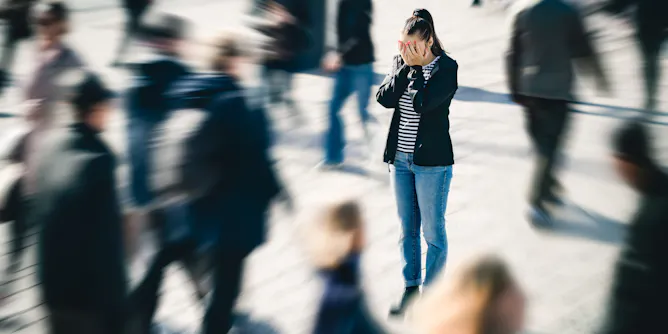
Our study suggests that socialising with acquaintances could trigger social anxiety more than close friends or strangers.
Articles on Social anxiety disorder
Displaying 1 - 20 of 34 articles

Many of us have rituals or habits to cope with worry that give us more of a sense of control. But here’s when they might be something more serious.
Tik Tok, Instagram, Youtube… Social Media is driving offline disorders among teenagers, suggests a large-scale report by French Agency for Food, Environmental and Occupational Health & Safety (Anses).

Both involve feeling uncomfortable in social situations. But one can be debilitating.

With online use ever-increasing, so is the rise of ghosting – when friends decide to disappear into the social ether.

Many people will be feeling anxious about working around others again, after such a long period at home. There are a few things employers and employees can do to ease the transition.
One person out of three does not dare to turn to the supplier in case of problems. Feeling of shame, as well as doubts about the ability of the person they are dealing explain that figure.
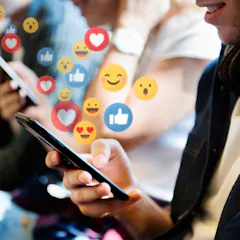
Comparing ourselves to people who are worse off than we are on social media should make us feel better. The opposite is true.

Home may have become associated with safety and control during lockdown, so resuming life in public can seem daunting.
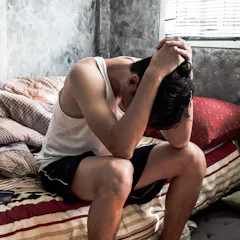
Traumatic experiences (usually of shame or defeat) lead many people across the globe to cut themselves off from social contact and withdraw from society.
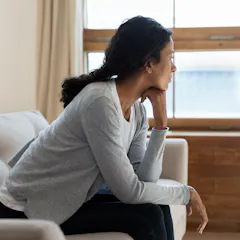
It’s helpful to remember you’re in an unusual situation with no perfect map of how to cope, or a ‘right’ or ‘wrong’ way to get through it.

Going back to school can be tough for children who suffer from social anxiety.

Particularly for people with social anxiety, the prospect of reconnecting with the outside world could be daunting. But there are things you can do to make the transition a little easier.

Anxiety around going to the toilet in a public place is a recognised mental health condition. We explored the thought processes behind shy bladder and shy bowel to better understand these disorders.
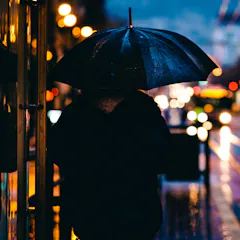
Loneliness is often triggered by significant life events, and young people have these in abundance. But the solution isn’t as simple as joining a group or trying harder to make friends.

Remembering past events, experiences or emotions is a big part of being human. But if dwelling on the past is distressing, here’s what you can do to help.

Posting on social media, reaching a group of friends all at once, can make connecting with others less threatening for people who experience social anxiety.

Loving parent can think of nothing more important than protecting their shy children, but excessively protecting your child and taking over doesn’t allow them to learn through experience.

As the first days of school approach rapidly, an educational psychologist offers strategies for combating anxiety in children and teens.
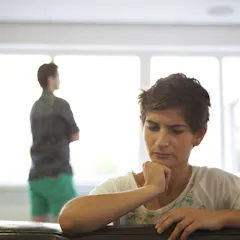
People with paranormal beliefs often experience social rejection. But for those at risk of psychosis, support is important for prevention.
Top contributors
-

Associate Professor, Sydney School of Public Health, University of Sydney
-
Professor, NHMRC Emerging Leader & Clinical Psychologist, UNSW
-
Postdoctoral Research Fellow and Clinical Psychologist, UNSW
-
Lecturer/Senior Lecturer Psychology, London South Bank University
-
Senior teaching fellow, University of Surrey
-
Honorary Professor of Psychology, Cardiff University
-
Researcher in Brain Imaging, Imperial College London
-
Professor of Psychological Sciences, School of Psychological Sciences, Australian College of Applied Psychology and Honorary Assoc Prof with the Faculty of Health Sciences, University of Sydney
-
Mental health researcher, University of Cambridge
-
Assistant Professor of History of Behavioral Science, The Ohio State University
-
Assistant Professor Educational Psychology, University of Calgary
-
Teaching Fellow (Integrated Care), University of Surrey
-
Adjunct Fellow, School of Psychological Sciences, Macquarie University
-
Professor of Clinical Psychology, Curtin University
-
Director of the Centre for Emotional Health and Distinguished Professor in the Department of Psychology, Macquarie University