
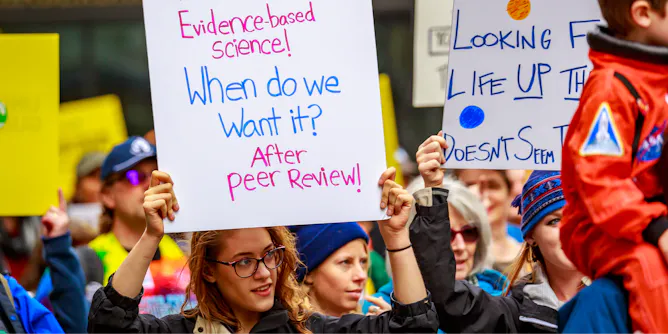
Trust in science seems compatible with believing almost anything, so long as it is expressed in plausibly scientific terms.
Articles on Anti-science
Displaying 1 - 20 of 24 articles
The CDC’s current crisis has been building since Trump’s first week in office and boiled over after Kennedy fired the agency’s newly appointed director.
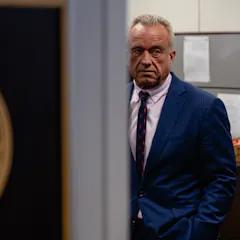
Attacks on scientific expertise have been increasing, especially in politics. Health and Human Services nominee Robert F. Kennedy Jr. is among the more prominent people who have done that.
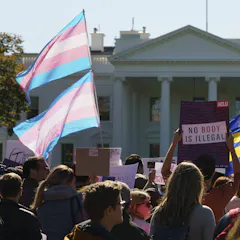
For as long as trans medicine has been around, so has its opposition. The tactics of prior waves of anti-trans policies are still in play today.

Bogus science articles are attempting to take advantage of our trust in experts.
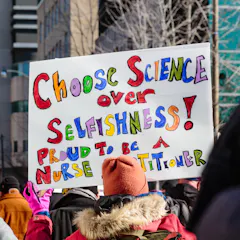
To communicate scientific findings that are relevant to the public, science communicators need to understand how to overcome attitudes that are anti-science.
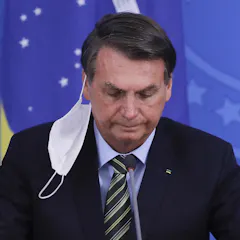
Research confirms that Brazil’s president, Jair Bolsonaro, bears heavy responsibility for the death toll in his country, at every wave of the pandemic.

‘Racism and misogyny are part of it. They simultaneously spruik pseudoscience and anti-science agendas which have come to Australia from overseas,’ said one expert.

Hopefully, Joe Biden’s presidency will mark the end of using cherry-picked science to suit a political agenda. As Trump’s successor, however, he’s placed in a difficult position.
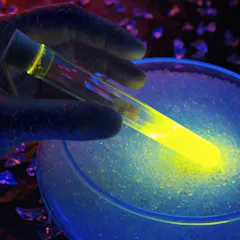
When you ask Americans what the word ‘science’ brings to mind, a majority respond ‘hope.’ Using this built-in brand can help communicate important science messages.
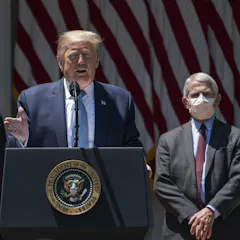
Whether in situations relating to scientific consensus, economic history or current political events, denialism has its roots in what psychologists call ‘motivated reasoning.’
Every day, new “alternative facts” are peddled in the public realm. But misinformation is not solely a modern problem - its origins are as old as humanity.
Science is a multicultural enterprise that benefits from and indeed requires competing views.
People universally believe scientists’ solar eclipse calendars, but vaccine warnings or climate predictions are forms of science that strangely do not enjoy equivalent acceptance.
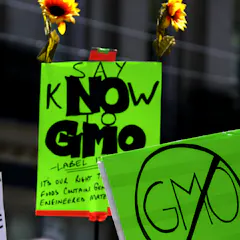
Whether you’re talking about climate change, vaccination or agriculture, the term “anti-science” means different things in different political contexts.
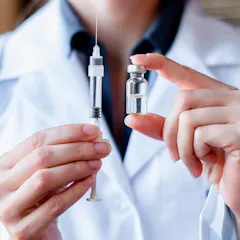
Does science have an answer to science denial? Just as being vaccinated protects you from a later full-blown infection, a bit of misinformation explained could help ward off other cases down the road.
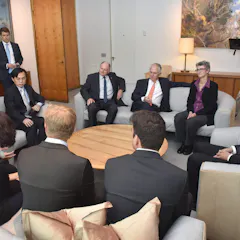
Today is the start of Science Meets Parliament, which helps our nation’s leaders embrace the latest scientific evidence.
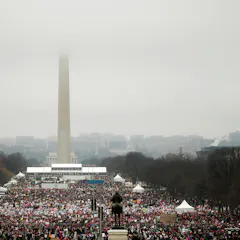
Trump is not science’s biggest problem.
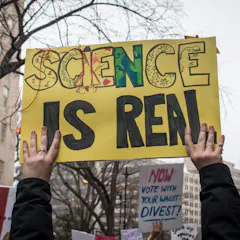
In the wake of the Flint water crisis and with a new notably anti-science president, U.S. scientists are reevaluating how to navigate the tension between speaking out and a fear of losing research funding.
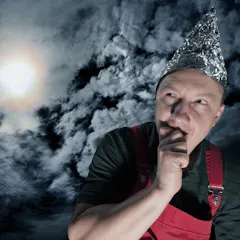
Some scientists refuse to debate or appear with those they consider to be unscientific. But is this the best approach to combat anti-science narratives?
Top contributors
-

Senior Research Fellow, Melbourne School of Psychological Sciences, The University of Melbourne
-
Senior Lecturer, Australian National Centre for the Public Awareness of Science, Australian National University
-
Associate Professor (hon) at the Centre for Public Awareness of Science, Australian National University
-
Associate Professor of Science and Technology Studies, The University of Melbourne
-
Professor of Pharmaceutical Chemistry, Macquarie University
-
Open Evidence Research, UOC - Universitat Oberta de Catalunya
-
Adjunct Faculty for Advanced Academic Programs, Johns Hopkins University
-
Associate Professor of Philosophy, Deakin University
-
Distinguished Journalist In Residence, Arthur Carter Journalism Institute, Retraction Watch
-
Professor of Psychology, The Ohio State University
-
Dean of Science, University of California, Santa Cruz
-
Associate Professor, Management and Psychology, University of Toronto
-
Emeritus Distinguished Professor of Archaeology, Simon Fraser University
-
Assistant Professor, Marketing, Simon Fraser University
-
Emeritus professor, Australian National University