
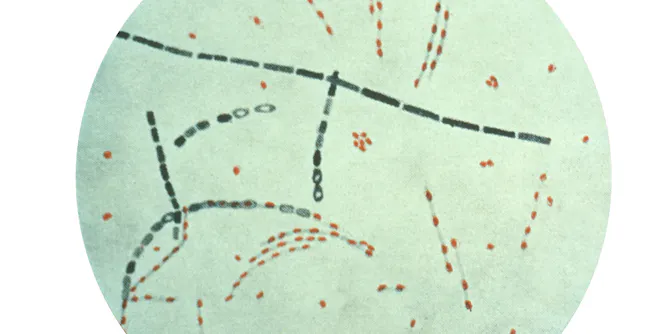
From bioweapons to biblical plagues, the bacteria that cause anthrax can persist for decades in harsh conditions and wreak havoc on people and cattle.
Articles on Anthrax
Displaying all articles
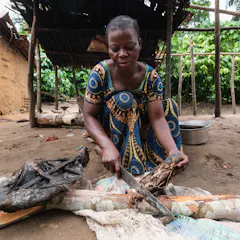
As many as three-quarters of emerging infectious diseases originate from wildlife.

You might expect scavengers such as vultures to have a diet high in dangerous bacteria. Our study investigated what defences these animals have to help them stay healthy.

A Pandoravirus has been revived after remaining dormant in the Siberian permafrost for nearly 50,000 years.

On World Rabies Day – which is also the anniversary of French microbiologist Louis Pasteur’s death – a virologist reflects on the achievements of this visionary scientist.
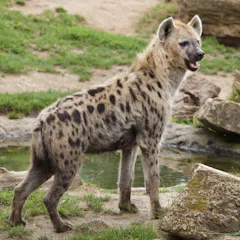
Spotted hyenas provide ecosystem services that improve human welfare and contribute to sustainable development goals.

Anthrax is best known as a bioweapon. But researchers have figured out how to tweak the deadly toxin and use it to fight cancer. So far, dogs are the first to benefit from the new therapy.
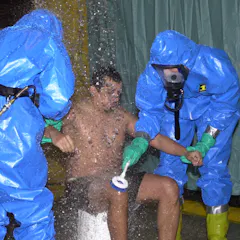
Talk of bioterrorism might provoke fears of smallpox and anthrax, but mundane threats like salmonella may pose greater danger. And experts say that the U.S. is not prepared for an attack.

Following the explosion of screen-based personal devices, the risk of users slipping into hyper reality has multiplied enormously since the television age.
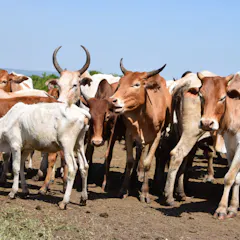
Governments in anthrax endemic countries should build efficient surveillance systems that incorporate detection, confirmation and efficient data collation and feedback.

Basic safeguards are not enough to protect against insider threats. It requires rethinking how to overcome the biases that cause us to dismiss the danger.
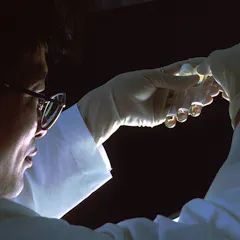
A scientific breakthrough in a vacuum may be free of ethical implications. But many developments can be used for good or evil, or both. There’s a fine balance on what to control and to what extent.

Doxycycline is an antibiotic drug that kills a wide, weird and wonderful range of bugs that are often difficult to treat with other antibiotics.
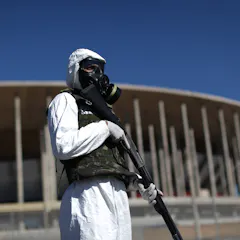
Governments often have limited knowledge of chemical production as it is the preserve of the private sector. Often these facilities are not as well secured as government facilities.

New initiative with old handsets halves rates of the disease in southern Tanzania – and is being applied to other conditions, too.

In the science world, laboratories are essential but safety precautions should be taken to prevent any incidents like the Ebola outbreak or biochemical attacks.

Anthrax occupies a special role as a feared and potentially lethal disease, but the culmination of a ten-year research project has identified a section of its toxin that could produce an effective new…

A new antibiotic that is effective at killing anthrax and superbug MRSA bacteria could be a weapon in the fight against antibiotic resistance - and terrorism. Anthracimycin, a chemical compound derived…

At least 37 cows have died after an anthrax outbreak in Moree, northern NSW, it was reported today. Here are some expert responses to the news, collected by the Australian Science Media Centre. Dr David…
Sheets of silk dipped in chlorine have been found to quickly kill off almost all bacteria, including the armoured spores…
Top contributors
-

Ph.D. Candidate, Global Studies Program, UMass Lowell
-
Professor of Oceanography, University of California, San Diego
-
Professor of Microbiology, Monash University
-
Lecturer in Cattle, The University of Melbourne
-
Professor of Disease Ecology and Public Health, University of Glasgow
-
Research Lead at Rhythm Obscura / Lecturer in the School of Art, Design and Architecture, University of Plymouth
-
Associate Professor, The University of Melbourne
-
Professor of the Practice of Energy, National Security and Foreign Policy, Harvard Kennedy School
-
Director, International Centre for Genetic Engineering and Biotechnology, University of Cape Town
-
Professor of Political Science, Stanford University
-
Assistant Professor of Philosophy, UMass Lowell
-
Professor of Microbiology, University of Birmingham
-
Co-Director, Center for Epidemiological Modelling and Analysis (CEMA), University of Nairobi. Chancellors Fellow, Institute of Immunonology and Infection Research, University of Edinburgh. Associate Professor, Paul G Allen School for Global Health, Washington State University
-
Senior Research Associate, University of South Africa
-
Professor of Immunology, Imperial College London