

When it comes to evolution, a few million years can really matter.
Articles on Animal evolution
Displaying all articles

It also explains why there are exceptions to the rule – including humans, who have strikingly short faces relative to the braincase.
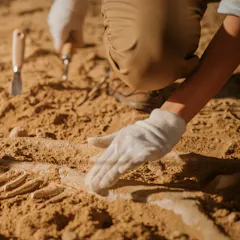
Charles Darwin knew the evidence from fossils contradicted evolution. Researchers are still trying to work out the problem today.

For more than a century, scientists have been puzzled by the set of shared changes that happen to many animals when they are domesticated.
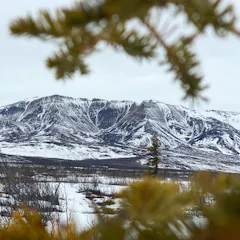
A recent discovery of a sponge fossil may be the oldest known animal fossil, extending the evolutionary timeline by hundreds of millions of years.

Archaehierax sylvestris, whose remains have been unearthed in the arid South Australian outback, was the apex predator in a lush prehistoric forest filled with marsupials and waterfowl.
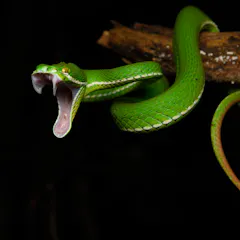
How have snakes evolved venom fangs so many times in their evolutionary history? Research suggests it’s due to a structure called ‘plicidentine’ in their teeth that can evolve into venom grooves.

During mating season, a male turtle-headed sea snake will often lose sight of the female before mating can happen. The female may be metres away, but the male won’t ever find her again.
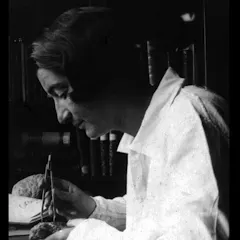
Tilly Edinger was the first person to apply a deep-time perspective into different species’ brain evolution. She did this by focusing on the hollow space within a dead animal’s skull.
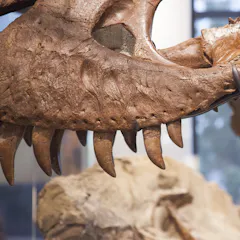
Teeth, horns, claws, beaks, shells and even plant prickles — the power cascade rule can be observed far and wide throughout nature, much like the famous golden ratio.
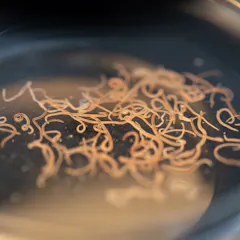
‘Worm’ is really a catchall term for a huge variety of animals with different characteristics that span the tree of life. They hold clues about our own origins as well as hints about human health.
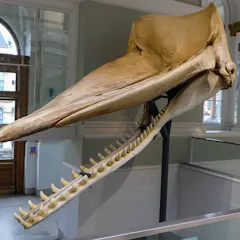
How we worked out when whales first evolved asymmetrical skulls.

The three-toed skink can give birth to live young and lay eggs in the same pregnancy. What can this little critter teach us about the evolution of live birth?
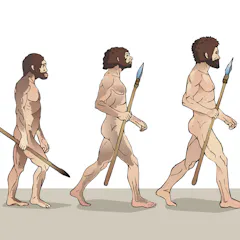
New research shows animal evolution often involves losing genes and becoming less complex.
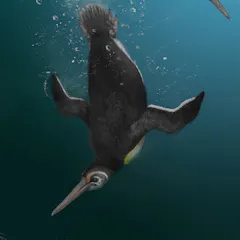
This newly discovered species is the oldest one known to resemble today’s penguins in both size and leg proportions, unlike its giant co-habitants at the time.
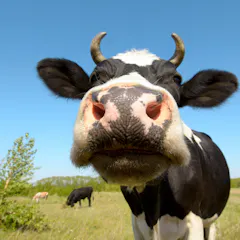
An internet-breaking 6'4" steer isn’t the only animal to reach gigantic proportions.

‘Molecular fossils’ in the DNA of elephants could help explain why their testicles are inside their bodies.
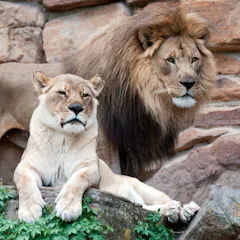
People used to think that boy lions had big shaggy manes to protect their necks from being bitten or scratched during fights. But scientists soon realised this idea didn’t make much sense.
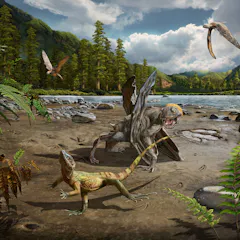
Bipedal movement has existed in modern reptiles for much longer than we previously knew.
Top contributors
-

Vertebrate palaeontologist, Flinders University
-
PhD candidate, University of New England
-
PhD candidate in Mammalian Palaeobiology, University of Leicester
-
Fellow, Keele University
-
Professor, Earth Sciences, Laurentian University
-
Lecturer in Palaeontology, Flinders University
-
Associate Professor in Vertebrate Palaeontology, Flinders University
-
Postdoctoral Scholar of Organismal Biology and Anatomy, University of Chicago
-
Research Fellow in Palaeobiology, University of Oxford
-
Research Associate in Evolutionary Biology, Adelaide University
-
Professor in Evolutionary Biology, College of Science and Engineering, Flinders University
-
Doctoral Candidate, Australian National University
-
Postdoctoral research fellow, Smithsonian Institution
-
Professor, School of Biological Sciences, Monash University
-
Adjunct Associate Lecturer in Palaeontology, Flinders University