
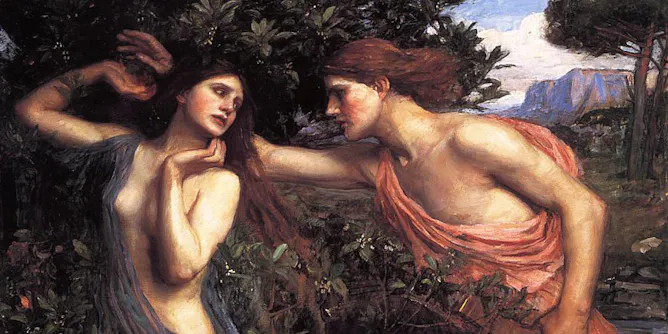
Ovid’s tale is a lusty celebration of man’s triumph over nature.
Articles on Ancient Greece
Displaying 41 - 60 of 247 articles
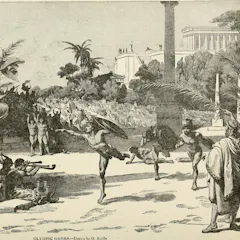
Australians love a major sporting event and so did the ancient Greeks and Romans. And it wasn’t just the Olympics they flocked to.
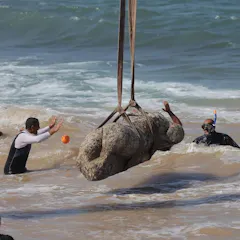
Statues continue to emerge, offering clues as to the physical appearance of the ancient city.
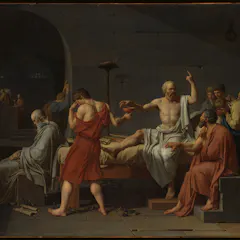
Democracy has been with us since it was founded in Athens in the 6th century BCE. Like some of today’s voters, the ancient Greeks were also divided over its merits.

From exorbitant rents to an undersupply of affordable homes, ancient societies faced some familiar-sounding problems – with serious social consequences.
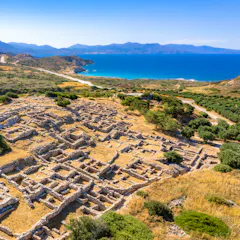
From art to architecture, this pioneering bronze age civilisation had a huge influence on other western cultures.
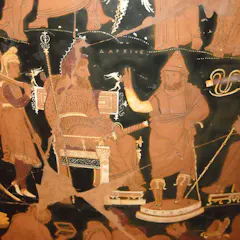
Herodotus showed how human beliefs and choices affected the fate of nations. His insights are still relevant.
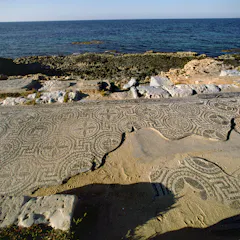
Huge upheavals of the land and sea were facts of life in the ancient world, just as they are today.

For the classical Greeks, citizenship was a binding relationship of reciprocal duties and obligations owed to all other citizens. The law, they believed, was king.
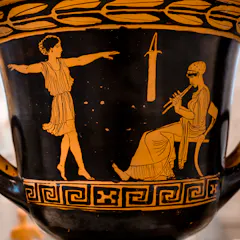
The Greeks and Romans figured out music and exercise go hand in hand more than 2,000 years ago – long before science backed it.

Nymphs offer us more than just stories of sexy nature spirits. They can reveal how ancient people thought about their world and connected with their landscape.
Ready to ditch the dating apps? Try loitering outside a courthouse instead - it’s one of many tips the ancient Greeks and Romans had for finding love.
Ancient Greeks and Romans were well aware that a cost of living crisis can cause political strife. Here’s how they managed.

Public baths also often featured gymnasiums, libraries, restaurants and exercise yards. Archaeological evidence suggests even dentistry was performed at the baths.

From Athens to the British Empire and on to the US – dominant powers have used might and consent to exert influence.

It might seem odd to look to someone who lived over 2,000 years ago for answers about AI. But Aristotle has enduring insights about friendships – and which ones are particularly valuable.

Both art forms encourage us, the listeners, to react, reflect and ultimately select with which speaker to side.
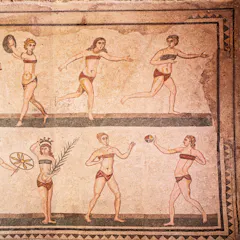
There’s nothing new about our modern obsession with playing and watching sports – they were popular in ancient Greek and Roman times too.
Is a US-China war inevitable? Perhaps that isn’t the lesson leaders should be taking from the ‘History of the Peloponnesian War.’
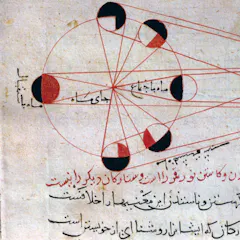
The West’s Eurocentric version of scientific history omits some of the most important events that shaped modern thinking.
Top contributors
-

Lecturer in Classics and Ancient History, The University of Western Australia
-
Emeritus Professor of Classics, La Trobe University
-
Professor of Classical Studies, Brandeis University
-
Honorary Professor of Classics and Ancient History, School of Historical and Philosophical Inquiry, The University of Queensland
-
Professor, Department of Classics and Ancient History, University of Sydney
-
Associate Professor of Greek History, The University of Queensland
-
Paul Eliadis Chair of Classics and Ancient History, The University of Queensland
-
Professor of Political Science, Macalester College
-
Associate Professor in Ancient History, Macquarie University
-
Professor in Philosophy, Australian Catholic University
-
Professor of Law, Wayne State University
-
Professeur d'histoire ancienne, Université de Lorraine
-
Research Scholar, Classics and History and Philosophy of Science, Stanford University
-
Senior lecturer, UNSW
-
Associate Professor of Classics, University of Winnipeg