
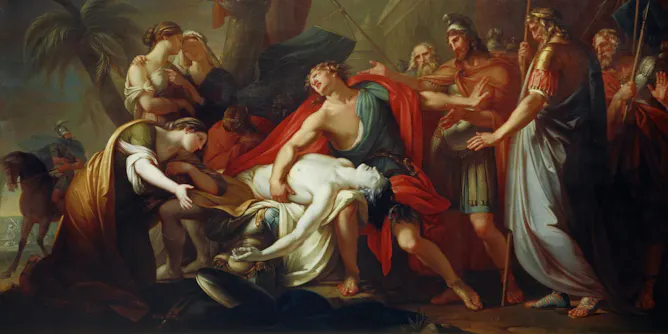
The fragment wasn’t placed besides the body, but stuffed inside it.
Articles on Mummy
Displaying all articles

Cronin has skill but it is lacking in this uninspired film.

Digital tools allow archaeologists to identify similarities between fragments and artifacts and potentially recover previously unknown parts of their stories.
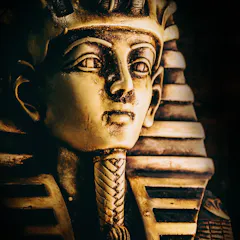
Several studies have upended what we thought we knew about mummification using scientific dating techniques to reveal some fascinating – and surprising – insights.
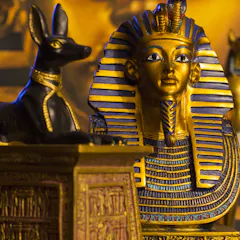
The discovery of Tutankhamun’s ancient Egyptian tomb in 1922 thrilled the world. But people know more about rumours of a curse than the amazing things science revealed about the boy king.
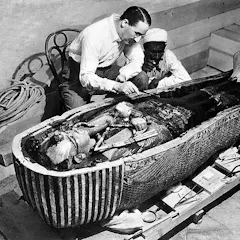
The discovery of his tomb full of magnificent and unique objects is more than a story of treasures. It’s also a story of class, privilege, colonialism, political freedom and national identity.
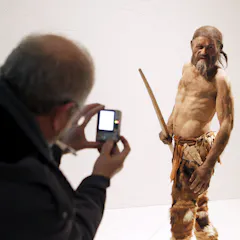
When the 5,300-year-old mummy of Ötzi the Iceman was found 30 years ago, researchers found 61 tattoos on it. A scholar explains how tattoos have been a sacred part of many cultures across the world.
The first mummy was wrapped up about 7,000 years ago, and it was from South America.
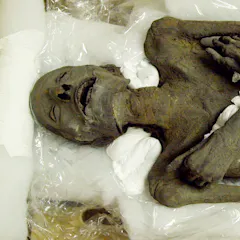
Are DNA samples today’s version of the human skeletons that hung in 20th-century natural history museums? They can provide genetic revelations about our species’ history – but at an ethical price.
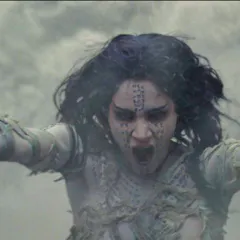
Mummies are scary but they also fascinate us, giving us the feeling that we can vanquish time by preserving our most perishable feature: flesh.
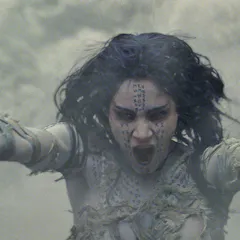
The latest reboot of The Mummy is all you should expect from a Hollywood blockbuster on an ancient Egyptian curse. But what about the science?
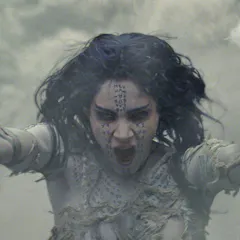
The Mummy, starring Tom Cruise and Russell Crowe, is the latest manifestation of our centuries old fascination with Egypt. But beneath this obsession is a darker story of looting and destruction.
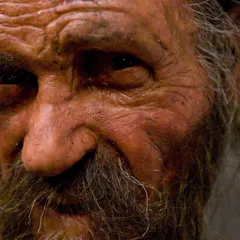
Here’s what one man from around 3,300BC actually sounded like.
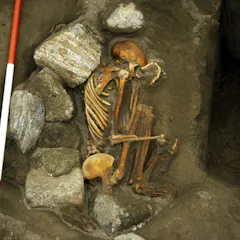
Turns out the Egyptians weren’t the only ones who mummified their dead.
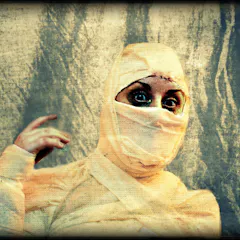
For the first time, scientific evidence has shown that prehistoric Egyptians experimented with techniques to preserve bodies around 4000BC, some 1,500 years before artificial mummification was believed…
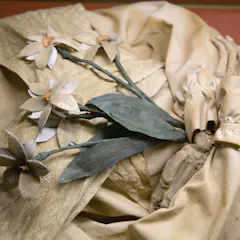
In 1994, a crypt containing 242 bodies was discovered in Vác, Hungary. Many of the bodies were naturally mummified, including the remains of a woman, Terézia Hausmann, who died apparently from tuberculosis…
Top contributors
-

Lecturer in Biomedical Egyptology, University of Manchester
-
Professor, Director of the Centre for Robotics, Queensland University of Technology
-
Honorary Senior Lecturer, UCL
-
Associate Professor in Archaeology and Heritage, Adelaide University
-
Wellcome Post-Doctoral Research Associate, Natural History Museum
-
Associate Dean Education, Professor of Biomedical Acoustic Engineering, University of Southampton
-
Professeur d'histoire ancienne, Université de Lorraine
-
Honorary Research Fellow in Archaeology, The University of Queensland
-
Head, Public Engagement, Chau Chak Wing Museum, University of Sydney
-
Associate Research Professor of Anthropology, University of Colorado Denver
-
Instructional Faculty in Communication, Arizona State University
-
Postdoctoral Fellow in Archaeology, University of California, Los Angeles
-
Senior Lecturer in Film History in the School of Society and Environment, Queen Mary University of London
-
Research Associate, Institute for Prehistory and Early History and Medieval Archaeology, University of Tübingen
-
Research Fellow in Ancient History, Macquarie University