

Leg pain can be a symptom of peripheral artery disease, a condition that is part of the same disease process that causes heart attacks and many strokes.
Articles on Amputation
Displaying 1 - 20 of 23 articles

In sub-Saharan Africa, over 300,000 people are envenomed each year, leading to over 7,000 deaths and almost twice as many amputations.
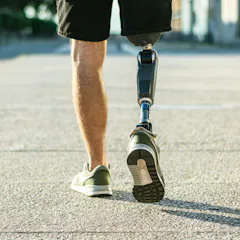
New study finds that the stubborn brain refuses to forget lost limbs.
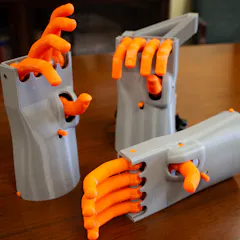
When historians and engineers work together, they can bring a version of the past back to life.

A recent study shows that carpenter ants have evolved amputation skills a cut above the rest of insects.

Gunpowder warfare kicked off a new era of invasive surgery and prosthetic technology in Western medicine.

In a number of stories and novels, lost limbs represent both physical and metaphorical loss.

When wild animals survive the initial trauma, blood loss and infection risk without medical help, it’s astonishing that they can adapt to life with three limbs.
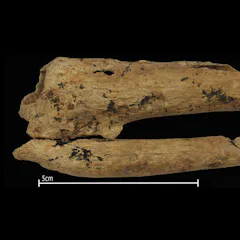
An astonishing discovery from the oldest known grave in Southeast Asia has revised medical history – the previous known amputation surgery was just 7,000 years ago.
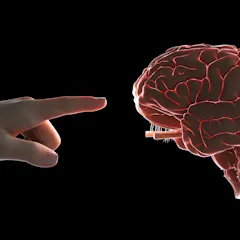
When designing neuroprosthetic devices for users to control with their thoughts, engineers must take into account the sensory information brains collect from the environment and how it gets processed.
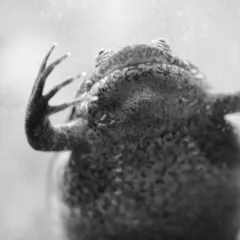
Unlike humans, many animals are able to regenerate their limbs after losing them. Giving the body the right conditions for regrowth might allow people to recover lost limbs as well.

New research involving temporary ‘finger amputations’ raises hope for more effective stroke rehabilitation.

New study sheds light on the mystery of how people can experience and control phantom limbs decades after losing a body part.
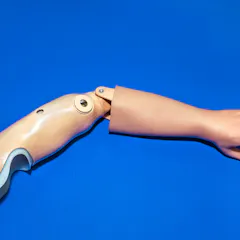
New treatment for phantom limb pain looks promising.
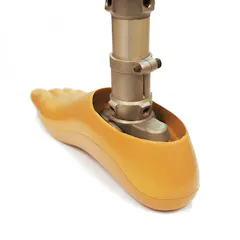
Guidelines for screening and treating diabetic foot are based on low-quality evidence and this is putting millions of people at risk of losing a foot.

A long time ago, in an empire far, far away …

The best prosthetics feel more like the real thing.
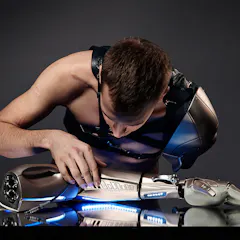
A tool in place of your arm or a stereo for your leg? How our attitudes towards human enhancement have changed.
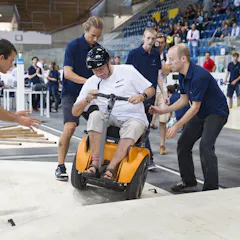
People with disabilities are often disappointed with their devices’ performance, and choose not to use them. To encourage innovation, a new competition tests assistive technologies.

The achievements of the Paralympians, and societal shift towards more inclusivity and the celebration of diversity, has had a dramatic effect on the lives of people living with disability.
Top contributors
-

Associate Professor of History, Auburn University
-
Postdoctoral Researcher in Cognitive Neurosciences, The University of Queensland
-
Professor of Clinical Biomechanics, University of Staffordshire
-
Professor of Sensory-Motor Systems, ETH Zurich
-
Assistant Professor of Psychology, Heriot-Watt University
-
PhD Student in Clinical Neurosciences, University of Oxford
-
Professor of Anatomy, Lancaster University
-
Professor de Filosofia da Universidade do Estado do Rio de Janeiro (UERJ) e Professor de Filosofia do Direito, Universidade Federal do Rio de Janeiro (UFRJ)
-
Lecturer, Classics, University of Glasgow
-
Assistant Lecturer, University of Lancashire
-
Visiting Assistant Professor of English, Hope College
-
Research fellow, Griffith University
-
Assistant Professor of Biology, Algoma University
-
Lecturer in Animal Behaviour, University of Chester; University of Surrey; University of Reading
-
Senior Lecturer in Animal Science, Nottingham Trent University